
Snail seclusion successful
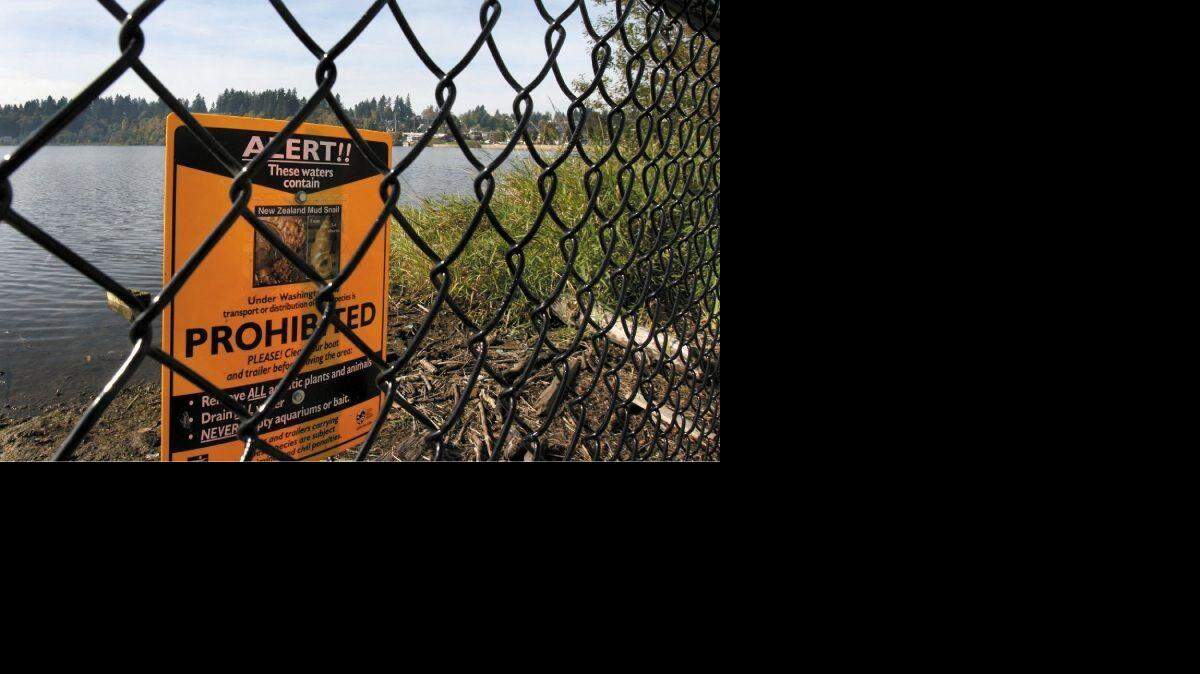
The South Sound invasion of the New Zealand mud snail appears confined to Capitol Lake, according to a recent scientific survey.
Lakes and streams within a 5-mile radius of the lake were surveyed at 85 locations. No New Zealand mud snails were found, according to a draft report prepared for the state by Deixus Consultants of Seattle.
The tiny, non-native snail was discovered in Capitol Lake in October 2009. The lake has been closed to boating and other recreation use since November 2009 in a bid to keep the rapidly reproducing mollusk from spreading.
“The survey is a sign that the quarantine is working and the infestation is fairly isolated to the lake,” said Allen Pleus, aquatic nuisance species coordinator for the state Department of Fish and Wildlife.
The $4,000 survey was commissioned by the Washington Invasive Species Council, which is housed in the state Recreation and Conservation Office.
“This result comes as a big relief and will help us move forward in Capitol Lake with the goal of not only controlling or eradicating the mud snail infestation, but also of protecting the reset of the Puget Sound basin,” invasive species council executive coordinator Wendy Brown said.
In the past year, a team of scientists and lake managers have tried to combat the snail in two ways. They include:
• A drawdown of the lake during a winter cold snap in an attempt to freeze the snails to death.
• Emptying the lake last March, then allowing it to fill back up with saltier Budd Inlet water in an effort to kill snails.
The backflush of the lake was not as effective as exposing the snails to freezing weather.
Pleus said the multi-agency task force trying to deal with the snail will try to take advantage of any major cold spells this winter by drawing down the lake to expose the snails.
“We haven’t ruled out salt, but relying on Budd Inlet isn’t sufficient,” Pleus said, adding that the salinity levels reached weren’t toxic enough.
Capitol Lake is home to the only New Zealand mud snail infestation in the Puget Sound region. It was first detected in the United States in Idaho in 1987 and has since spread to 10 Western states.
The New Zealand mud snail is asexual, has no known natural predators and can live outside the water, making it easy to transport by boat, human clothing or a pet’s paw. At maturity, it is about the size of a grain of rice. It reproduces quickly and can overwhelm an aquatic ecosystem.
The snail is not considered a factor in the policy decision to preserve Capitol Lake or revert back to the Deschutes River estuary, state Department of General Administration senior asset manager Nathaniel Jones told the state Capitol Committee last week.
But the snail’s presence in the lake could add to the cost of dredging the lake, if such a project is ever approved.
John Dodge: 360-754-5444 jdodge@theolympian.com.
This story was originally published October 19, 2010 at 12:00 AM with the headline "Snail seclusion successful."