
Thurston County began with a racist outsider and an upstanding pioneer family
For the next three Sundays, we are honoring Black History Month by celebrating the lives and experiences of local African-Americans, and exploring our part in America’s struggle to confront and overcome racism.
Today, we start at the beginning.
The petition for the creation of our county called for it to be named for pioneer Michael T. Simmons, but he modestly declined the honor. So it was named instead after Samuel Thurston, an Oregon politician who never set foot here. He served in the territorial legislature, and represented the territory in Congress. When Thurston died in 1853, his colleagues named our county after him.
Thurston believed in a uniquely American racial conspiracy theory. In 1850, Thurston wrote a letter to Congress asking for approval to ban African-Americans from settling in Oregon. Here’s what he wrote:
“(It) is a question of life or death to us in Oregon. The negroes associate with the Indians and intermarry . . . and the Indians being led on by the negro who is better acquainted with the customs, language, and manners of the whites . . . these savages would become much more formidable . . . and long bloody wars would be the fruits of the comingling of the races. It is the principle of self preservation that justifies the actions of the Oregon legislature.”
A few years ago, a small group of activist students of color discovered this bit of history and thought we should change the county’s name. They were inspired by King County, which had been named for William Rufus King, a slave owner who had briefly been a Vice President. King County changed its first name, but not its last, by switching from William Rufus to Martin Luther – a wonderful idea both in substance and convenience.
The young Thurston County activists searched for a person named Thurston with less odious views on race. The best they found was the African-American comedian, writer and activist Baratunde Thurston. He is indeed very smart, funny and insightful, and he has performed here, which would arguably give him a greater claim to naming rights than Samuel Thurston. But the students were daunted by the odds against winning such a change, and gave up.
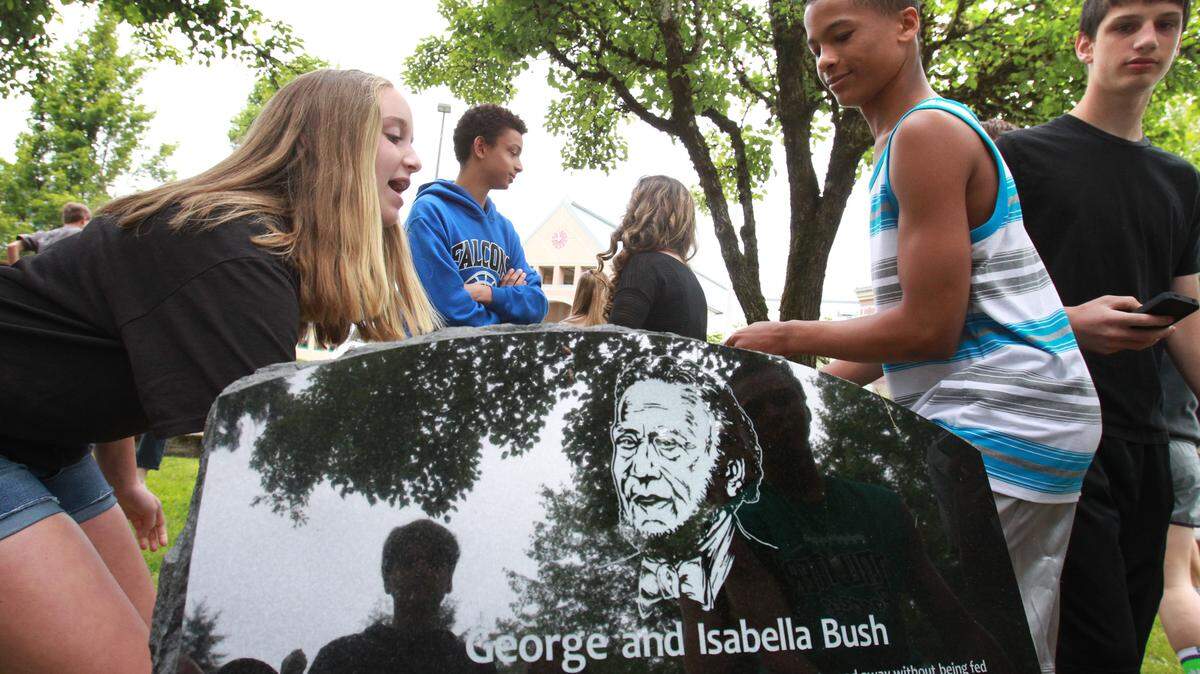
The irony of Thurston’s racist Oregon law was that it caused one of Washington’s most distinguished pioneers to settle in Tumwater. George Washington Bush, the son of a free African-American man and an Irish mother, learned he was guilty of the crime of being black when he arrived in Oregon. So he brought his party north, where the law was not enforced.
George and his white wife, Isabella, had been prosperous farmers and cattle ranchers in Missouri. But before that, George Bush had been a trapper for the Hudson’s Bay Company, so he knew his way around the Northwest. He and Isabella led a group of five white families, including Michael T. Simmons, from Missouri. Bush’s knowledge of the territory, Isabella’s skill as a nurse, and their generosity to their fellow travelers won them deeply loyal friends. Once settled here, Isabella nursed both Native Americans and settlers. The couple were legendary for the productivity of their farm, orchard, and garden. They ran a free hotel for people traveling up the Cowlitz trail to settle Puget Sound, and they provided free food for those who needed it.
When Washington became a separate territory, one of the territorial government’s first acts was to petition Congress to grant George Bush title to his farm, which otherwise would have been denied because of his race. Congress granted that request. But George Bush died in 1863 without ever having the right to vote.
The Bushes’ eldest son, William Owen Bush, served in the Washington territorial legislature, and introduced the bill to create Washington State University. He also continued his father’s legacy as a leader in agricultural innovation.
Members of the Bush family are buried in the pioneer cemetery in Tumwater, and honored by a kiosk near their pioneer home at 88th and Old Highway 99. Bush Middle School is named for George Bush. And African-American artist Jacob Lawrence painted a stunning series depicting his life journey.
Still, we wish we knew more about the Bushes. Many details of their lives are lost in the mists of time. For instance, it’s not clear that George’s middle name was Washington; that may result from a conflation of his identity with another African-American pioneer, George Washington, who founded Centralia.
It would also be wonderful to know more about Isabella, who defied the rising racism of Missouri before the civil war. Nonetheless, we honor their legacy, and are thankful they are part of our history.
This story was originally published February 9, 2020 at 5:45 AM with the headline "Thurston County began with a racist outsider and an upstanding pioneer family."