
Dr. Wood: Now’s the time to make sure everyone is up to date on their vaccines
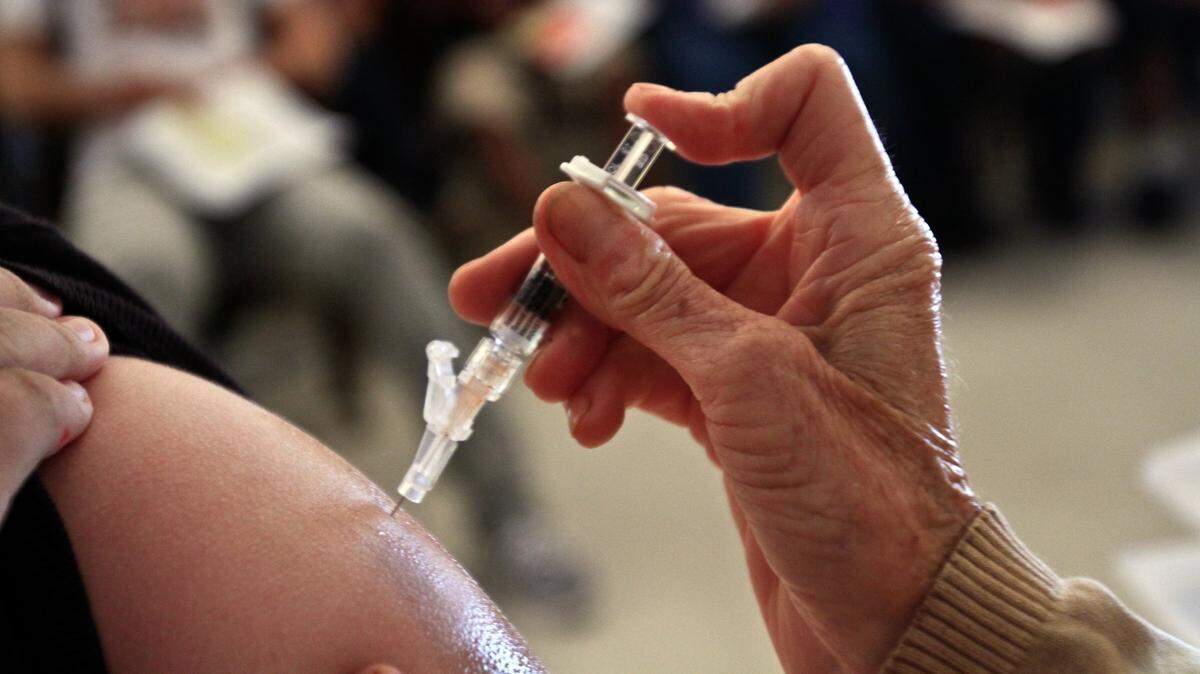
It’s time to begin thinking about back to school again. Part of getting ready for school is making sure all required immunizations are up to date. It’s also a good time for parents to revisit their own immunization records. After all, grown-ups get sick too.
Widespread vaccine coverage in the United States is one of our major public health achievements. Often in health care we fix things after they are broken, but vaccines help us go “upstream” to prevent things from breaking. Vaccines in recent years have helped dramatically decrease vaccine-preventable diseases for which vaccinations are available. For children born in the United States from 1994 to 2013, vaccination will prevent an estimated 322 million illnesses, 21 million hospitalizations, and 732,000 deaths during their lifetimes.
Vaccine preventable diseases are serious, and can be life-threatening. Many of us are familiar with Chickenpox (varicella), but may not be as aware of Whooping Cough (pertussis). Both are highly contagious and pose a risk to people in the community including those who are very young, pregnant women, or those whose immune systems may not be strong. There are a wide variety of diseases that are preventable through vaccination, including:
Cervical cancer (HPV)
Chickenpox (Varicella)
Diphtheria
Whooping Cough (Pertussis)
Tetanus
Polio
Hepatitis B
Hepatitis A
Flu (Influenza)
Measles
Mumps
Rubella
Pneumonia Infections
Meningitis Infections
Not all of these vaccines are required for every person in every place. Check with your health care provider to make sure your child has the vaccines required for school and that you have those that are needed. If they are given at the right time, it means not only protecting yourself, but also the people you care about, including family members, friends, neighbors and grandparents. Many diseases have what’s called an incubation period. That is, a time when you are contagious, but don’t yet look or feel sick. This is often when diseases get spread to others.
According to the World Health Organization, there are five important things to know about vaccines:
Vaccines are safe and effective. All vaccines undergo long and careful review by scientists, doctors, and the federal government.
Vaccines prevent deadly illnesses. Vaccination protects children and adults from serious illness and complications of vaccine-preventable disease.
Any licensed vaccine is rigorously tested before it is approved for use, regularly re-assessed, and constantly monitored for side effects.
Combined vaccines are safe and beneficial. Giving several vaccines at the same time has no negative effect on a child’s immune system. It also saves multiple visits to the clinic to bring a child up to date on their immunizations.
If we stop vaccination, diseases will return. Even with good hygiene, sanitation and access to safe water, infection still spreads. When people are not vaccinated, infectious diseases that have become uncommon quickly reappear. The Immunization Action Coalition states that “when children aren’t vaccinated, they can spread disease to other children who are too young to be vaccinated, or to people with weakened immune systems, such as transplant recipients, or people with cancer. This can result in long-term health complications, and even death, for these vulnerable people.”
It’s important to know that the American Academy of Pediatrics, the American Academy of Family Physicians, and the Centers for Disease Control and Prevention all strongly support protecting children with recommended vaccinations. If you need a copy of your child’s immunization record, contact your health care provider or check the Washington State Immunization Registry 800-325-5599) or by visiting the Washington State Department of Health.
For a list of recommended vaccines for children and adolescents, visit: https://www.doh.wa.gov/CommunityandEnvironment/Schools/Immunization/VaccineRequirements, or talk to your health care provider.
There will be a free back-to-school immunization clinic for students who are entering pre-school through age 18 from 9 a.m. to noon Sept. 22 at the Kaiser Permanente Olympia Medical Center at 700 Lilly Road NE, Olympia. Families do not have to be members of Kaiser, or show proof of insurance. The event is free.
There are many tools people can use to avoid illness, such as washing your hands, or covering your cough and sneeze, but when it comes to preventing serious diseases, using all the tools available is important — and immunizations are a powerful tool.
This story was originally published August 31, 2018 at 7:01 PM.