Washington state perspective: Here are six takeaways from the Tribal Nations Summit
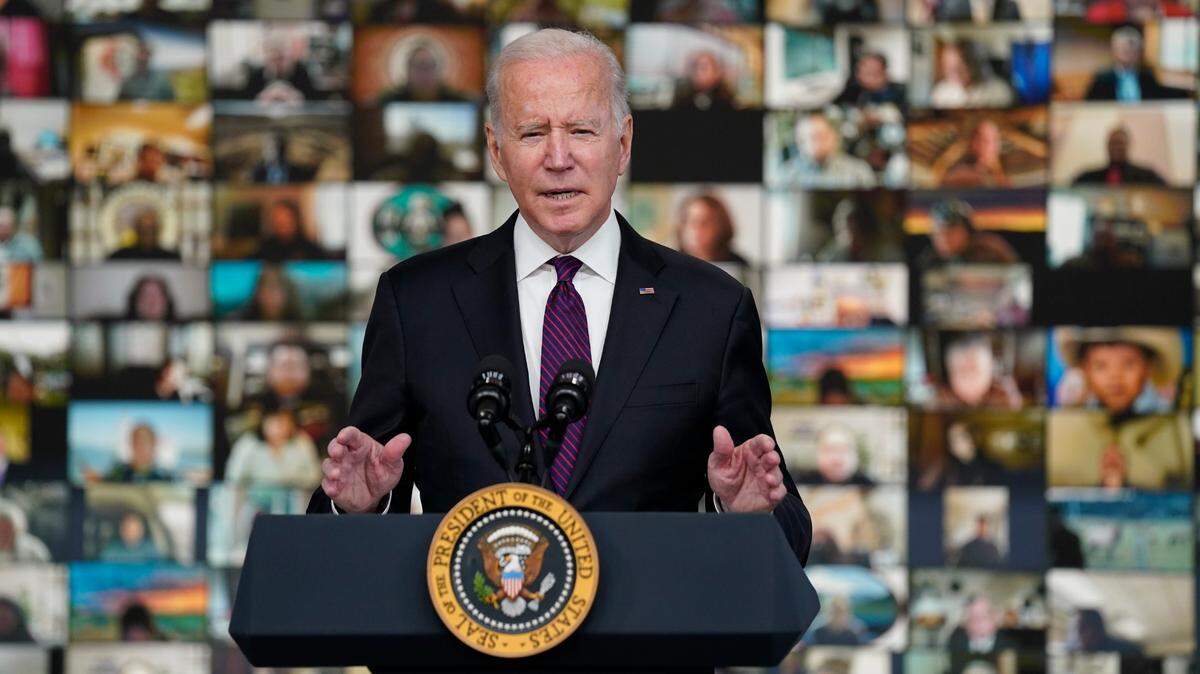
In a two-day virtual conference, the White House hosted the first Tribal Nations Summit since 2016. Leaders from the 574 federally recognized Tribes discussed Tribal education, healthcare, climate change and other pressing issues Nov. 15-16.
After an introduction from Secretary of the Interior Deb Haaland — a citizen of the Laguna Pueblo and the first Native American to hold a cabinet position — President Biden presented five of many new initiatives aimed at “building a new era of nation-to-nation engagement.”
He highlighted the Tribal Treaty Rights Memorandum of Understanding; Sacred Sites Memorandum of Understanding; Indigenous Knowledge Statement and Establishment of Interagency Working Group on Indigenous Traditional Ecological Knowledge; Greater Chaco Landscape Mineral Withdrawal and the Improving Public Safety and Criminal Justice for Native Americans and Addressing the Crisis of Missing or Murdered Indigenous People executive order.
The event continued with panels including various government agencies and Tribal leaders.
Sacred Sites
One initiative highlighted by the Biden administration throughout the summit was the Sacred Sites Memorandum of Understanding.
The memorandum creates a framework through which the departments of the Interior, Agriculture, Energy, Transportation, the Environmental Protection Agency, the Advisory Council on Historic Preservation, the Council on Environmental Quality and the Tennessee Valley Authority can protect Tribal sacred sites.
It also identifies opportunities for considering Tribal sacred sites early in the federal decision-making processes that may result in regulatory and policy outcomes; adds a commitment to incorporate Indigenous knowledge when assessing impacts of federal actions on sacred sites; and provides clear direction on developing best practices for collaborative stewardship and co-management when working with Tribal Nations.
Each agency is required to hold consultations with Tribal Nations when it considers action that could affect a Tribal sacred site and submit an annual report to the White House Council on Native American Affairs.
Beginning in July, Native American activists from across the nation joined in a cross-country totem pole journey from Whatcom County to Washington, D.C., to advocate for the protection of sacred sites where Indigenous communities are leading efforts to halt resource extraction and industrial development.
The pole, created by the House of Tears Carvers of the Lummi Nation, was both a gift to President Biden and a message to his administration to work with Tribes.
The two-week tour included stops at Snake River on the Washington-Idaho border, Bears Ears in Utah, Chaco Canyon in New Mexico, the Black Hills in South Dakota, the Missouri River in South Dakota, Standing Rock in North Dakota, Line 3 oil pipeline in Minnesota and Line 5 pipeline in Michigan.
Since the totem pole journey’s completion, Biden has restored protections for Bears Ears in October and recently proposed a 20-year drilling ban in Chaco Canyon.
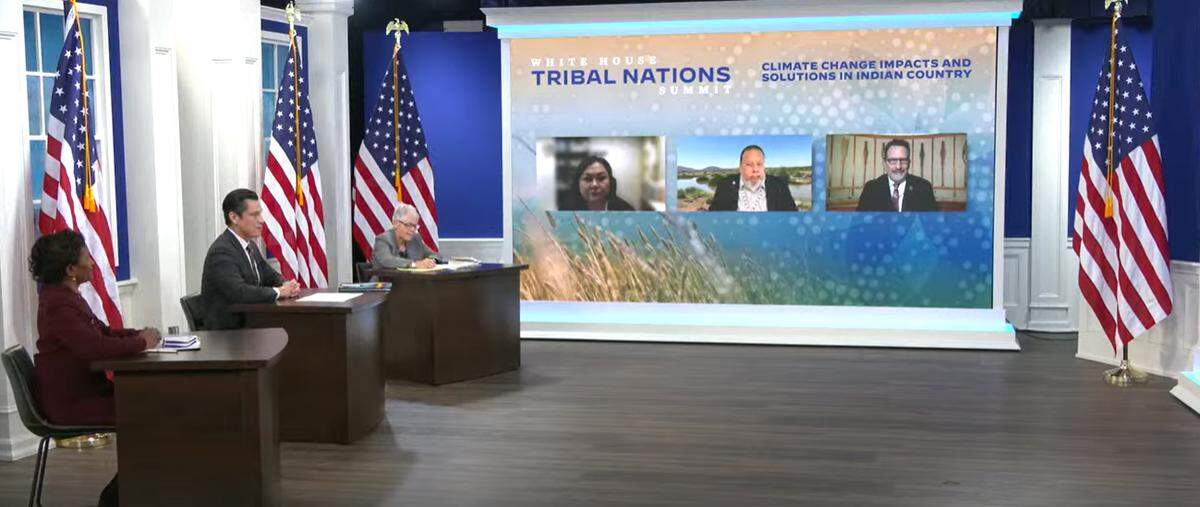
Suquamish Chairman highlights salmon crisis, calls for proactive engagement
Suquamish Tribal Chairman Leonard Forsman shared that Tribes always have fought for their treaty rights and against climate change, even before it was called “climate change.”
After summarizing the Boldt decision — the 1974 case that affirmed Tribes’ rights to 50% of harvestable fish — Forsman said Northwest Tribal issues are similar to that of their spiritual cousins, the southern resident orcas. They all need salmon to maintain their way of life.
“We are in a crisis situation with our salmon runs,” he said. “We’re willing to work, we’re willing to go out, we’re willing to take the political heat sometimes that we have to take... and being the warriors to protect our waters and our ecosystems, but we really believe that we need investment of not only money, but also of time and commitment to that.”
Forsman affirmed the federal government not only has an obligation to uphold treaty rights, but also protect them.
“As we exchanged our lands, our original homelands, for these opportunities to fish and hunt in our usual and accustomed areas, there’s a clear responsibility for the U.S. to protect those. To be blunt, we’ve been doing a lot of this on our own, and we’ve been looking to the United States to help us,” Forsman said.
He stated the Biden administration needs to encourage national, state and local agencies to be more proactive in engaging with Tribes on climate issues and maintaining their natural resources.
Forsman said there’s been a lot of success in intergovernmental relationships in Washington state surrounding wastewater and storm water issues.
“We’ve also had a lot of progress on climate change legislation here in the state which is, I think, gonna hopefully be a great model for the rest of the nation,” he said.
Protecting the land, removing dams
In continuing his time on the climate change panel, Forsman discussed the “successful” Buy-Back Program — The Department of the Interior’s program which implements the land consolidation component of the Cobell Settlement, providing $1.9 billion to consolidate fractional interests in trust or restricted land within a 10-year period. It is set to expire in November 2022 and as of March 29, 2021, approximately $131 million of funding remains.
“Reinvesting in that gives us opportunity to protect our large fractionated allotments that hold oftentimes sacred sites and ecosystems and forests that we can manage in a better way if the Tribes were able to get more control over that,” he said.
With that in mind, he said he was happy to see the Infrastructure bill provides funding for fish barrier removal, but there needs to be more investment.
“And also consideration of removal of those antiquated hydroelectric dams, especially on the Lower Snake River. The (Affiliated Tribes of Northwest Indians), which I’m president of, has an initiative to try and get those dams removed in order to restore a wild run of Chinook and other species that would be very important to the cultures of the Tribes of the Columbia River... and for the orcas that also feed on those salmon.”
Forsman concluded his time by saying he was thankful for the Biden administration bringing back the summit and was looking forward to the implementation of the president’s initiatives, especially those on treaty rights support and traditional ecological knowledge, or wisdom held by Tribes on their ancestral natural resources and how to care for them.
Restoring commitments and lasting partnerships
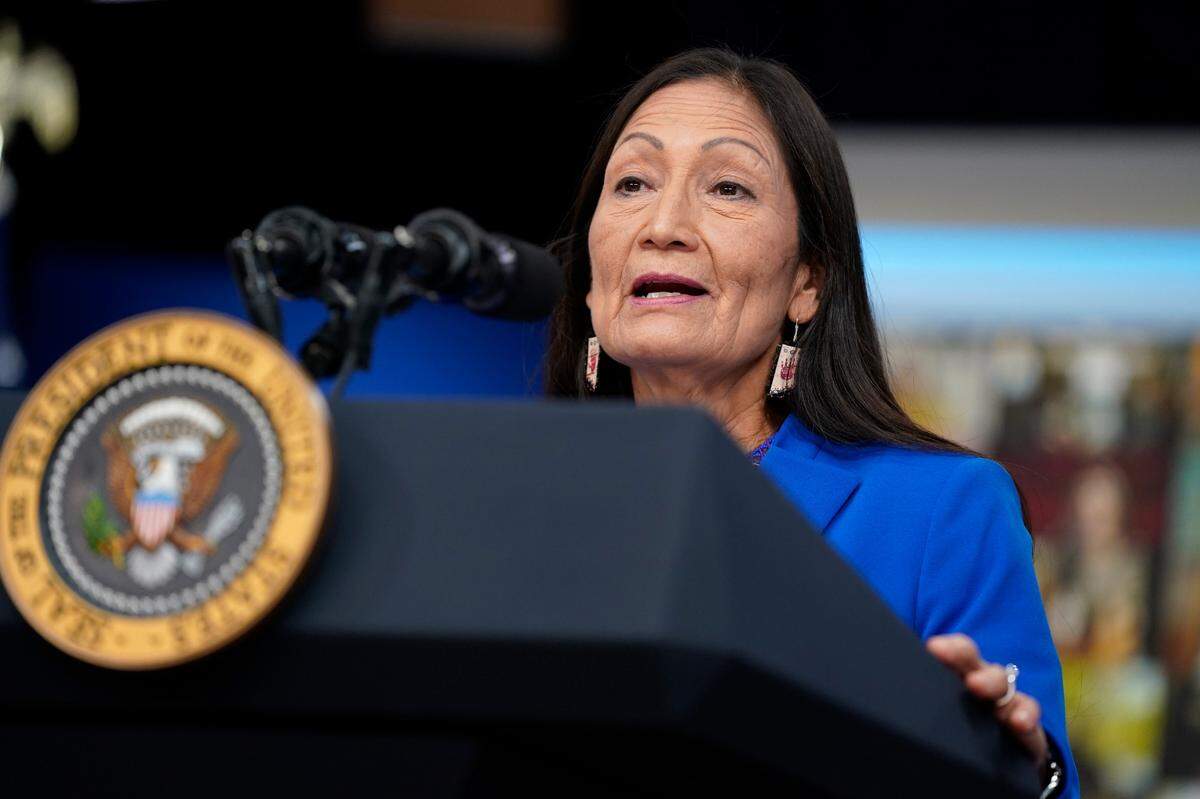
Gina McCarthy, the first White House National Climate Advisor, said the Biden Administration is committed to restoring the lasting partnerships between Tribal nations and the White House.
As former administrator of the Environmental Protection Agency under President Obama, McCarthy noted that she was particularly excited to hear Forsman discuss the issues of the Columbia River.
McCarthy said she was grateful to see the administration restoring science as the fundamental practice in policy making and the initiative on Indigenous traditional ecological knowledge.
“President Biden has told each and every one of us repeatedly and in no uncertain terms that Tribal nations are partners. We are to respect you and develop these relationships and that you will not be the last to be considered, but rather the first,” she said.
Washington Tribes spotlighted in climate panel
In her first Tribal consultations as Chair of the White House Council on Environmental Quality, Brenda Mallory sat down with Washington state Tribal leaders in October.
Hosted by the Yakama Nation and later the Nisqually Indian Tribe, Mallory discussed federal investments in Tribal communities and conservation efforts with Tribal leaders across the state, the Northwest Indian Fisheries Commission and U.S. Reps. Derek Kilmer and Marilyn Strickland.
Mallory said that she heard from Tribal leaders about the importance of partnership and listening. She said one of the themes in her visits was recognizing traditional ecological knowledge and how difficult it can be for federal agencies to do so.
“Because climate change disproportionately affects Native communities, it is now more important than ever to assure that the federal government collaborates with Tribal nations and Native communities to better understand the impacts of climate change on ecosystems, landscapes and subsistence resources and to identify durable and sustainable measures to respond to those impacts,” she said.
Mallory highlighted the Bipartisan Infrastructure bill, which provides $250 million for Tribal climate mitigation and adoption funding to catalyze more work with Tribes. She also noted that the Bureau of Indian Affairs is hiring Tribal climate liaisons in regions across the country to work with the Department of the Interior’s Climate Adaptation Science Centers.
She said that during her consultations, she heard about how climate change needs to be worked on at regional level because national consultations miss important and unique issues in each region.
She reiterated that her consultations with Washington Tribes further cemented what the Biden administration understands: traditional ecological knowledge is invaluable, the Tribes own it and control who accesses it and the federal government is to be a cooperative partner in what should be a mutually beneficial relationship.
Missing and Murdered Indigenous People Crisis
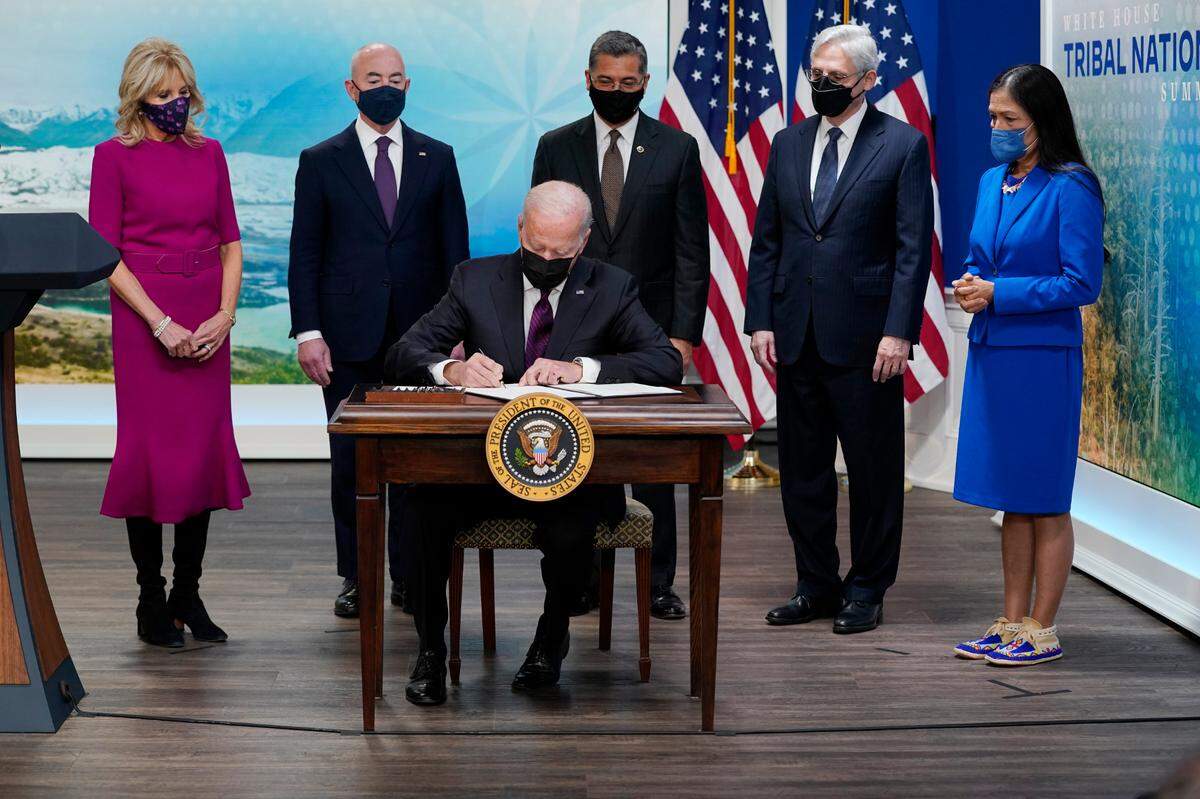
As part of the summit, Biden signed a “long overdue” executive order directing the Department of Justice, Department of the Interior and Department of Homeland Security to pursue strategies to reduce crime.
The order — “Improving Public Safety and Criminal Justice for Native Americans and Addressing the Crisis of Missing or Murdered Indigenous People” — also aims at strengthening Amber Alert programs, training federal agents and appointing liaisons to connect with family members and the community.
The Missing and Murdered Indigenous Women crisis continues to be a big issue in Washington state.
A 2018 report by the Seattle Indian Health Board found that Washington state had the second-highest number of cases of missing and murdered Indigenous women in the U.S.
Of the 71 urban areas studied, Seattle had the highest number of murdered Indigenous women and Tacoma had the highest number of missing cases.
In September, the Department of Justice selected the Muckleshoot Indian Tribe as one of 12 Tribes to participate in the expansion of the Tribal Access Program for National Crime Information, which provides Tribal governments with means to access, enter and exchange data with national crime information systems, including those maintained by the FBI.
Responding to a report released by the U.S. Government of Accountability Office last month, Senator Maria Cantwell from Washington state, who in 2019 joined a group of 16 bipartisan legislators calling for the study, said improvements to data collection are necessary to understand and address the crisis.
“The Department of Justice needs to work with law enforcement, states and Tribes to ensure every missing and murdered indigenous person is accounted for. This is critical to preventing future cases and finally making progress on this epidemic,” said Cantwell in a press release.
The Government of Accountability Office spoke with Tribal governments and their law enforcement agencies in seven states, including Washington, to obtain their perspectives on how federal law enforcement agencies have investigated or assisted local agencies in investigating these cases.
Additionally, Washington state Attorney General Bob Ferguson has announced the Missing and Murdered Indigenous Women and People Task Force will hold its first meeting Thursday and Friday Dec. 2 and 3.
Co-hosted with Yakama Nation, the meeting will be open to the public and will include an opportunity for people to provide comments.
BEHIND THE STORY
MOREPlease help support this reporting
Natasha Brennan covers Washington state tribes’ impact on our local communities, environment and politics, as well as traditions, culture and equity issues, for McClatchy media companies in Bellingham, Olympia, Tacoma and Tri-Cities.
She joins us in partnership with Report for America, which pays a portion of reporters’ salaries. You can help support this reporting at bellinghamherald.com/donate. Donations are tax-deductible through Journalism Funding Partners.
You can sign up for her weekly newsletter here.
This story was originally published November 25, 2021 at 5:00 AM with the headline "Washington state perspective: Here are six takeaways from the Tribal Nations Summit."