How is distracted driving data compiled when it seems like everybody is on their phone?
Question: I’ve heard the Traffic Safety Commission talking about how most drivers aren’t driving distracted (something like nine out of 10.) I find that hard to believe. When I look around I see people on their phones all the time. How’d you get those numbers?
Answer: Before I explain how we got the numbers, let’s consider why you don’t believe them. If it’s any comfort, you’re not alone. Many people, when they hear the statistic that more than nine out of 10 drivers are focused on the road, reject the data as somehow flawed.
I’m guilty of it myself.
Last week, while in a city I don’t visit often, I walked along the main thoroughfare and thought to myself, “Wow, every driver in this town is on their phone.” To confirm my observation I started counting. After 50 or so vehicles, I counted five drivers that were on their phone or otherwise distracted, roughly in line with the statewide results.
The problem here is the human brain. We’re wired to notice and remember the outlier rather than the ordinary. When drivers keep their focus on the road, there’s not much to notice. The distracted folks stick out. This wouldn’t be a big deal, except that misperceiving the frequency of a behavior influences our own behavior.
A study in Minnesota found that 70% of people think most drivers speed 10 mph over the limit, but in reality only 15% do. Those who believed most drivers speed were more likely to do it themselves.
We tend to behave according to perceived social norms, even when we’re wrong about them. If you think most people are on their phones while driving, you might be more inclined to pick it up to respond to a call or text.
As to how we got the numbers, it’s pretty simple. Trained observers went to randomly sampled locations all over the state and counted distracted drivers.
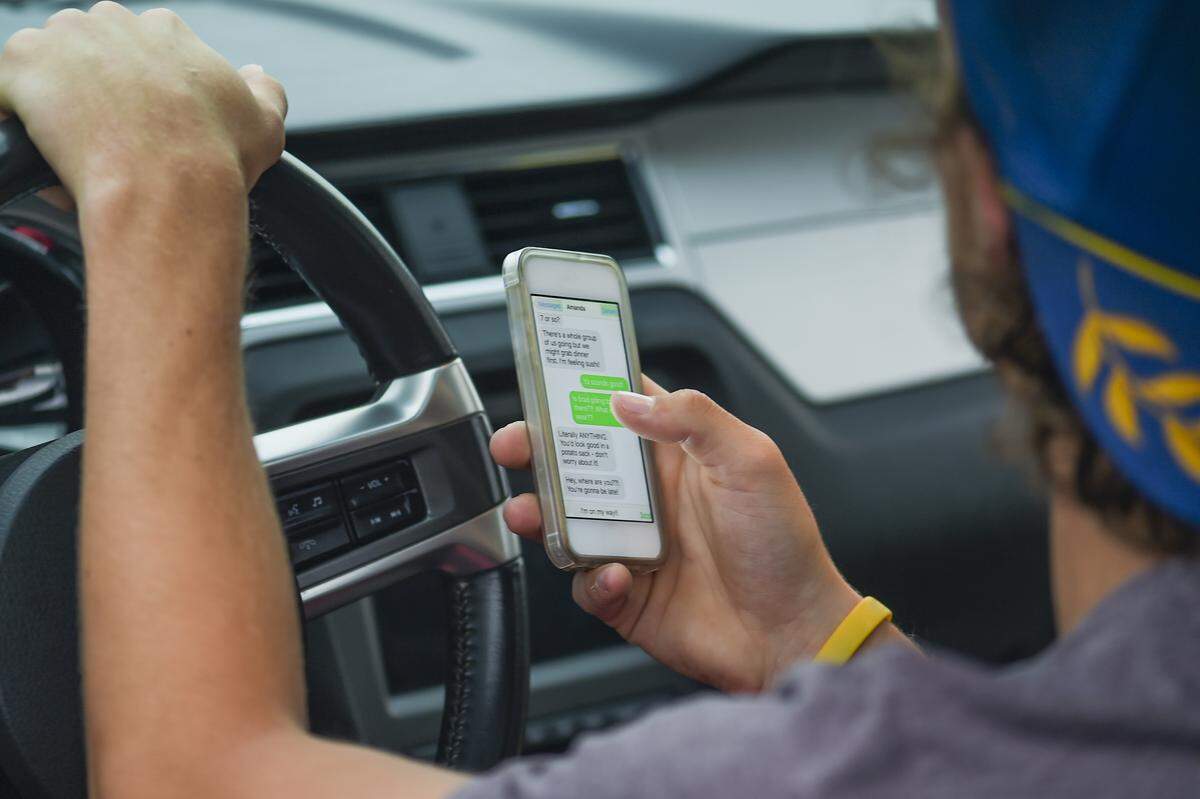
Last year, after counting thousands of vehicles, the observational study shows that about 7% of drivers were distracted. That’s down from a high of about 10% in 2016, when Washington first started counting.
That also correlates with a decrease in fatalities involving distracted drivers. In 2015, a third of all traffic fatalities involved a distracted driver. Since then that rate has been declining, with approximately 18% of fatal crashes in 2020 involving a distracted driver.
I should point out that the seven percent number is a “moment in time” statistic. It doesn’t mean that 93% of us never get distracted. We still have some work to do there.
In a 2019 survey of Washington drivers, 35% said they frequently use a cell phone while driving, contrasting 62% of drivers that said they frequently wait to use a phone until they’re out of the flow of traffic.
Even there, most of us don’t usually get distracted by our phones while driving.
Doing the math, the above data suggest that using your phone while driving roughly triples your risk of a fatal crash.
As you might guess, the type of distraction is part of that equation (texting is worse than talking), and driver age is a big factor. For young drivers (I know, I’m always pointing out young drivers have it worse) talking on the phone quadruples their risk, and texting increases their risk of a fatal crash by eight or more times.
Whatever your age, distraction is one if the top factors in fatal crashes, but it’s solvable. If you’re one of the outliers, it’s time to put away the distractions and make driving your priority.
This story was originally published April 4, 2022 at 5:00 AM with the headline "How is distracted driving data compiled when it seems like everybody is on their phone?."