
Why are hellebores perfect for Pacific Northwest gardens? Let us count the ways
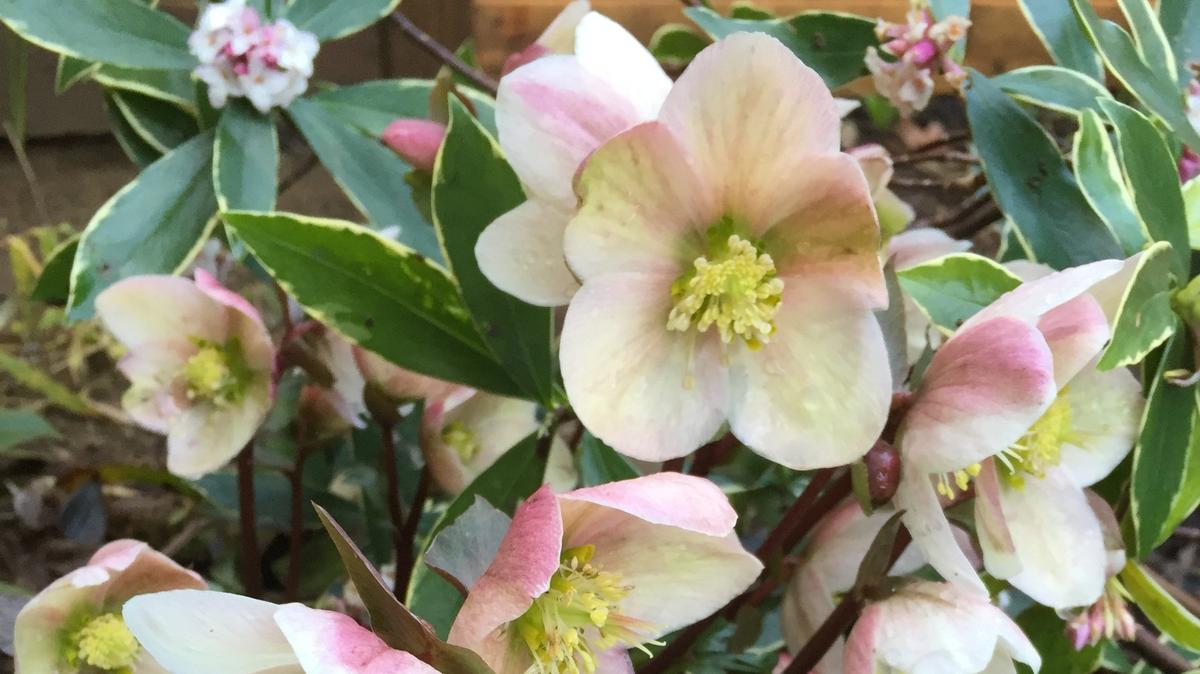
The second week of January has us deep into the dormancy of winter, but there are signs of spring if you look. Buds are swelling, bulbs are poking their pointed tips up out of the soil and there are always the hellebores flowering despite snow and sleet and frozen soil.
This month at the Tacoma Home and Garden Show Jan. 2-30, I will be speaking about “The Heavenly H Plants: Hellebores, Hydrangeas and Heucheras,” perennials that together can offer year-round color.
Here are the most asked questions about hellebores:
Q. What is a hellebore?
A. Hellebores, also called Christmas Rose and Lenten Rose, are heavenly plants perfect for Western Washington as they love cloudy days, rain and cool summers like ours. They have thick green leaves shaped a bit like maple leaves and, depending on the variety, send up bell-shaped blooms from December until March.
Q. What about deer and slugs? Will they eat hellebores?
A. Nope. These tough plants are deer-, slug- and even drought-resistant.
Q. Will all hellebores return year after year without replanting?
A. Yes, hellebores are perennial so as long as you provide them with well-drained soil and enough moisture to establish a root system, all the different hellebore varieties will survive to flower winter after winter.
Q. Do hellebores need sun or shade?
A. Most hellebores do well in part shade but these adaptable plants will bloom in deep shade and some varieties such as the Corsican Hellebores with lime-green blooms will thrive in full sun and sandy soil.
Q. I received a potted hellebore for Christmas wrapped in foil to enjoy indoors. When I can plant it outdoors in my garden?
A. Find a shovel and dig a wide hole as holiday gift hellebores want to go back outdoors as soon as possible. Place the plant outside at night immediately so it becomes used to the cold. Anytime the ground is not frozen, you can plant a hellebore.
Find a spot where the hellebore is protected from the hottest afternoon sun and dig a hole that is three times as wide as the potted plant and twice as deep as the roots. Remove all the rocks from the hole and make sure the remaining soil is loose. Hellebores have thick fleshy roots that, if allowed to spread out into loose soil, will absorb water and moisture on their own, making hellebores a very undemanding plant.
Hellebores love it if you add compost or some other organic matter to the planting hole.
Q. What varieties and what colors can I find if I want to add some hellebores?
A. Every year new varieties are offered, many by local growers in the Skagit Valley that supply chain stores and independent nurseries. Many are pure white or pale, but others are deep purple, lavender, pink, speckled, spotted and change color as they age
As a bonus, hellebores can reseed in your garden and the baby plants can bloom in different shades as the mother.
Marianne Binetti has a degree in horticulture from Washington State University and is the author of several books. Reach her at binettigarden.com.