
This recipe for ‘bulb lasagna’ will create a long parade of spring color in your yard
November is the month to prepare for spring.
This is the month to remove fallen leaves from the lawn and pile them up behind shrubs or save them in plastic bags. In the spring they will have transformed into leaf mold, and you can use them on a weedy patch of open soil to smother the weeds.
November is also the month for planting bulbs that will blossom in spring. Act now and your garden will give you something to look forward to at the end of winter.
Cooking hearty stews and soups may be the first thing that one thinks about when “November recipes“ are shared. But this week I offer a recipe for bulb lasagna that could become your favorite way to celebrate the month of November.
November bulb lasagna recipe
Ingredients: 12 to 30 spring flowering bulbs with a mix of tulips, dwarf daffodils and crocus
Container: Any pot with drainage holes that is at least 14 inches deep. Container must be able to withstand winter temperatures without cracking. I have used metal washtubs and garbage cans with added drainage holes with great success. You also can just uproot potted summer annuals and replant your patio pots with bulb lasagna.
Cooking time: Needs 4 to 6 weeks of cold weather to chill the bulbs, followed by cool spring weather as bulbs are transformed into a blooming spring bouquet. (Confession: I have planted bulbs in pots as late as January and still had good results.)
A Pesky Garnish: After planting the bulbs in layers, you can top off the potting soil with a sprinkle of red pepper flakes or chili powder. This will help to keep squirrels, cats and deer away.
To assemble:
Add at least 4 inches of potting soil to the bottom of the pot. The largest and latest to flower bulbs go in first, so in a bulb mix this will be the tulip bulbs.
Arrange the bulbs so they sit on their fat bottoms with their pointed noses sticking upward.
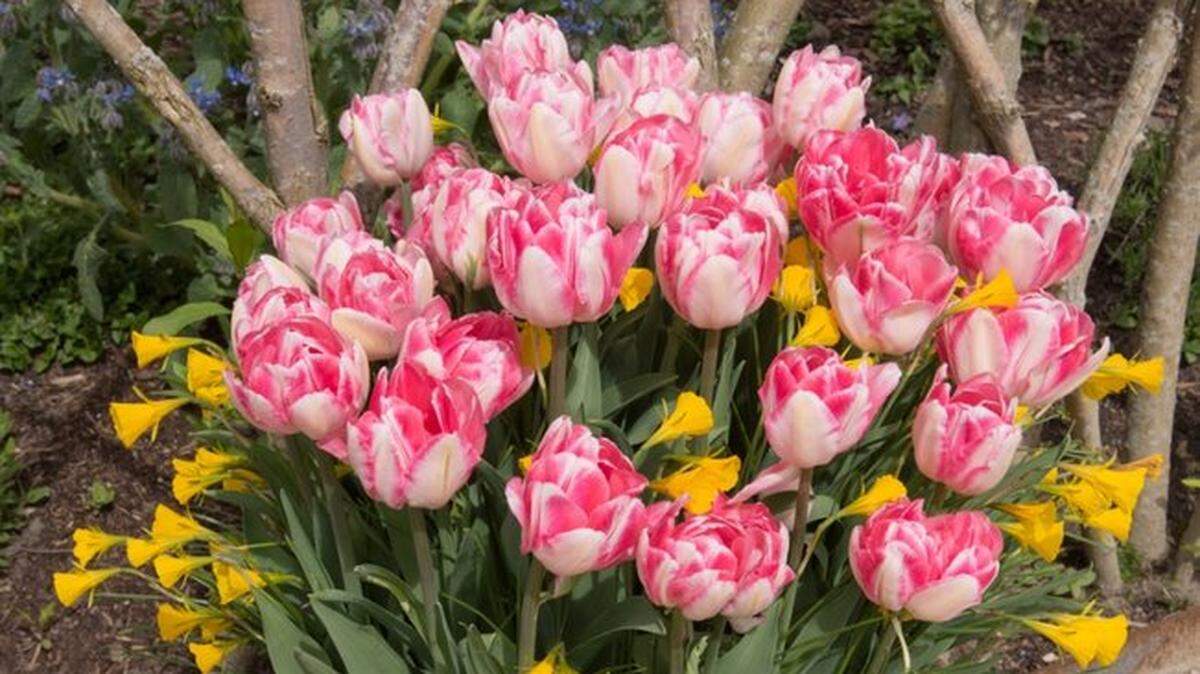
You can put bulbs in a pot quite close together, but not touching. Depending on the size of your pot, use from 6 to 15 tulip bulbs. Arrange along the edge of the pot leaving the middle open. My favorite tulip to use in pots is the double flowering pink Angelique tulip. It has a very long bloom time.
Cover this first layer of bulbs with 4 inches of potting soil.
Now add the second layer of dwarf daffodil bulbs. Place the daffs more toward the center of the container as the tulip bulbs will emerge along the outer side of the pot after the daffodils bloom.
Cover this middle layer of daffodil bulbs with more potting soil.
Add the final layer of small bulbs (crocus or dwarf iris or snowdrop bulbs) so that they are covered with at least 4 inches of potting soil.
You can add a decorative mulch of pine cones or wood chips or poke some holly branches into the soil.
Set the pot on a porch or patio where it will receive rain and experience cold weather.
In March, enjoy the first blooms from the crocus, iris and snowdrops, followed by an April flush of dwarf Tete a tete or February gold daffodils and ending with a May display of tulips. The late blooming tulips will shield the center display of fading daffodil foliage. This recipe guarantees three months of blooms and a winter of expectation.
Now that’s what I call November recipe that satisfies.
Marianne Binetti has a degree in horticulture from Washington State University and is the author of several books. Reach her at binettigarden.com.
This story was originally published November 5, 2022 at 5:00 AM.