
Enjoy the first signs of spring — but don’t start pruning cold-sensitive plants
The beginning of February is the time to look for signs of spring: snowdrop and crocus bulbs pushing up through the soil, early flowering shrubs such as forsythia and witch hazel ready to burst into bloom, and even the sound of croaking frogs when the night temperatures rise.
This is not the time to cut back cold-sensitive plants such as salvia, rosemary and hibiscus. This is a good week to prune pee gee hydrangeas (Hydrangea paniculata) and the other hydrangeas that flower on new wood such as Hydrangea arborescens (Lime Light and Incrediball) with the huge white blooms. Do not prune the old-fashioned Hydrangea macrophylla with the round flowers that bloom blue in our acid soil. The common hydrangea flowers on two-year-old wood so cutting the branches back now would be cutting off the flower buds.

Q. I have a houseplant question. My indoor hibiscus has what looks like clear crystals growing on the stems and leaves. They are not moving so do not appear to be insects. Why? — P.P., Enumclaw
A. Crystals on houseplants are a sign of too much watering. The plant is pumping out the excess salt that builds up in the soil. This often happens in winter when plants go dormant, but we keep watering them. The cure is to flush the extra salt out of the potting soil by watering so that the water pours from the drainage holes. Then repeat. Try watering with distilled water which will have less salt.
Do not fertilize in the winter as the plants go to sleep when the days are shorter and do not take up the plant food as quickly. Most indoor plants do fine with feeding just once a year in spring or summer. Do not water until the top one inch of soil is dry to the touch and make sure the pot does not sit in drainage water.
I believe your houseplant will recover from this drinking problem — with some tough love and less to drink.
Q. I bought a beautiful indoor plant called croton in September. The colorful foliage had deep orange stripes and yellow spots. Now the leaves are all turning green. What happened? — B.H., Renton
A. Winter happened. A lack of sunlight will cause the colorful croton to revert to green. Move the plant closer to a bright window, especially during the winter months. Direct sun can burn the leaves of a croton but bright light will wake up your croton and the new growth will once again be as colorful as spring time.
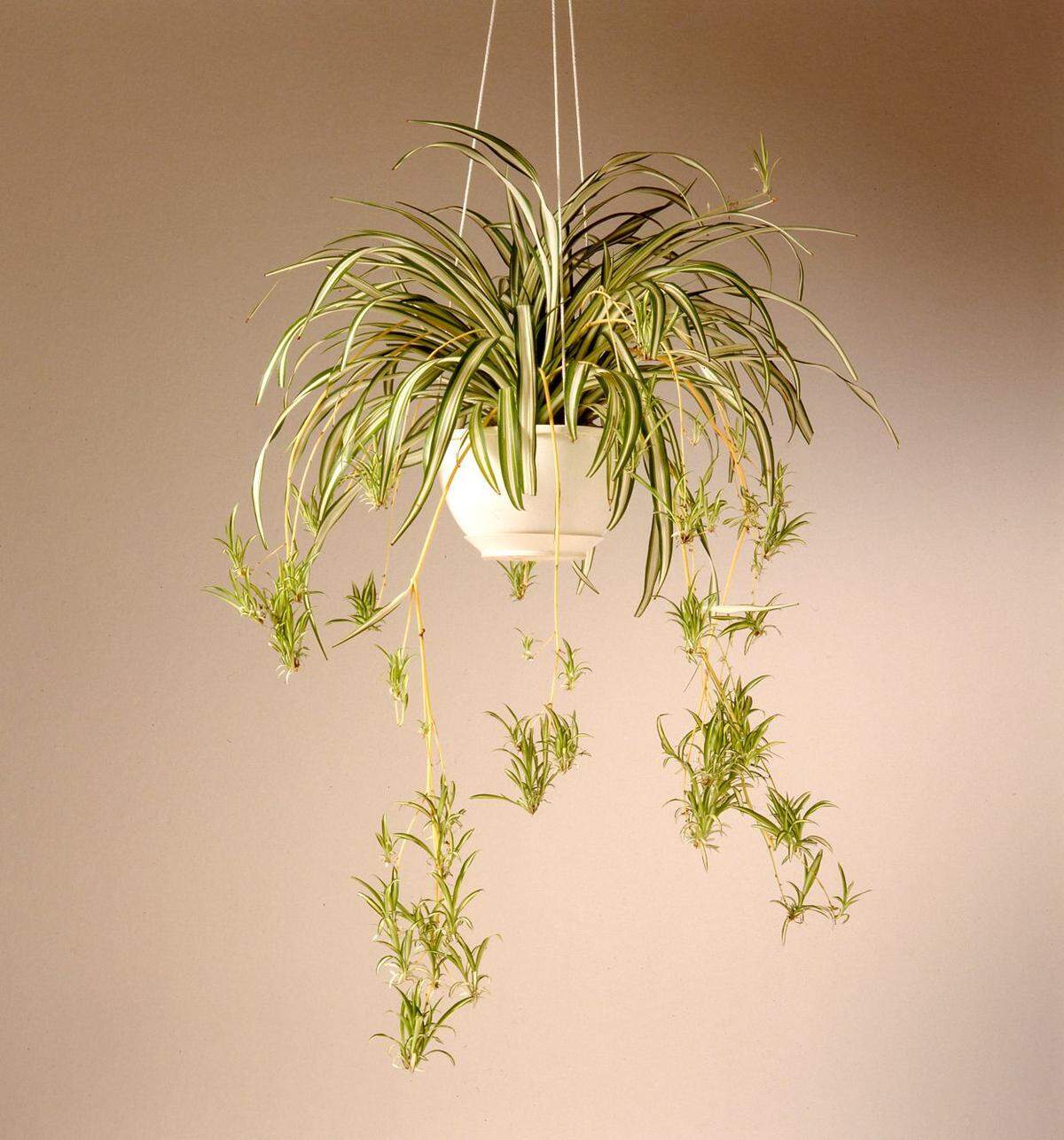
Q. I have a spider plant as a houseplant. It does not make the aerial shoots that have baby spider plants at the tips. How can I encourage new shoots? The plant is otherwise healthy, and I just repotted it into a larger container. — B., Email
A. Spider plants (Chlorophytum) need to be root-bound or stuck into a small pot to encourage lots of aerial shoots. If you just repotted, I suggest you unpot your houseplant and put it back into a smaller container. You want to see the roots poking out of the drainage holes and pushing from the soil before you repot this type of houseplant. Give it a year in a small pot and those babies will appear.
Marianne Binetti has a degree in horticulture from Washington State University and is the author of several books. Reach her at binettigarden.com.