
Tips for spending less but growing more in your Western Washington garden
Gardening and landscaping can be expensive. Not just the purchasing of trees, shrubs and flowering plants but the soil, pots and fertilizers that can fill a cart and empty a pocketbook at the garden center.
Here are some of my best tips for spending less and growing more in your garden.
Penny-pinching pointers for plants in pots
Reuse your potting soil. Yes, you can use the same potting soil for several years, but first you must renew it by digging into that pot and turning the soil so that it is once again fluffy and full of air. Remove the roots of old plants too. Make sure your reach down to the drainage holes to ensure they are not plugged.
Add a trowel full of compost to old potting soil if it seems very lightweight. Organic matter is full of the living soil microbes that help plants absorb nutrients, and old soil needs a bit of organic matter.
Fill large pots part way with empty water bottles or recycled plastic nursery pots if you are growing annuals. Annuals are plants that die in the winter after giving you a summer of color. They need 8 to 12 inches of soil for their roots, so you don’t need to fill a deep pot with all soil. (Your plants will love it if you do give them a deeper root run, but pinching pennies may be more important than pampered plants.)
Adding recycled bottles to the bottom of large pots will keep them lightweight and help with drainage. Just know that the less soil in a container, the more often you will need to water.
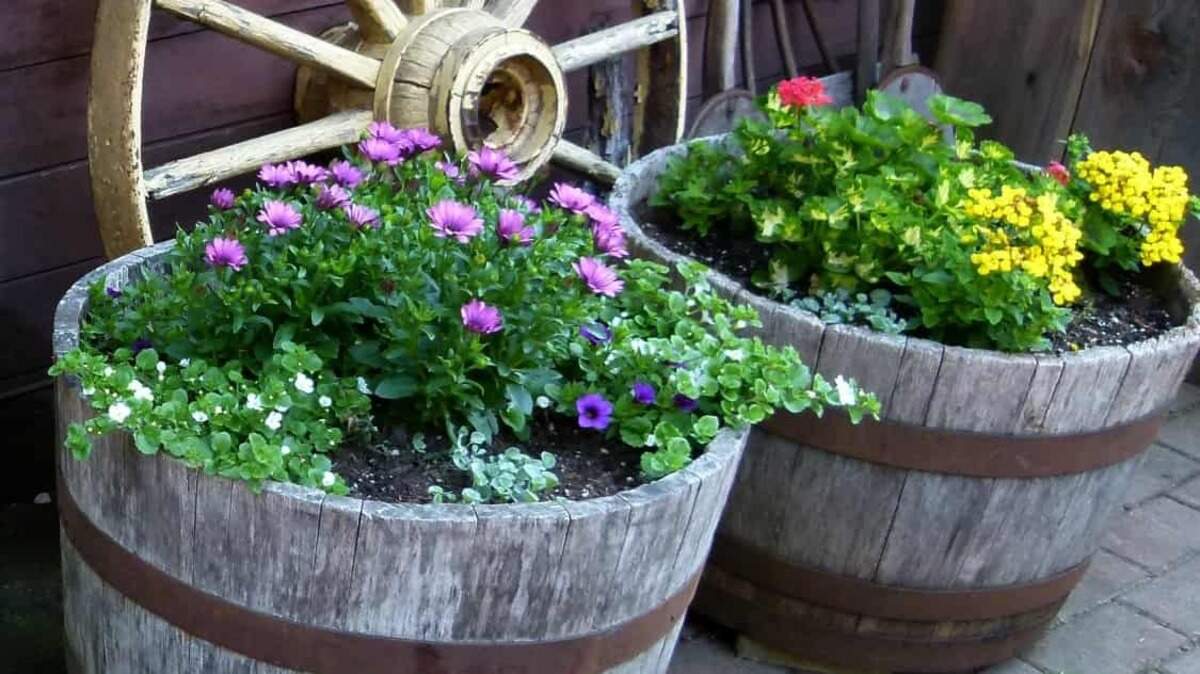
Recycle and reuse containers you have around the house. Creative containers are free for the making if you consider using metal wash tubs for bulbs and lilies, old colanders for herbs and succulents, or even metal trash bins for layering bulbs and annuals.
Anything that you can drill drainage holes into can be used to grow plants, so visit the thrift store or scavenge your own cupboards. Old baskets can be used as coverings for cheap plastic nursery pots, and traditional wood, ceramic or clay pots can be found at yard sales.
Shrubs in tubs — then into the landscape
If you are rethinking your landscaping and score some new shrubs or small trees at a sale price or from a friend, consider growing them in large tubs or pots to beef up the root system while you decide where you want to use them in the landscape.
A young Dwarf Alberta spruce or maple in the middle of a container, surrounded by colorful annual flowers makes a great focal point in a patio pot for a few years. Then transplant the specimen into the landscape once it outgrows the container.
Easy ways to amend lousy soil
Leaf mold is laying about free for the taking. The partly rotted foliage from small leaf maples, beech and birch trees is called leaf mold when you can see the white filaments of mold that are breaking down the fallen foliage from last summer’s trees. These partly decomposed leaves make a great soil conditioner and help the soil to hold moisture.
Making your own compost is the ultimate garden hack to save money, but if you lack the room for compost making, collecting leaves is the next best way to improve your soil for free. In the fall, collect fallen leaves in plastic garbage bags (ask the neighbors if you don’t have any leaves of your own) and poke the bags full of air holes so they can rot over the winter. In spring, use these partly rotted leaves to improve the soil and mulch your plants.
Free plants from cuttings
You can take stem cuttings from hydrangeas, boxwood and hundreds of other shrubs this month and poke the cut end into moist soil after removing the bottom leaves from the bottom half of the cutting. A row of lavender or a hedge of boxwood may take a few years to grow into maturity, but you get the satisfaction of growing new plants from old, and an entire hedge from just one plant.
Beg and barter
Some great free plants are available if you are willing to dig them out of someone’s crowded landscape. Offer to remove unwanted shrubs, perennials and groundcovers from other landscapes using social media in your area or word of mouth.
Many perennials such as astilbe, delphiniums and hosta do better if dug up and divided every few years. Ground covers such as ajuga, saxifrage and black mondo grass also need digging and dividing to keep them tidy. Offer your muscle in exchange for a piece of a perennial. This is a great way to collect hard-to-find plants or enthusiastic groundcovers to fill in a new landscape.
Marianne Binetti has a degree in horticulture from Washington State University and is the author of several books. Reach her at binettigarden.com.