Will Americans get more financial relief from Biden or GOP COVID plan? Study compares
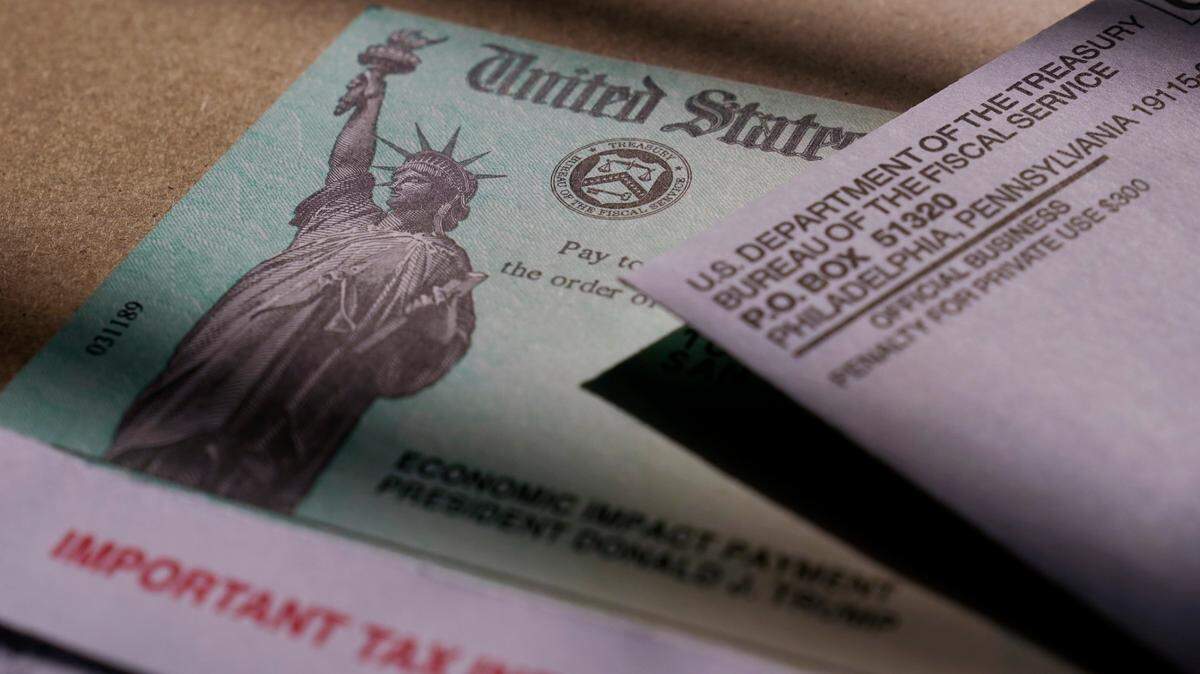
President Joe Biden’s COVID-19 relief plan would provide billions more in direct relief to American families — and a bigger boost to the economy than a counteroffer from Republican Senators, a study found.
The Brookings Institution released studies on both plans, analyzing how much each would increase Gross Domestic Product, or GDP, this year and in 2022, and how much aid each would deliver in different categories, including containing the virus and vaccines, state and local aid, direct aid to families, direct aid to “financially vulnerable households” and aid to businesses.
Biden unveiled his $1.9 trillion relief plan in January, but some lawmakers have balked at the cost and questioned its timing given the passage of a $900 billion relief package late last year. On Monday, a group of 10 Republican senators unveiled a slimmed-down, $618 billion counteroffer that includes less aid and smaller stimulus checks narrowed to people with a lower income threshold.
The study analyzed each proposal by dividing the plans into the four categories and applying a “fiscal multiplier,” or an “estimate of the increase in real (inflation-adjusted) GDP for each initial dollar of spending” to calculate the effect on GDP.
Here’s what the study found about each plan:
Biden’s plan
▪ Direct aid to families: $600 billion. That includes the $1,400 stimulus checks to most Americans and expansion of the child tax credit. Individuals making up to $75,000 a year or couples making up to $150,000 a year received the full payments during the first and second round of stimulus checks — with payments then decreasing as income rises.
▪ Aid to “financially vulnerable households: $400 billion. That includes the additional $400 per week in unemployment benefits and extending pandemic unemployment programs.
▪ COVID-19 containment and vaccination: $750 billion
▪ Direct state and local aid: $350 billion
▪ Aid to businesses: $150 billion, including loans, grants and paid sick leave
The study estimates that Biden’s plan would increase the GDP by 3.6% above the Congressional Budget Office’s baseline level projections, which assume no additional fiscal support, by 2021, and by 2.1% next year.
That would put GDP above pre-pandemic levels, meaning “some of the economic activity lost during the pandemic would be made up,” Brookings says. That could in turn put “upward pressure on inflation, which the Federal Reserve has said would be welcome.”
“However, the temporary surge in economic activity would also create a risk that the return of GDP back down to potential could create a difficult economic period after 2021.”
The Biden administration has said its relief plan is tailored to the economic crisis the country is facing, and the president has signaled he’s open to passing at least part of it through a process called budget reconciliation if a bipartisan deal can’t be reached.
Reconciliation allows “expedited consideration” of legislation on spending, taxes and debt. Passing relief through reconciliation would require only a simple majority, rather than 60 votes. Democrats hold a narrow majority in the U.S. Senate, which is split 50-50 between Republicans and Democrats with Vice President Kamala Harris serving as the tiebreaker.
GOP plan
▪ Direct aid to families: $220 billion, including $1,000 stimulus checks. The Republican plan would provide more “targeted” direct relief than Biden’s — meaning individuals making up to $40,000 a year and couples making up to $80,000 a year would be eligible for the full payments. The payments then decrease as a person’s annual income increases, capping out altogether at $50,000.
▪ Aid to “financially vulnerable households: $144 billion. That includes an additional $300 per week in unemployment benefits through June and nutrition assistance programs.
▪ COVID-19 containment and vaccination: $204 billion, including money for vaccination, testing and tracing, child care and reopening schools.
▪ Direct state and local aid: The Republican plan does not include state and local aid.
▪ Aid to businesses: $50 billion. That includes small business loans and grants.
Brookings estimates the Republican plan would raise GDP by 1.6% by the end of 2021, and 0.8% by the end of 2022 above CBO’s baseline projections.
“This would leave GDP about 0.8 percent below its pre-pandemic trajectory at the end of both 2021 and 2022,” the analysis says.
Biden and congressional Democrats have said the GOP counteroffer is too small, and the president has pledged to deliver the $1,400 stimulus checks.
He’s reportedly signaled his openness to more narrowly targeting the aid, but not decreasing the size of the checks, people familiar with his conversations told The Washington Post.
Biden has previously said he supports “passing COVID relief with support from Republicans if we can get it,” according to NPR.
“But the COVID relief has to pass,” he added.
This story was originally published February 4, 2021 at 12:56 PM with the headline "Will Americans get more financial relief from Biden or GOP COVID plan? Study compares."