
Dept. of Ecology preparing report on $9 million cleanup of oil spill into Capitol Lake
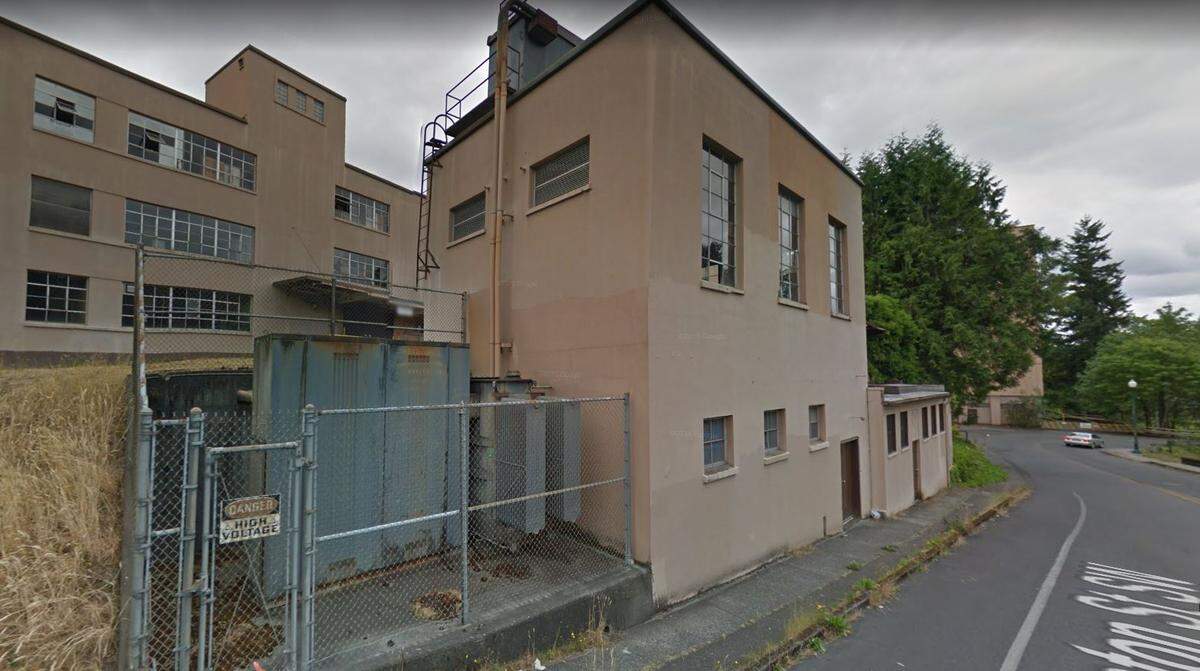
It started back in February, when police believe someone broke into a transformer on Boston Street Southwest in Tumwater, part of the former Olympia Brewing Co. property, in search of copper wire.
That’s when the transformer oil spilled: About 600 gallons flowed through storm drains, into the Deschutes River and on to Capitol Lake, according to the state Department of Ecology, which oversaw the months-long cleanup.
A final report from the department into what happened is expected early next year. Among other things, the report will look at ownership history, maintenance and security at the brewery property to identify the responsible party.
Only then can the state try to get back the money it spent on the cleanup, which totaled more than $9 million.
The cleanup involved local, state and federal agencies, popular trails and parks, endangered salmon and an already challenged ecosystem. Plus, while the spill started on private property, it mostly affected state land, said Dave Byers, who led the Department of Ecology’s response.
“That created a liability to Washington state citizens and taxpayers, and all of that stemmed from one transformer owned by an invested,” he said.
How the cleanup worked
Lab results early on showed the oil that spilled contained less than 0.005 percent PCBs and did not pose an immediate public health threat, according to the Department of Ecology. But PCBs in the water can accumulate in the food chain and build up over time to reach harmful levels for marine life.
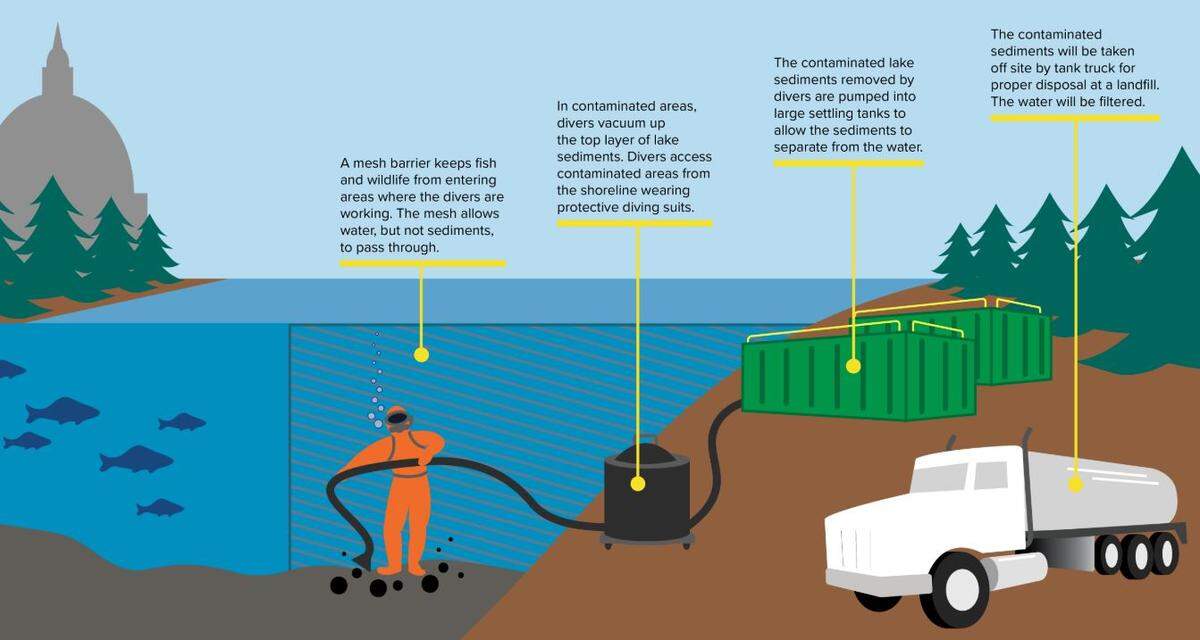
Booms were installed and oil was skimmed off the surface. Starting in late May, crews started removing contaminated sediment, a process in which divers vacuumed up sediment and pumped it into settling tanks to separate it from water, which was then filtered.

Crews also cleared 3.5 miles of oily vegetation along the shoreline and removed contaminants from a hillside and trail on the east side of Brewery Park at Tumwater Falls, Byers said.
On the brewery property, which has sat idle since the brewery closed in 2003, the owner had the building next to the vandalized transformer removed since the ground under it was contaminated, along with sidewalk on Boston Street and storm drains leading from the transformer to Brewery Park.
Along the way, crews found evidence of previous spills that officials believe came from the brewery property, according to Byers. Crews also found 14 other transformers on the property that were tested for PCB-contaminated oil. Three were subsequently removed.
“That spill was very unfortunate, but it did get us onto a property that needed attention,” Byers said. “It’s been a very, very long time since I’ve come across transformers with a high enough level of PCBs remaining in them to require cleanup. The industry has been fairly good at recognizing that liability.”
Tumwater Development LLC of Anaheim, California, which bought the brewery property in 2015, initially was paying for the cleanup. Joe Scuderi, an Olympia lawyer representing the owner, said the company spent millions in those first few months before it was unable to continue paying.
The state took over paying in early May, citing “continued possible risks to human health and the environment.”
No measurable amounts of oil were discovered at Budd Inlet and the Department of Ecology received no reports of oil-affected wildlife.
Tumwater Police Department never made any arrests related to the vandalism.
“The cause of (the spill) was theft and vandalism to that transformer on Boston Street. It was a fenced enclosure. It’s a blight that’s happening all over the city,” Scuderi said.
As for who should pay for the cleanup, he said that’s yet to be decided.
Cleanup delayed other projects
The cleanup, which ended in August, pushed back the schedule for an environmental impact statement for Capitol Lake. The state Department of Enterprise Services, which is leading that work, announced this month a draft isn’t expected to be ready until mid 2021 now.
The delay centered on surveys of the depth and shape of the landscape — the underwater equivalent to topography above ground — that will show where sediment is accumulating and how fast.
That was supposed to happen this past spring. By the time crews got to work in July, there was too much underwater vegetation to get a clear picture.
Surveys are now scheduled to be done in early 2020.
Sue Patnude leads the Deschutes Estuary Restoration Team, or DERT, which advocates for removing the dam at the base of Capitol Lake and widening the opening there to restore water flow from the Deschutes River into Budd Inlet. That is one possibility the environmental impact statement will consider.
Patnude said the oil spill was just the latest environmental concern for the area, in addition to sediment buildup, invasive species and choking aquatic weeds.
She said it’s concerning to see a major property along the river fall into such disrepair.
“The idea of that, to me, is a symptom of people forgetting that we have a really important body of water there that’s connected to Puget Sound,” Patnude said.
The city of Tumwater had no official role in the cleanup, but the property was already on the city’s radar, to put it mildly. Even before a fire destroyed the south side of a brewery office building on Custer Way in 2018, the city was working with the owner to address code violations.
Just days before the oil spill, the two sides signed a voluntary correction agreement to address violations, including added security on site.
“Initially the city was very pleased with the progress they made,” said Ann Cook, a spokeswoman for the city of Tumwater.
But the spill response slowed down that progress. Outstanding issues include fire suppression in some areas of the complex and engineering plans to either demolish or reuse a building near the fire site.
The two sides have signed an amended agreement to give the property owner more time. Cook said city code enforcement officers plan to inspect the property in January.
So far Tumwater Development has paid $75,000 in fines and another $17,000 related to the fire response, according to Cook. No fines have been issued since the agreement was signed, but she said that could change if the owner fails to meet the terms of the agreement.
The former brewer property is at the heart of the city’s revitalization plans for a Brewery District, with the original brick brewhouse to the north and the burgeoning Craft Brewing district to the south, where South Puget Sound Community College will offer craft brewing and distilling courses starting fall 2020.
Renovations on the exterior of the historic brewhouse, which the city owns, will wrap up in the coming weeks, and a seismic retrofit is planned to begin early next year.
