Port of Olympia settles lawsuit with environmental group for $1.3 million
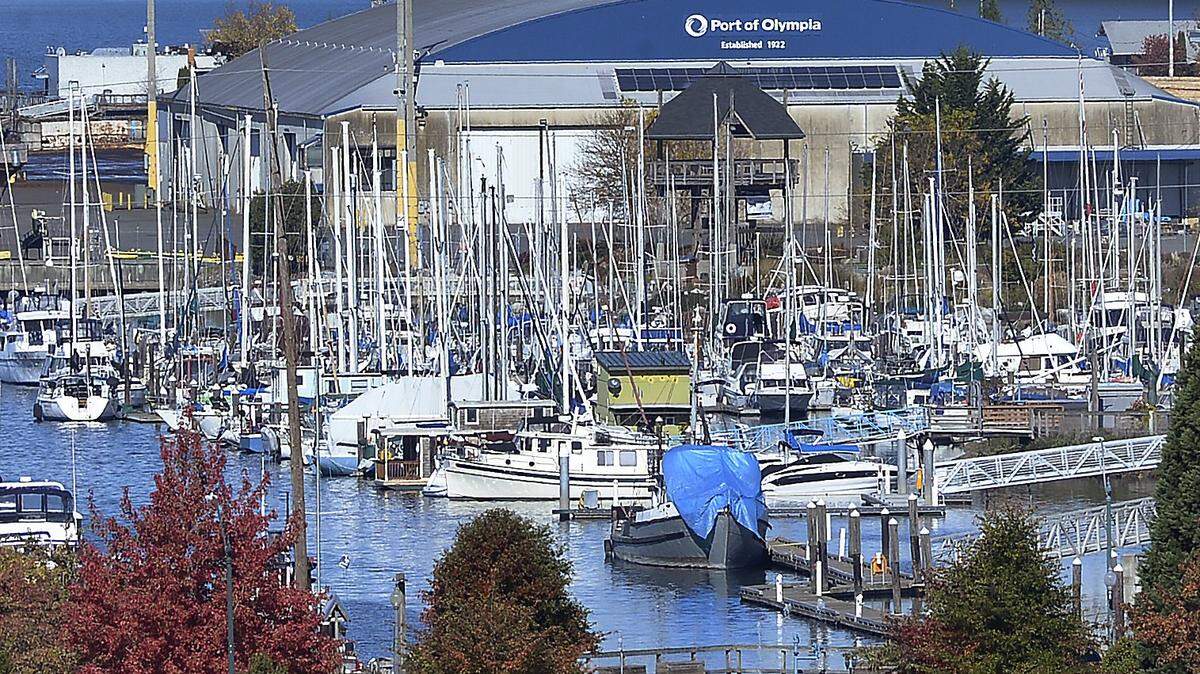
The Port of Olympia agreed this week to pay roughly $1.3 million and take corrective steps to settle a federal lawsuit that alleged violations of the Clean Water Act at the port’s marine terminal.
Waste Action Project of Covington announced that it intended to sue the port in April 2017, then followed through on that lawsuit two months later. Waste Action Project alleged that the port was violating the Clean Water Act by discharging polluted stormwater into Budd Inlet.
“We’re not going to stand here and watch it happen,” Waste Action Project Executive Director Greg Wingard said at the time. “The port can step up and take care of it or we’ll step up and fix it in federal court.”
That “fix” happened this week. The port commission — Joe Downing, Bill McGregor and E.J. Zita — met in executive session on Tuesday to discuss the litigation, then emerged and voted unanimously to approve the proposed settlement.
The settlement was finalized Wednesday after the port and Waste Action Project signed off on the “consent decree,” which spells out the payment, as well as the steps the port must follow to meet requirements for stormwater discharge under a national pollutant discharge elimination system permit.
“It’s really in the best interests of the port and citizens to bring this to a conclusion,” port Executive Director Sam Gibboney said Thursday. “It’s not an admission of wrongdoing, it’s a settlement of the dispute.”
Of the $1.3 million, the port will pay $733,000 to cover Waste Action Project’s expenses and litigation fees. The other $625,000 will be paid to The Rose Foundation of Oakland, California, which will use the money for “projects to improve the water quality of Budd Inlet or South Puget Sound,” the consent decree reads.
The port and Waste Action Group agreed to a payment in lieu of a penalty fee, Gibboney said. The Rose Foundation was suggested by Waste Action, she said.
The consent decree also spells out a number of corrective steps the port must follow.
Among them:
▪ The port will install a 3-inch curb along the bull rail to prevent stormwater discharge off the edge of the marine terminal.
▪ No log loading will occur at Berth 1, which is the southern most berth on the marine terminal.
▪ During the loading of logs with bark, the port will vacuum sweep the marine terminal at lunch, at the end of the day and at the shift change for multi-shift loading. If stormwater sampling shows the port is not meeting permit requirements, the port must invest in a high-efficiency sweeper.
“Our intent in constructing the settlement in this way was to provide additional motivation to the port to maintain their permit compliance,” Waste Action Project’s Wingard said in an email to The Olympian.
Gibboney said the port has enough cash on hand to make the $1.3 million payment. The costs of the other requirements will be shared with the port’s tenants.
“We will be evaluating cost recovery agreements with our tenants,” she said, adding this would be in addition to what tenants are charged to use the port’s stormwater treatment plant.
Gibboney emphasized that the port is following best practices when it comes to stormwater, citing an agreed order with the state Department of Ecology to meet requirements under an industrial stormwater permit. She said the port met those benchmarks in all four quarters of 2019.
“We are already doing best practices, and we’ve been asked to do some additional ones,” she said.