
Farmers and their markets adapt to continue providing fresh food
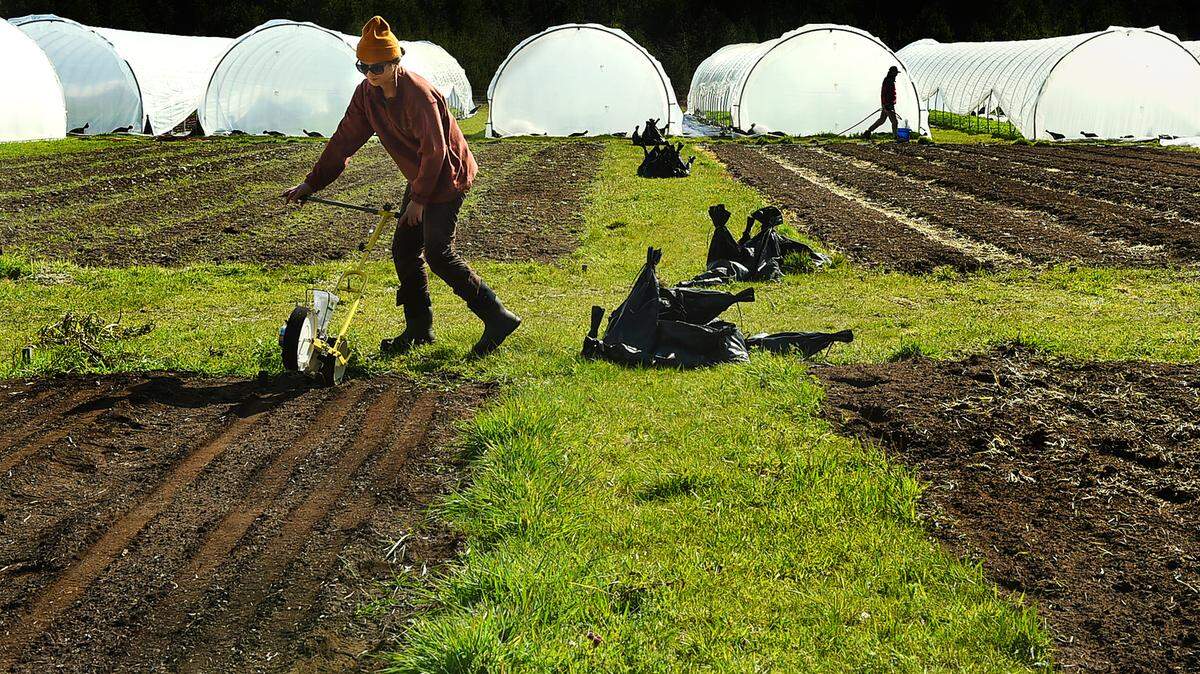
Like almost everything else these days, getting food during the coronavirus outbreak is more complicated than it used to be.
At the other end of the food supply chain, farmers are facing complications, too.
“This pandemic has flipped our business upside down,” said Maya Wood of Olympia’s Little Big Farm.
Like many South Sound farmers, Wood and partner Phelan Pagano sell much of what they produce at Seattle farmers markets, which the city has closed. They and other local farmers also sell to restaurants, and much of that business is on hold, too.
The good news is that local farms and organizations supporting them are finding new ways to connect people and produce — ideas that will not only help farmers stay in business, but also make it easier for South Sound shoppers to get fresh vegetables while minimizing social contact.
“Farmers are getting creative,” said Jeanine Toth of the Community Farm Land Trust, which publishes an annual map of Thurston County farms with information on their products and offerings.
To market
The Olympia Farmers Market, considered to be an essential business like a grocery store, would normally be launching its new season with fanfare this week. While that isn’t the case, it will expand from its winter hours of Saturday only to be open 10 a.m. to 3 p.m. Saturdays and Sundays in April, with vendors selling food, plants, soap and other grocery items, and market eateries offering takeout.
The market has made changes to encourage safer shopping, including adding more handwashing and sanitizing stations, moving vendors further apart and adding markings and signs to encourage social distancing.
To accommodate those who want to minimize the time they spend in public, Kirsop Farm of Rochester is offering pre-packed boxes of vegetables for customers who want to pick up their food at the market booth and go. (Those who prefer to choose their own items are welcome to, but market organizers want shoppers to avoid both lingering and touching the merchandise.)
The $25 boxes are filled with potatoes, carrots and greens, with this week’s assortment boasting such exotic offerings as purple sprouting broccoli and cabbage raab. Contents will change with the season.
“The boxes are gathering momentum,” said Genine Bradwin, who owns Kirsop with her husband, Colin Barricklow. “All of us are acclimating to a new way of life, staying home and handling the situation, and people are interested in getting a box and securing their food. They’re becoming more popular every week.”
On Wednesday, the farm launched an online ordering system so customers can pay for the boxes and a selection of other products in advance and pick them up at the market or at neighborhood locations where members of the farm’s CSA (community supported agriculture) program pick up weekly shipments during the summer.
CSAs to the rescue
The traditional CSA model, where customers pay in advance to receive a regular box of produce and sometimes other items, is well-suited to containing the spread of COVID-19, because there’s no contact between farmer and customer.
“It’s a way to get food without being in crowded places like grocery stores,” said Sarah Moorehead, executive director of the Thurston Conservation District, which recently published Farmer’s Basket, an online buyers guide aimed at connecting consumers with local farmers.
Both Kirsop and Little Big are offering spring CSAs for the first time. Kirsop, which will feature the same mix of root vegetables and greens as the boxes available at the market, launches Wednesday.
Little Big Farm’s spring CSA, focused on greens and other salad items, started last week, but the farm is still taking orders for a May-only CSA.
The farm also has joined the long list of local farms offering growing-season CSAs, which last from June to October.
There’s been a resurgence of interest in CSAs, Moorehead said. “The demand for locally produced food is increasing,” she said. “We’ve had producers tell us that they are expanding their CSAs and converting fields that they used to grow other things, like fresh-cut flowers, to grow more food.”
“We’ve seen a lot more interest in local food,” said Jennifer Crain of Slow Food Olympia. “We’ve also heard from people that they want to support local businesses.”
Joining a CSA is one of the best ways to support local farmers and local food, she said, adding, “We’re encouraging people to buy CSAs for the summer so they won’t have to worry about accessing fresh food.”
Supporting locally grown food
Part of the slow food group’s mission is to strengthen the local food system so that residents would have enough to eat if, for example, I-5 were closed by an earthquake.
“It’s important that we support people who know how to grow food,” she said. “It’s important that we support more farmland and keeping the farmland that we have. I think people are kind of waking up to that.”
Wood agreed.
“The surge of support towards small local farms has been huge,” she said. “What I, and every small farmer in America, hope for is that once life returns to some sort of normal, this support doesn’t dissolve.
“This pandemic will change all of us, and my hope is that most of this change is for the better.”
Olympia Farmers Market
- What: The market remains open, selling only grocery items, plants and soap. Market eateries will be selling food for takeout only, and there’s no seating or entertainment.
- When: 10 a.m.-3 p.m. Saturdays and Sundays
- Where: 700 Capitol Way N., Olympia
- More information: 360-352-9096, http://www.olympiafarmersmarket.com
Fresh from the farm
Interested in buying directly from local farmers or joining a community supported agriculture (CSA) program? Here are some resources.
- Farmer’s Basket: The Thurston Conservation District spearheaded the development of this new guide to farms and their offerings.
- Farm Map: The 2020 edition of the map, published annually by the Community Farm Land Trust, is due out this month.