
Sidewalk dining, street closures proposed for downtown Olympia
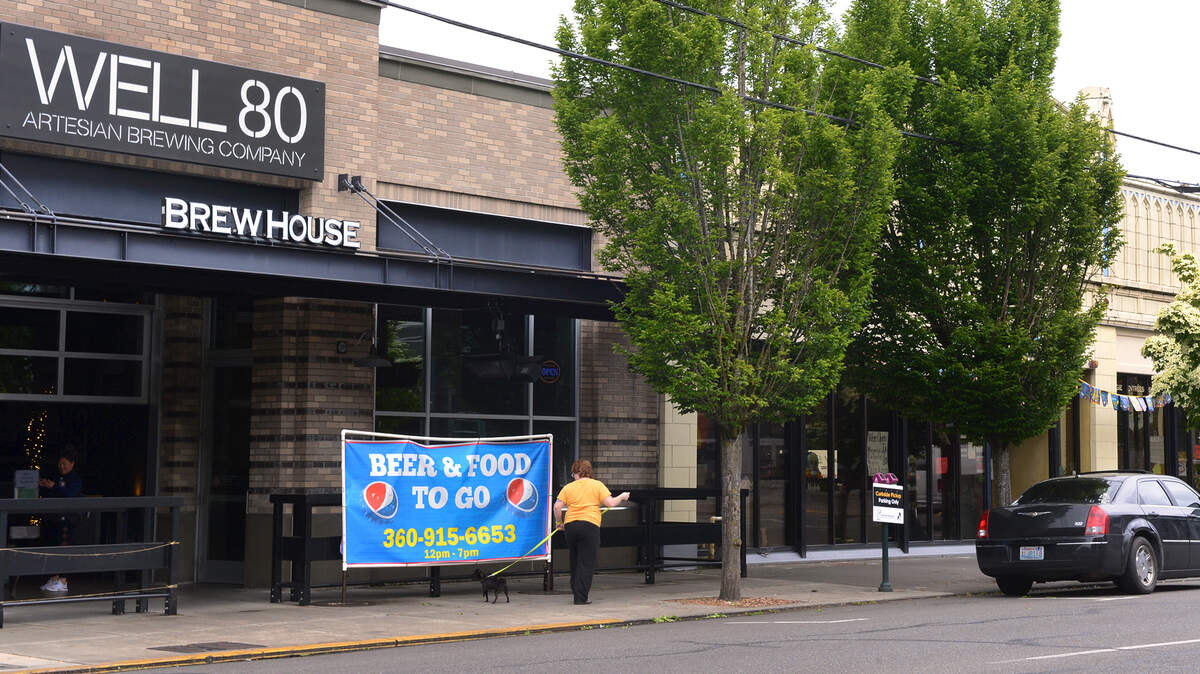
Downtown Olympia will take on an al fresco feel this summer as storefronts and restaurants adjust to the parameters of doing business during the novel coronavirus pandemic.
Among the six pillars of a new initiative fronted by the city of Olympia and the Olympia Downtown Alliance in response to the pandemic is a plan for retailers and dining establishments to expand out to the sidewalks.
Street closures — some on a rotating basis, others for longer periods of time — will be used to support social distancing requirements for pedestrians. Outdoor spaces including streets and sidewalks may also be repurposed for outdoor programming such as art and music, or even small events as allowed in Phases 3 and 4 of the state’s framework for reopening.
Mike Reid, director of economic development for the city of Olympia, said the hope is to begin trying out some sidewalk and street closures within the next week or two. Thurston County is expected to receive approval in the coming days to advance to Phase 2 of reopening.
“The hardest streets would be the main connectors, like Fourth Avenue, State Avenue and Capitol Way,” Reid said. “Those have emergency vehicle and freight traffic, so utilizing just the sidewalk cafe model there is maybe the best, but the side streets that run north and south could be ideal for intermittent closures.”
Another key component to the downtown project is enhanced cleaning and beautification efforts supported by the Downtown Clean Team and additional ODA positions funded through a contract with the city.
Additional points of emphasis include a streamlined process for awarding temporary use permits for mobile vendors and a potential partnership with county agencies for small grants up to $1,500 to businesses that need help restocking supplies such as food and personal protective equipment.
“Any measures that we can take in partnership with the city to support our downtown business community are welcome,” ODA Executive Director Todd Cutts said. “It really depends on business by business, block by block, as to whether it lends itself to the outdoor concept or not. Generally, it’s a model we’re seeing employed across the nation, and we welcome it, but I think it’s going to be very localized by block and by business.”
Cutts and other local officials said they are operating under the belief that dining tables and retail activity that takes place on the sidewalk, in an alleyway or on the street would not count toward the Phase 2 occupancy limits of 50 percent for dine-in restaurants and 30 percent for general merchandisers. Detailed guidance released by the state for those industries does not give explicit direction for that scenario.
Outdoor seating must follow the same requirements as indoor dining. Those include limiting tables to five or fewer guests, arranging tables to ensure guests remain at least 6 feet from other parties and the use of disposable menus.
Bar seating is prohibited during Phase 2, but restaurants that sell alcoholic beverages will be able to extend that service to the sidewalk by using medallions provided by the city to outline the outdoor space where food and drink from that establishment can be consumed.
Until recently, the Washington State Liquor and Cannabis Board required physical barriers like fencing or railings to separate outdoor food service areas from pedestrian traffic. Olympia City Manager Jay Burney emphasized the need for enhanced awareness and compliance with the loosened restrictions.
“There’s going to have to be an education component with the restaurants as they roll out the outdoor seating, with our Downtown Ambassadors and with the public,” Burney said. “We’ll be putting out some materials to help with that as we move forward. We’ll work really closely with the liquor control board, as will the restaurants, to make sure everyone is in line with the rules.”
The vast majority of storefronts within the footprint of downtown Olympia do not have outdoor space as part of their normal operations. For those that do, such as The Oyster House and Budd Bay Cafe, it will still help them add capacity while trying to adapt to the new normal.
Most restaurants function on thin profit margins during the best of times. Trying to make payroll and pay overhead for full-scale service while being limited to half their normal capacity will likely force proprietors to operate in the red for the time being.
Patrick Knutson runs Budd Bay and the Oyster House as well as River’s Edge in Tumwater. He anticipates losing money for at least a year, based on the size and capacity of his restaurants. Knutson doesn’t expect to be full even at 50 percent for some time, as people slowly reintegrate themselves back into public places.
Smaller places that have only a few dine-in tables will likely see a bigger impact from being able to use additional outdoor spaces, he said, but it likely won’t be enough to fully overcome other factors involved in the reopening process.
“I don’t foresee people feeling safe enough to even fill half of one of our dining rooms, because even until the full vaccine is in place, I’m expecting I would be very happy to be doing 50 percent of the sales I was doing the prior year,” Knutson said.
“I do think it will help us accommodate a little more business, and I’m excited for some movement just like everyone else. We’re excited to get our employees back and going a little more, but my concern is that with bringing them back at 50 percent, it won’t be enough to allow me to keep my entire staff.”