
Merritt Long’s memoir weaves his experiences with U.S. history of racism
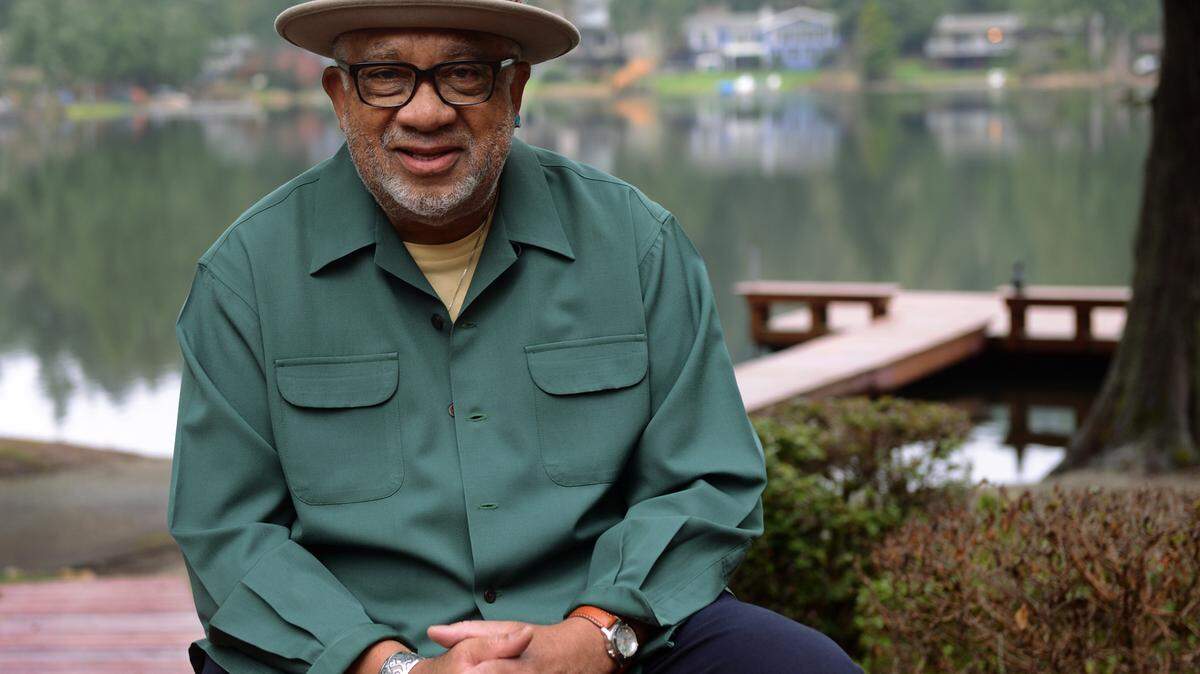
Growing up in Alabama, Merritt D. Long had to ride in the back of the bus with other Black people.
At his first job, in a florist shop, then-13-year-old Long wasn’t allowed to use the restroom. That, like the front of the bus and restaurants, was reserved for white people only.
When he was in high school, hooded members of the Ku Klux Klan drove through his neighborhood one evening, honking to make sure everyone saw them.
These are among the memories Long shares in “My View From the Back of the Bus,” the memoir he and his wife, Marsha Tadano Long, published in December.
“I’m the one you forced to use the ‘Colored’ restroom in the land of the free and the home of the brave. … “ the prologue reads. “I’m the one who was invisible, who didn’t count. You thought I would never amount to anything.
“I’m Merritt Douglas Long.”
What follows is the story of what Long survived and what he went on to accomplish. He headed up four Washington state agencies during his long career. He and his wife started the Learning Seed Foundation, which funds college scholarships for students, mostly people of color, who show promise and want to serve their communities but face financial challenges.
And now he’s written his memoir.
When he began the book 15 years ago, Merritt Long envisioned it as a personal project, something he could give to his children and grandchildren.
Then he realized that he wasn’t only writing his own story but also putting a face on the story of racism in America, a story that is still unfolding.
“Things change,” he told The Olympian, “but they remain the same.
“I did not believe that I would live to see an African-American president,” he said. “I am in no way saying that there hasn’t been progress, that there hasn’t been advancement. It’s pretty remarkable given the history of slavery and the sentiments that Black folks have endured since we got here — and we didn’t come of our own volition — but at the same time, there’s still an obvious difference in how Black folks and white folks are treated.”
During the Jan. 6 insurrection at the U.S. Capitol, he said those invading the building were treated quite differently from Black Lives Matter protesters in 2020, pointing out that President-elect Joe Biden made the same observation.
A starker example: Images of the death of George Floyd, suffocating as a Minneapolis police officer knelt on his neck for seven minutes, were a brutal echo of the social order Long grew up with in Bessemer, Alabama, where whites learned that “their pathway to success was dependent on their believing that they needed to keep their foot on the back of the Black man’s neck.”
Along with the painful experiences Long endured and the lessons that he learned about how to stand up for himself and for others are stories of childhood adventures, family members past and present, and meetings with such famed figures as Rosa Parks and Muhammad Ali, who spoke at Morehouse College, a historically Black college in Atlanta, when Long was a student there.
Readers have responded strongly to the power of the stories, the Longs said. The first printing of 300 copies has already been sold, and a second printing is on the way. South Puget Sound Community College has invited Long to speak in May as part of its Artist & Lecture Series. (The date has yet to be announced.)
“With the feedback that we’re getting, I’m realizing that this is more than just Merritt’s story,” said Marsha Long, who edited the book and attended to the details of getting it published. “Even though it’s his story, he could be any Black man who grew up in Alabama during that time.
“We hope that when people read the stories, they will feel some of the things that he felt,” she said. “I’ve known Merritt almost 50 years and he’s told me stories, but when I read some of these stories and I read how he felt, it really struck me. We’re hoping that other people will have a similar experience and be able to better understand the history of our country.”
Dolen Perkins-Valdez, known for her best-selling Civil War novel “Wench” and who spoke at South Puget Sound Community College last February, wrote a blurb for Long’s book cover.
“This is not just personal memoir,” Perkins-Valdez wrote. “This is a history of a country.”
‘My View From the Back of the Bus’
- What: The memoir by Merritt D. Long integrates his own story with the history — and present — of racism in the United States.
- Cost: $23
- Where to buy: Autographed copies will be available soon at Browsers Bookshop, 107 Capitol Way N., Olympia, and Orca Books, 315 Fifth Ave. SE, Olympia, or email Longmm7777@gmail.com.
This story was originally published January 18, 2021 at 5:45 AM.