
The pandemic revealed the need for locally produced food. This Matlock woman stepped up
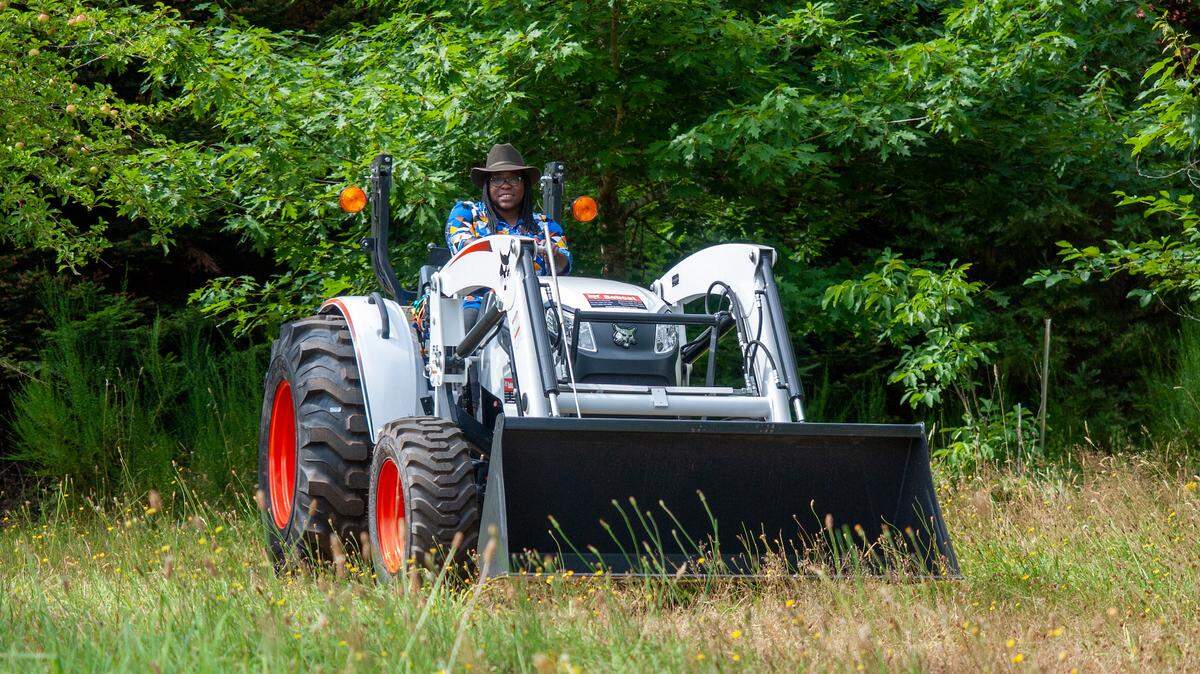
Shellie-Ann Kerns of Bunkhouse Acres, a 20-acre homestead near Matlock, is working to build a better food system from the ground up.
Growing food is a way of life for Kerns, who grew up in a family of subsistence farmers in Jamaica. But it was the pandemic that inspired her to make the transition from enthusiastic gardener to commercial farmer.
“I saw empty grocery shelves,” Kerns told The Olympian. “Farmers were having to throw out food. The supply chain was disrupted, and I knew that the answer was having more local food available.
“I thought, ‘Hey, I have a garden that’s incredibly abundant. Why not scale this up?’ ” she said. “Farming is my way of ensuring a more robust food system.”
She is part of a nationwide boom for local farmers, one she hopes will outlast the pandemic. Local farms that sell directly to consumers — often through community-supported agriculture (CSA) subscriptions, in which people pay in advance to receive a box of produce weekly during the growing season — saw a boom last year.
Kerns, who quit her job as an aircraft dispatcher in February, is doing the hard work of clearing the land and preparing for her first year of farming mostly on her own, receiving hands-on help from friends, big-picture advice from her husband, and donations from supporters near and far.
She’s raised more than $50,000 on GoFundMe, enough to buy a new compact tractor, and she’s looking to hire a full-time farmhand.
“I’ve done way better than I thought I would,” she said. “That’s part of why I was confident enough to resign.”
Now, she’s focused on farming — and on documenting her life as a Black woman farmer on her popular Instagram page, which has attracted more than 12,000 followers with pictures of Kerns cradling chickens and beaming while she works.
“It’s incredibly grounding just working with the soil,” she said. “I love being outside. I love watching things grow. But most of all, I just love the fact that I’m feeding people. You can never come to my house and leave hungry. That’s just part of me.”
Her Instagram page also includes glimpses of what it means to be a Black farmer working against white supremacy. “I’m in this for the love of it, and not for likes,” she wrote Thursday. “I am not your kumbaya black friend.”
While she continues to raise money to cover the costs of equipment and clearing the land, Kerns is also giving back. She donates surplus eggs to the Matlock Food Bank, and her nearly full CSA program offers sliding-scale subscriptions and an option to purchase a share to be donated to families that are low-income, Black, indigenous or people of color.
“There aren’t any other farms that have a similar model that I know of,” she said. “I realized that most of the people who were supporting me were folks who were not necessarily from this community, folks who were higher income, and I thought it was important that I stay true to my vision, which was to literally feed the people around me.”
Those she feeds this summer will be eating such staples as lettuce, tomatoes, cucumbers and peppers, along with amaranth — not the decorative variety, but a spinach-like vegetable that Kerns grew up eating in Jamaica — and purslane, a succulent green with a tangy flavor.
“It’s considered a weed,” she said of the latter vegetable, “but it’s incredibly delicious and nutritious.”
Also in the CSA boxes will be garlic, which she’s been growing since she moved to the farm in 2013. This year, she’s expecting a harvest of 20,000 bulbs, enough to sell to restaurants and a food distributor.
She’s also hoping to grow awareness about how food is farmed. Four generations of her family in Jamaica have been migrant farmers, and two of her brothers still do that work.
One of her brothers worked at Gebbers Farms in eastern Washington, a fruit grower that was fined $2 million in December after two workers died of COVID-19.
“I had to extract my brother from that farm,” she said. “He saw that literally it was his life at stake, so he left.”
Kerns wrote about the situation, and about the larger picture for workers who come to the country seasonally on H-2A visas, on her website.
“In July, when I finally decided to farm full-time, I acknowledged that I was taking on a monumental task,” she wrote. “I knew that I was making a meaningful stride towards changing how food and farming are understood in the United States. I did not foresee that before the end of the summer, we would have such a clear example of how food systems built on the backs of marginalized people are harmful and unsustainable.”
Bunkhouse Acres
- What: Shellie-Ann Kerns is creating a sustainable farm on a 20-acre homestead near Matlock. She’s offering CSA shares and raising funds to buy equipment and clear the land as she begins her first year of full-time farming.
- More information: https://bunkhouseacres.com/
- More CSA options: Check out the Community Farm Land Trust’s CSA Guide
This story was originally published March 24, 2021 at 5:45 AM.