Still have questions about the future of Capitol Lake? We have answers
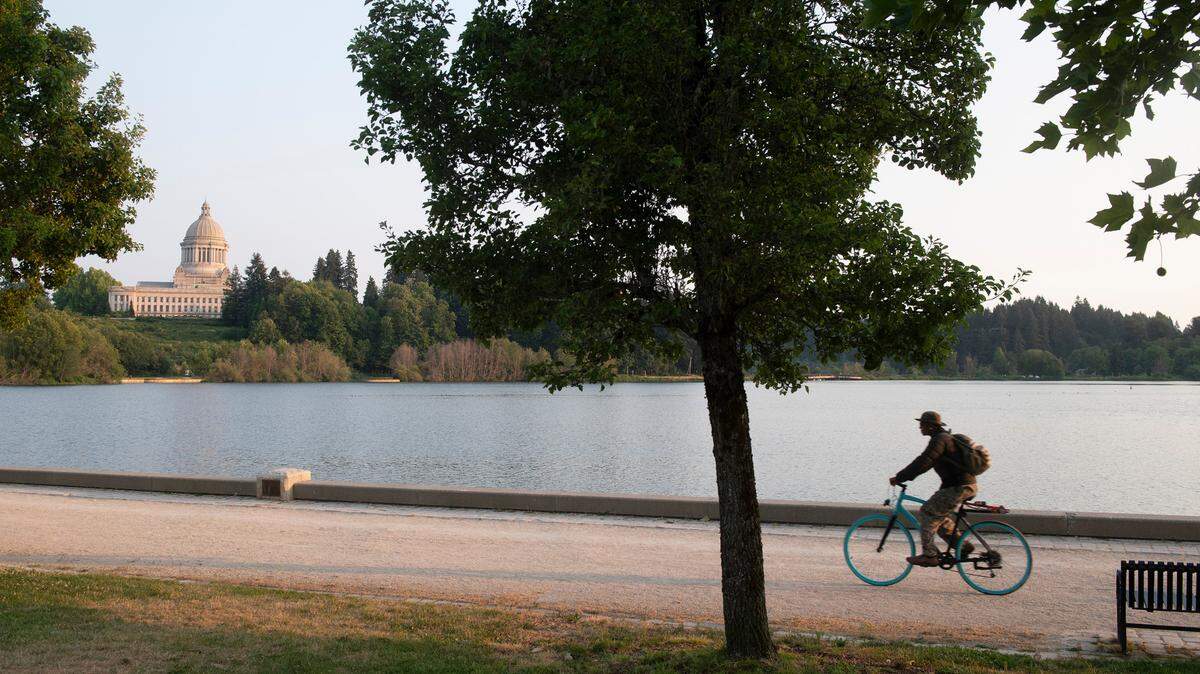
The state Department of Enterprise Services, which manages Capitol Lake and recently released a draft environmental report about the future of the lake and related waterways, is giving people more time to share their thoughts.
The comment period on the draft report has been extended to Aug. 29, DES announced on Friday.
The draft EIS was released June 30. It examines three key options for the future of the area that runs from the end of Tumwater Falls on the Deschutes River, through various basins, including the north basin (“the lake”) and into Budd Inlet’s West Bay.
The options: a managed lake; an estuary created by removing the Fifth Avenue dam to allow water levels to rise and fall with the tides; and a hybrid of the two.
The final EIS, which is expected to be released on or before June 30, 2022, will recommend one of those options.
So far, DES has received 250 comments, including about a dozen at a recent public hearing.
The Olympian initially sat down with the project leads in mid July for a 10-question Q&A. Then last week, we again asked 10 follow-up questions of the two representatives of Seattle-based Floyd Snider, the principal consultant to DES on the project: Project Manager Tessa Gardner-Brown and Stakeholder Engagement Lead Ray Outlaw.
Question: How often would there be water in the basins under the estuary or hybrid options?
Outlaw: In the north basin, there would be water in that basin approximately 80 percent of the time. This is based on predicted tide levels and the average elevation of estuary bottom. During low tides — twice daily in summer and twice nightly in the winter — there would be water in the river channel, as seen from both parks, about 20 percent of the time.
Q: Would the hybrid option include a saltwater or freshwater reflecting pool?
Gardner-Brown: The draft EIS recommends a saltwater reflecting pool for the hybrid alternative and we got to that recommendation through a measured evaluation process. The primary difference between the two: a saltwater reflecting pool would come in through tidal gates and through the barrier wall, flushing in and out of the area. A freshwater pool would be groundwater-fed and that water would move out into the estuary.
When we looked at the two concepts at the beginning of the process, our conclusion about saltwater was that it has higher technical and regulatory feasibility and better environmental and economic sustainability than the freshwater reflecting pool. However, it’s something we’re going to look at after the comment period is over.
Q: Does the EIS address the potential impact on the LOTT Clean Water Alliance (the area’s wastewater utility)?
Gardner-Brown: LOTT is a key stakeholder of the project and is represented in our formal work group. LOTT could be affected by the project in varying ways. Water quality in Capitol Lake has regulatory implications for utilities like LOTT that discharge into Budd Inlet. Under the no-action (maintaining the lake as is) and managed lake alternative there would be significant impacts to LOTT because the state Department of Ecology would require LOTT and other dischargers under those alternatives to implement additional, more stringent measures to treat and improve their discharge. (For additional reading on this topic, Gardner-Brown recommends Chapter 4, sections 12 and 14 of the draft EIS).
Q: There have been comments that the analysis of bat species that rely on the lake wasn’t deep enough and that the overall tone of the report doesn’t feel objective. Do you consider such comments?
Outlaw: It’s really important that the EIS is an impartial and objective analysis, and we will absolutely consider every comment carefully. You’re going to see a final EIS that reflects the feedback that we’re hearing and the degree of those changes can be pretty wide ranging. Some comments may result in small changes, other comments may result in additional or new analysis. And if new data or information is provided or identified that could result in changes to the impact determinations.
Q: Does the EIS look into the Deschutes River over time and how low flow may change long term costs?
Gardner-Brown: The draft EIS used best available science in its analysis. We did look at effects of climate change, both in our water quality analysis and in our numerical modeling.
Q: How was it analyzed?
Gardner-Brown: We know that sea level rise is certainly an important component to study in the city of Olympia area. And we developed numerical modeling and used a state of the art modeling system that simulated conditions for each lake option for two types of storm events: 100 year river and tidal floods, and also evaluated them with and without relative sea level rise. (For further reading on this topic, Gardner-Brown recommends Chapter 4, sections 1 and 3 of the draft EIS.)
Q: Would any of the lake options impact private property?
Outlaw: Possibly. Based on current conceptual designs for the estuary and hybrid alternatives, there would be a need to acquire some small portions of two private parcels along Deschutes Parkway. Enterprise Services would work with affected private property owners and provide compensation according to applicable law. We have a lot of work to do after a preferred alternative is identified before you get to talk about acquiring parcels.
Q: Is in-water disposal of dredge spoils an option under the managed lake?
Gardner-Brown: The answer is no. And that’s based on the fact that the presence of the New Zealand Mud Snail (which prompted the state to cut off public access to the lake in 2009) and other aquatic invasive species will persist under the managed lake alternative. We coordinated with several agencies and they have stated that the snail and other species cannot be disposed of in water.
Q: Why doesn’t the project area (Tumwater Falls to West Bay) cover a larger area, say to Boston Harbor? And why is the planning horizon 30 years?
Gardner-Brown: The project area includes the lake, which DES manages, and into West Bay, which is not managed by DES, but under certain alternatives there would be project areas in West Bay. We do look beyond Tumwater Falls and West Bay in a variety of different places to see how the environment would change. The time horizon is 30 years because that allows us to project far enough into the future to have a good understanding of how environmental conditions will change. To project any farther becomes speculative.
Q: Is Capitol Lake considered a historic resource and how does this reconcile with the Deschutes estuary that existed before that?
Gardner-Brown: There’s duality in our study area with respect to Capitol Lake that may have historic significance, and there’s the historic estuary that has had significance for time immemorial. We have heard from many stakeholders from both sides. Neither Capitol Lake nor the Fifth Avenue dam are currently listed on any register of historic places. Our work is to look within the study area and to evaluate what potential historic resources are there. (For further reading on this topic, Gardner-Brown recommends Chapter 4, section 9.)
How to comment
▪ The draft environmental impact statement can be found at https://capitollakedeschutesestuaryeis.org/
▪ To comment by email: comment@CapitolLakeDeschutesEstuaryEIS.org.
▪ To comment by online form: https://comment-tracker.esassoc.com/CLDE/index.html#/21/welcome
▪ To comment by mail: Department of Enterprise Services Capitol Lake – Deschutes Estuary EIS, P.O. Box 41476, Olympia, WA 98504-1476.
This story was originally published August 1, 2021 at 5:45 AM.