WA Supreme Court says ‘race and class’ wrongly affected decision in child dependency case
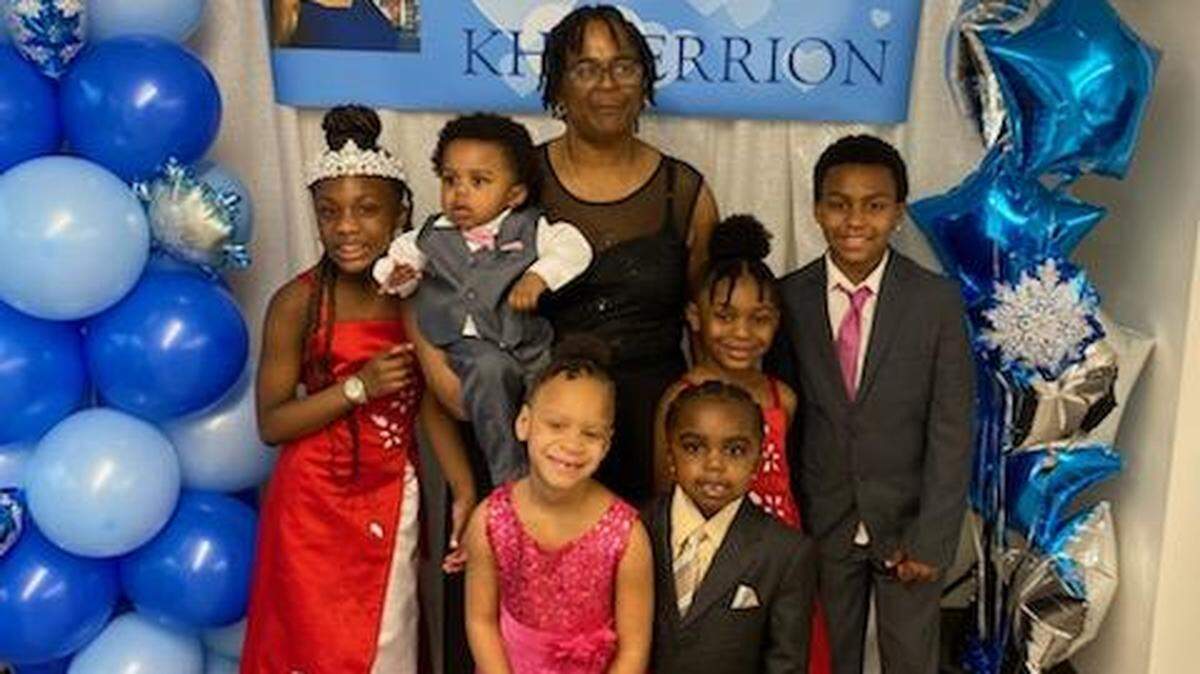
Two years ago, sitting in a three-hour long court hearing regarding the placement of their young relative, the two Black women were given no opportunity to speak until the hearing was about to end.
When they finally spoke, their words did no good. Two years later, the Washington State Supreme Court said they should have.
The young boy’s great aunt, Barbara Hobson, stood up and asked to speak to the King County court. She described the love for her family and the changes she had made to her work schedule to ensure Keyon had someone to take care of him when his other family members couldn’t.
The other woman, Cheryl Beaver, spoke too while she had the chance. Keyon had lived with Beaver for most of his life in Rainier Valley, except for the months he spent in foster care after being abruptly taken away. Although she is his second cousin, Keyon calls her “Grandma.”
But, both women said, their words had no impact on the judge’s decision or the outcome. The young boy was instead placed with a white foster family who had been given the opportunity to testify.
“It was like fighting a losing battle,” Hobson said.
Hobson and Beaver both said they felt like their race played a major hand in the outcome, and the way they were treated not just by the court system but the Washington State Department of Children, Youth and Families.
A recent Washington Supreme Court opinion filed Feb. 17 agreed with Hobson and Beaver, and reversed the trial court’s decision for the placement of Keyon, now 9 years old.
The high court’s unanimous ruling noted that state law strongly prefers “placement with relatives during child welfare proceedings, and those placements must be given meaningful preference throughout a dependency.”
The trial court had “abused its discretion” by denying Hobson and Beaver’s request that Keyon be placed back with his family members, the high court’s ruling added.
Additionally, the lower court erred by accepting DCYF’s “reasons for opposing relative placements — which, without more, serve as proxies for race and class.”
The Supreme Court’s ruling also called DYCF’s decisions arbitrary, and cast doubt on the agency’s claim that its actions were intended to support “permanence” and “stability” for Keyon.
“The Department abruptly removed K.W. from a relative placement with no prior safety concerns without conducting sufficient inquiry into the plans for his care,” the ruling states, “subjected him to three different foster homes in a few weeks, prevented him from attending an important annual family and cultural event, and then refused to return him to the care of his relatives, despite his and his family’s many requests.”
An amicus brief filed by groups such as the Washington Defender Association, the NAACP, and the ACLU of Washington backed the family up, as well.
In the brief, the groups note that serious questions about racial bias in dependency cases such as Keyon’s are raised when considering the “governmental preference for a white nuclear family as a placement for a Black child in dependency court.” Using the excuse of “best interests” allows courts and agencies such as DCYF to improperly remove Black children from their homes, they said.
“Forced family separation—of which the foster care system is the most recent iteration—is a relic of slavery, wherein the State through its laws allowed whites to rip Black families apart and ignored their pleas of reunification,” the brief added.
In Keyon’s case, he had been removed from Beaver’s care for seemingly no reason.
Keyon was considered “legally free” at the time, meaning that his birth parents no longer had legal rights over him. Beaver had been Keyon’s main guardian since he was one. Typically, courts will try to find permanent placement with other family members before looking for foster or adoption options.
But in Dec. 2019, as Beaver was on her way to a graduation in Oregon, she was texted by a social worker asking to meet the next week. Beaver informed the social worker that she was out of town and would contact her Monday. The social worker then asked where Keyon was while Beaver was out of town, a text Beaver didn’t respond to because she was driving.
Beaver had made arrangements for her son to pick up Keyon from after school daycare that day, as he was already on an approved list of people to do so. Keyon was then supposed to go to Hobson’s until Beaver returned that evening from Oregon.
Instead, the social worker went to Keyon’s after school daycare.
DCYF alleged that Keyon told the social worker that Beaver would be returning in six days, something Beaver denied and was able to produce the receipts to prove. Keyon was taken into custody that same day, without even contacting any of the family members.
The first family he was placed with cut his hair before turning him back over to DCYF, just days after he had been placed in their care. He was taken in by two other families before returning to his own.
Hobson and Beaver had little to no contact with him as they went through the courts. They participated in home studies and filed all the paperwork necessary to get Keyon back.
“We tried to do everything we could to please them, or whatever they wanted us to do,” said Hobson. “But it seemed like whatever we kept doing just wasn’t ever enough. It really became overwhelming.”
Hobson said she started having difficulty sleeping and had to miss out on work. Beaver said she lost nearly 100 pounds and that her hair started turning gray.
Keyon’s mother eventually filed to regain custody, and succeeded prior to the Washington Supreme Court ruling. He lived with her for a short time before going back to live with Beaver, and he stays with Hobson in Renton every other weekend.
Both Hobson and Beaver said the transition has been hard for him. He is more withdrawn these days. Reserved. Beaver said he walks with his head down now, something he didn’t used to do. Keyon makes it clear to the family that he doesn’t want to be separated from them again.
In an email to McClatchy, DCYF said that “increasing relative placements” has been part of their strategic plan “for over a year.” They added that they are “carefully reviewing” the Washington Supreme Court decision and “are evaluating what practices and policies need to be revised.”
A Washington State Institute for Public Policy study showed that Black children are nearly twice as likely to be referred to CPS. Additionally, Black children are 1.2 times more likely to be removed from their home, and 1.5 times more likely to stay in state care for more than two years.
Beaver said that throughout the whole process she almost gave up, but decided to stick it out for Keyon. She also encouraged other families of color to not give up if they find themselves in a similar situation.
This story was originally published February 28, 2022 at 5:00 AM.