Why are Thurston County and Community Action Council feuding?
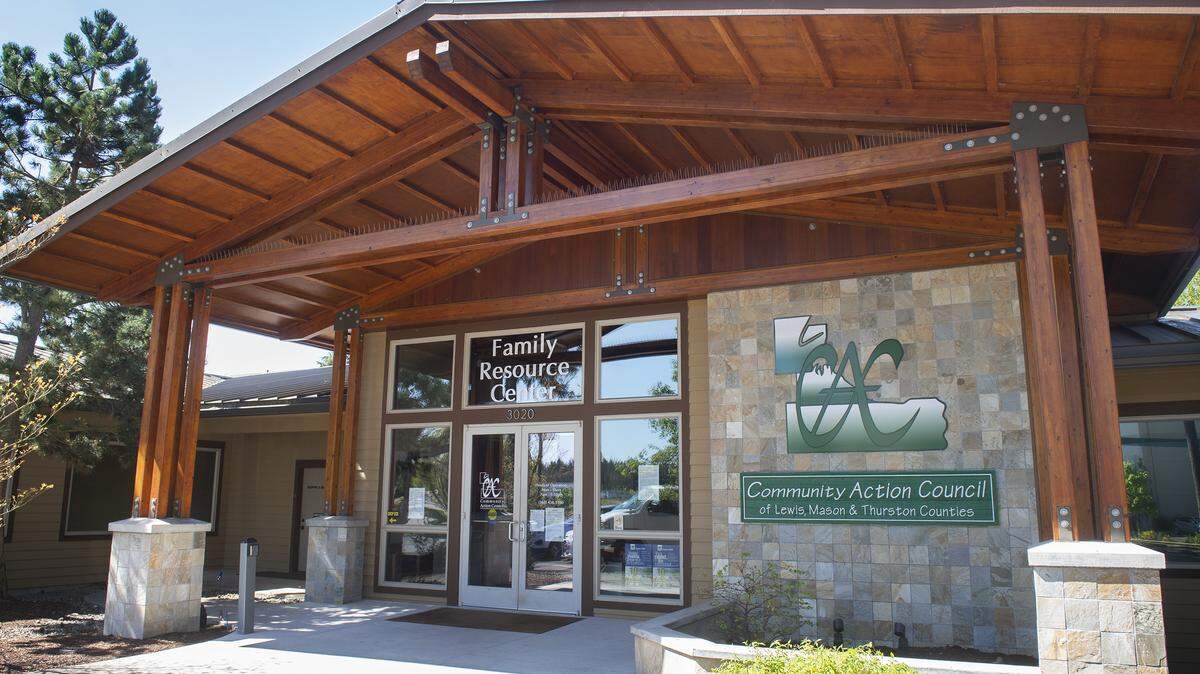
Residents waiting for rent assistance could face obstacles as Thurston County’s efforts to transfer clients to a new provider may be stymied.
Last week, the Board of County Commissioners approved a new $5 million contract with Geocko Inc., which does business as LiveStories, a Seattle-based company. The move came 12 days after the county abruptly suspended its contracts with Community Action Council of Lewis, Mason and Thurston Counties, citing fraud concerns.
CAC is the regional non-profit that has been dispersing rental and utility assistance during the COVID-19 pandemic. The county had been passing federal and state funds to CAC to support these services.
However, continued disagreements with CAC threaten a smooth transition. CAC has so far refused to turn over client information to the county. The reason, CAC says, is because they claim the county has released and intends to release client information to law enforcement.
If the county does not receive the information before LiveStories takes over, then many clients will be impacted. County Auditor Mary Hall told The Olympian the county can’t effectively process requests without client records.
“First and foremost, what we want to guarantee is that people who need these funds, get these funds,” Hall said. “If we can’t have our partners cooperate, it’s going to be very difficult to ensure that happens.”
CAC Chief Executive Officer Kirsten York has repeatedly called the county’s accusations “slanderous.” She told The Olympian her organization remains committed to prioritizing the needs of clients.
“We are unfortunately reacting to a decision made by the county and their leadership,” York said. “We are continuing to stand by our ethics and values of care and compassion for our clients and offering the best client service we can.”
Confidentiality concerns
CAC has requested certain client protection measures be implemented in a transitional contract with the county, York said, but the county has refused.
“We still have grave concerns about the safety and security of our clients receiving these services when the county reports clients to law enforcement and the (Federal Bureau of Investigations),” York said.
York said the mere prospect of personally identifiable information being turned over to law enforcement may make clients, especially those in vulnerable situations, feel unsafe.
“Releasing their identity to law enforcement unnecessarily or to any entity could be damaging and detrimental to their safety and security,” York said. “As well as not abiding by our ethics and standards in social service and public service.”
Hall said the county has a right to client data and is required by law to report suspected fraud to law enforcement. Hall added the county has robust controls for protecting personally identifiable information.
“We have strong protocols in place to ensure that only the people that need access to that data have access to the data,” Hall said. “I would say that we probably have a lot stronger controls than they (CAC) do.”
So far, Hall said the county has passed on some information to the Sheriff’s Office about the few applications that raised red flags during their monitoring period in December.
York shared an email dated Feb. 24 from County Manager Ramiro Chavez. It indicates the county did contact the Sheriff’s Office about the suspected fraud.
However, Chavez also shared a March 3 email sent to York by county senior program manager Tom Webster. It indicates the county has not shared any personally identifiable client information with law enforcement.
Has there been fraud?
Hall said people have been reporting instances of suspected fraud in rental assistance payments since the county announced it was suspending its contracts with CAC.
Her office needs more information to run a full audit, Hall said, but CAC has so far refused to cooperate.
“We have suspected fraud, but we can’t prove it until we get the information from the Community Action Council,” Hall said. “So, they are inhibiting these investigations.”
If fraud were to be found, the county would notify the Sheriff’s Office or the FBI. An investigation would be conducted, funds would be recovered, and law enforcement would prosecute where necessary, she said.
If no fraud is ultimately found, Hall said the county would have done its due diligence.
York maintains no findings of fraud were found during the monitoring period and the county should have all the information it needs to come to that conclusion.
“There would be no additional information that we could possible release to them to clarify any additional detail,” York said.
A review of the monitoring period sent by County Internal Auditor Brandon Weber notes CAC’s Emergency Rental Assistance Programs were “generally operating in accordance with state and federal guidelines.”
Yet, the review indicates six out of 14 sampled applications raised red flags. It also lists five scenarios suspected of fraudulent payments.
York said her organization confirmed no payments were received in three of the five scenarios. Two did receive payments, she said, but only because they “met all criteria” set by the state Department of Commerce.
York alleged the county’s actions did not adhere to standard auditing practices. She maintained CAC has operated in an ethical, professional and respectful manner with funding partners for years.
For her part, Hall said she has never seen a response like this to sub-recipient monitoring. Contrary to CAC’s claims, Hall said there was nothing unusual about the way her office conducted the sub-recipient monitoring that led to the contract suspensions.
“I took an oath to fulfill my job description as defined by law to protect public funds,” Hall said. “That’s all we’re trying to do and we really need to have cooperative partners.”
Hall likened the situation to a house fire scenario.
“It’s like saying there’s no fire in the house when there’s smoke coming out of the window,” Hall said. “So, when they won’t let firefighters in the door, we can’t see if the house is on fire.”
Should this situation eventually be amicably resolved, York said CAC would be open to continuing to work with the county on various services. However, she expects some form of reparations.
“Our hope is that the county can continue to offer those services through CAC and we expect that there is some repair done to the harm that they have caused our agency,” she said.
CAC and the county plan to continue discussions next week.
This story was originally published March 12, 2022 at 5:30 AM.