Thurston County renters struggle to find affordable housing
Almost six weeks after losing his job, Ashton Burch and his husband resorted to living in hotels until they could find an affordable apartment. He didn’t expect the search would take them nearly nine months.
From August to mid-April, the pair navigated support programs and Facebook groups to find a place under $1,500 a month that would accept them and their three pets. They eventually connected with a California-bound Tenino homeowner who rented them her two-bedroom home.
“We lucked out there,” Burch said. “But if it hadn’t been by the grace of that one person who reached out, we would still be in the exact same situation.”
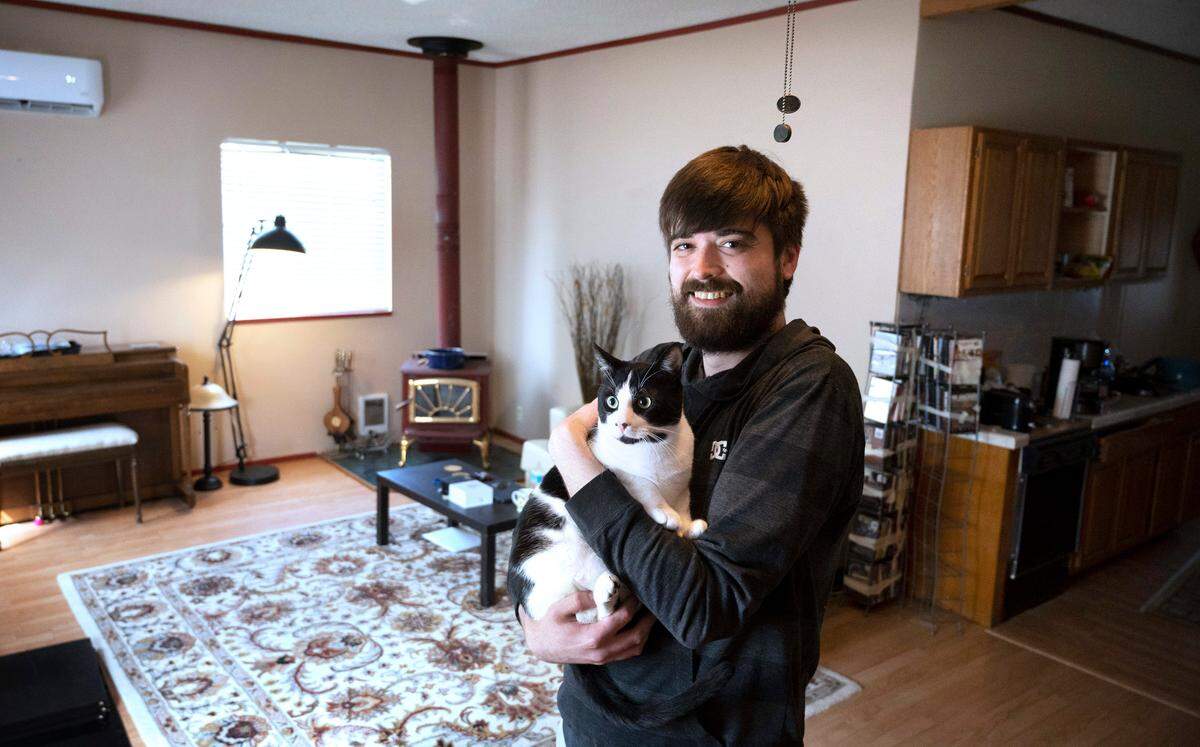
Burch, a 27-year-old Instacart worker, said the experience has motivated him to complete his bachelor’s degree and pursue work related to housing advocacy. He said the support options for finding housing in Thurston County did not meet his expectations.
“It really feels like it’s case by case; it’s a real mess,” Burch said. “There’s no clear process to follow. If there is, I didn’t figure it out between July and April.”
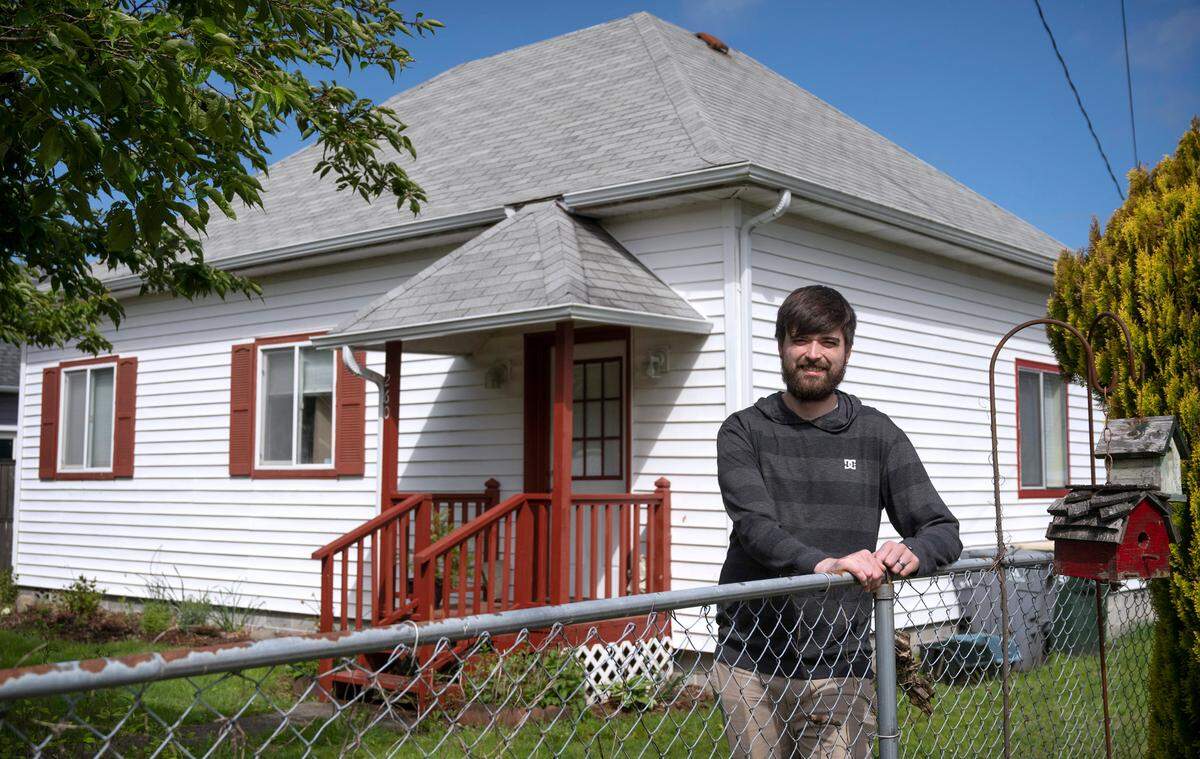
Median rent in the Olympia-Lacey-Tumwater metro area has increased 9.9% from $1,401 in 2019 to $1,540 in 2022, according to data from a Stessa report. Across Washington state, the data show median rent increased 13.4% from $1,571 in 2019 to $1,782 in 2022.
The cumulative effect of continuing increases is clear when looking back just five years. For example, data from Zumper indicates the average mid-May rent for a two-bedroom apartment in Olympia increased from about $1,250 in 2017 to $1,650 in 2022 — a 32% jump.
Burch and his husband moved to Thurston County from Cincinnati, Ohio in 2017. He said his initial two-bedroom apartment near Hawks Prairie went for $1,200 back then and the price has since increased about 40%. He called such increases “insane.”
“There’s no way this is affordable long-term,” Burch said. “It feels like it’s pressure testing, almost like seeing how far they can take it before people finally break and start seeing vacancies go up. I guess until that happens, it won’t stop.”
Many other Thurston County renters are feeling the effects of rising rents and the lack of affordable housing.
Tatum Ponzoha, 43, said she has been staying at a motel for the past two months with her partner, two kids and a friend. They have been paying $100 a night, she said.
Her family previously paid about $1,400 a month for a three-bedroom house with a two-car garage in the Grand Mound area, she said. They only moved out because their landlord decided to sell the home, she said.
“Anything even similar to that is up near $3,000 now,” Ponzoha said. “That’s like double. There’s no way I could afford that.”
Ponzoha, who is not working due to an injury, said she turned to the Family Support Center of South Sound for help but has yet to receive assistance. She said she wishes information about assistance programs was more accessible.
“Personally, I’ve never been in this situation before,” Ponzoha said. “I don’t really know how to navigate it and how to get out of it, but I have to. I have no choice.”
A similar challenge befell Chris Allert, a 50-year-old father of three who found himself moving from motels to hotels for nine months before a GoFundMe campaign helped him pay for housing, The Olympian previously reported.
Challenges also extend to single adults. Erin Boushey, 31, said they have only been able to afford renting a room in a six-bedroom home in east Olympia for around $1,000 a month.
“Rooms are easy to find,” Boushey said. “I make decent money. I should be able to find a little studio, but I can’t find anything.”
Boushey, a veteran, said they work at a plant that manufactures PVC pipes and recently got a raise to $23 an hour. Though they still want to get their own apartment, Boushey doesn’t see that happening in the foreseeable future.
“Honestly, I’ll probably be stuck renting rooms for most of my life until (rent) gets fixed,” Boushey said. “I don’t even know how we would even think to fix it at this point.”
What options are there?
While some options exist for those struggling to find housing, programs and services are decentralized and often overwhelmed by demand.
Todd Monohon, owner of Olympic Rental and Landlord Services, said he has recently seen more people unable to qualify for the housing his company manages. When this happens, he refers people to other options.
“It’s not just about how much rent you have to pay,” Monohon said. “It’s about your whole financial outlook. If you owe so much on your credit cards or to a medical place or to a past landlord, I don’t know how they’re going to get out of that.”
Eligible people who can’t afford market-rate housing can turn to the Housing Authority of Thurston County for a subsidized housing voucher, but there is often a long wait. People also can turn to subsidized apartment buildings, private owners willing to negotiate, and Facebook groups to pull together roommates, he said.
“The challenge that I see is there’s no one network,” Monohon said. “If I’m searching for an apartment at market rate, I have to find those individually out there.”
Using the internet can help, but Monohon said not everyone has equitable access. Ultimately, he said he hopes the community can build a network of assistance rather than point fingers at each other.
People on the brink of homelessness don’t have easy answers either. Those living in hotels and motels can seek out rent assistance in Thurston County, said Keylee Marineau, Homeless Prevention and Affordable Housing Coordinator at Thurston County.
“There’s potential for rent assistance to be able to keep them in that spot for a longer period of time until they figure out what’s next,” Marineau said.
However, the county expects to stop accepting new rent assistance applications on June 15 due to dwindling funds and an immense backlog. Officials expect to launch a permanent rent assistance program later this year, but details have yet to be firmed up.
People also can turn to the county’s coordinated entry system, Marineau said. The system aims to help people get their needs met while ensuring equity and prioritizing people based on vulnerability.
There are three entryways into the system, she said. Community Youth Services helps young adults, Family Support Center helps families and victims of domestic abuse, and Community Action Council of Lewis, Mason and Thurston Counties helps single adults.
When someone contacts these providers, Marineau said they assess their case and either add them to a waitlist or divert them to other options through case management.
“Once you fall into the homeless crisis response system, it’s really hard to get out,” Marineau said. “Especially in our system, which is vulnerability based.”
In reality, coordinated entry only serves those who are homeless rather than those who may be in unstable housing situations, said Family Support Center Executive Director Trish Gregory.
“Unfortunately, in our community, the majority of the housing dollars that are available prioritize families that are literally homeless,” Gregory said. “So, there’s not a ton of resources outside of (pandemic rent assistance) that’s coming to a close.”
People who aren’t homeless are not put on the coordinated entry list at FSCSS, Gregory said. Instead, she said they are directed to call their Family Resource Services Navigator. This person cobbles together rent and utility assistance from various sources and helps connect them to medical care, she said.
“It’s just completely overwhelming and we’re not able to keep up with the number of people that are calling,” Gregory said.
Their call line gets 60-70 calls a day and responses can take 7-10 days, Gregory said. About 95% of these calls come from people experiencing housing instability, she added.
Even if someone gets on a coordinated entry list, Marineau said they may have hundreds of people ahead of them.
The lists are so large because service providers are generally strained by a lack of funding, staffing and space, Marineau said. Bottlenecks also emerge because the county lacks sufficient permanent supportive housing and affordable housing in general, Marineau said.
“Calling coordinate entry isn’t like ba da bing ba da boom you have a place to stay.” Marineau said. “It’s more about getting into the system and starting that process. It’s imperfect and frustrating.”
Marineau said she is working with other jurisdictions to create a master list among the three providers since November. This way they can eliminate duplicate entries and better coordinate assistance, she added.
But it’s still unclear when or how this may be realized as discussions are ongoing, she said.
The situation is heart-breaking for providers as well as the people searching for a home.
“We have hundreds, maybe even thousands, of families in our communities that are doubled up or sharing houses with other people that also need assistance to get back on their feet in their own place,” Gregory said. “We just don’t have the level of funding in our community to be able to provide that type of support.”
This story was originally published June 12, 2022 at 5:00 AM.