Olympia non-profit aims to help youth in justice system reenter society. Here’s how
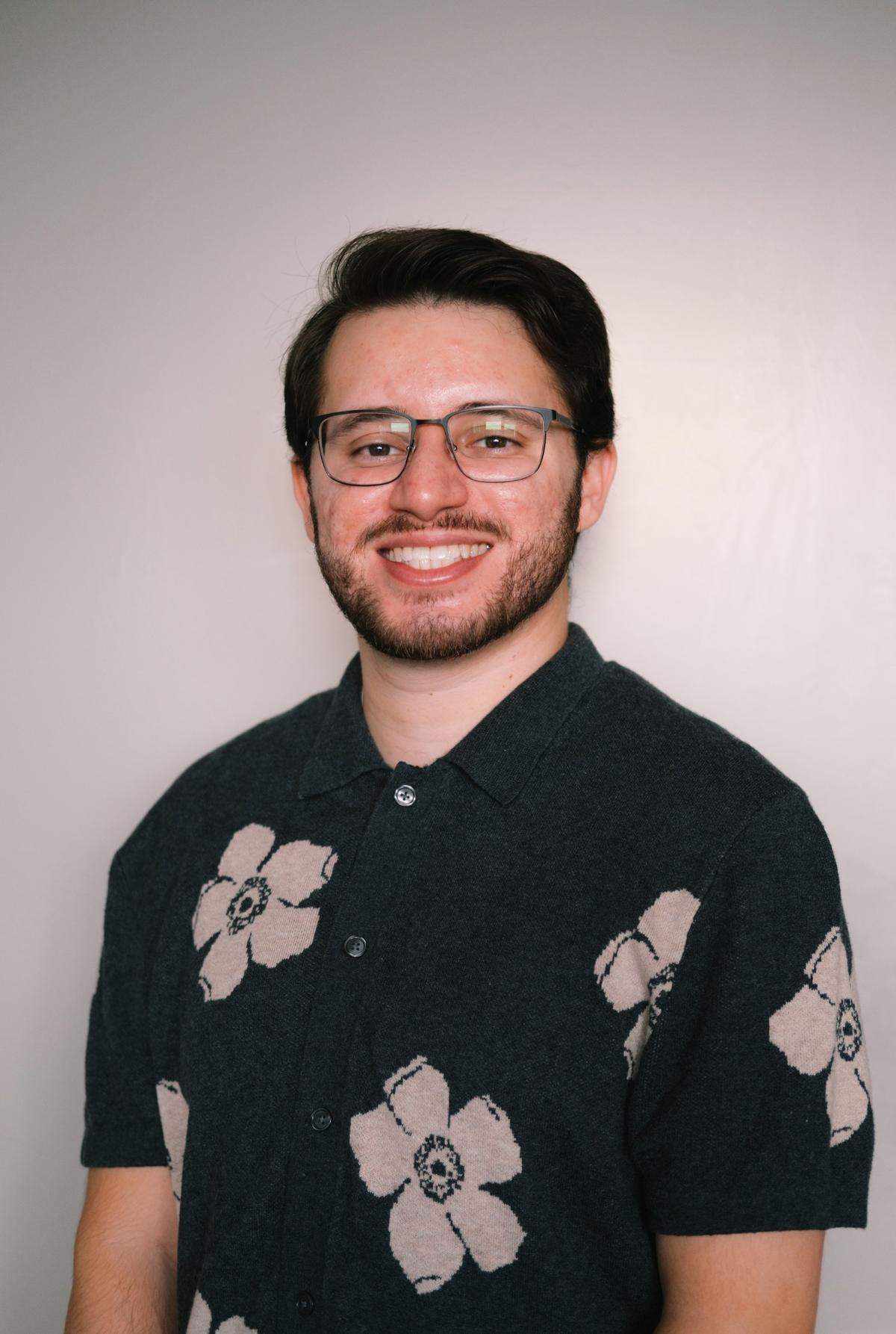
Finding housing has been a struggle for Shaelyn Reed. The 23-year-old said he has been sleeping on the streets or staying at shelters since being released from jail.
Though he still hasn’t secured housing, he has made progress with the help of a local non-profit.
CARE Olympia, which stands for Collaborative Association of Reintegration and Education, has been helping Reed and others like him reenter society. In addition to getting guidance from the nonprofit, Reed also has volunteered with them.
“Getting housing has been very hard because of, like, being in the court system in the past and being homeless with diabetes issues,” Reed said. “So, doing this nonprofit is a way for me to help others but at the same time helping myself.”
Executive Director Emily Clouse created CARE Olympia in 2021 with the goal of helping reintegrate youth and young adults who have been in the criminal justice system. She said she aims to do this in collaboration with other organizations.
“The collaborative aspect is something that I’m really passionate about because I feel like we have a lot of organizations working on serving marginalized communities, but a lot of them aren’t working together,” Clouse said. “That continuity of care could be a lot better.”
Clouse, 28, also prioritizes education, not just for the people CARE serves, but for the community as a whole. Clouse said she believes the wider community must meet marginalized people halfway to help them succeed.
“There are people who say, ‘I am totally going to dismiss that population because they’ve done wrong…’ and then there’s people like me who say, ‘No. Second chances are really important and it impacts the community in a positive way,’” Clouse said.
Reed is among those trying to make the most of the chance he has. He previously served time at Green Hill School, a secure juvenile rehabilitation facility, as well as Thurston County jail for several crimes, according to court records.
In 2017, he accepted a plea deal after being charged with having sex with younger teen. His most recent convictions are for third-degree assault and theft charges stemming from a protest that occurred outside Olympia City Hall in July 2020.
Reed said the criminal justice system mistreated him and he suffered abuse while at Green Hill School. After being released, he said he had difficulty getting consistent help among the various nonprofits and programs in the county.
As a result, Reed said he knows first-hand how similar experiences can impede a young person’s ability to reintegrate into society. Contrary to what some may believe, Reed said people like him are not simply lazy.
“A lot of people do need help to get transportation to appointments,” Reed said. “Sometimes people have disorders from being incarcerated and dealing with the court system. So having somebody to help us through a little of that pushes our ability to do it ourselves.”
What CARE does
Reed’s situation started improving this past May when he met Clouse. He engaged with CARE more frequently in the summer and by November he joined CARE’s Youth Advisory Board.
The board helps CARE’s leadership shape its services to ensure it is meeting the needs of the community it is trying to serve, Clouse said. They call their clients “neighbors” and serve them through three main programs.
First, volunteers and certified peer counselors work one on one with youth and families through the CARE Collaborators program. They help them navigate reentry from the criminal justice system, find safe housing and understand their rights, among other things.
Over the last eight months of 2022, three care collaborators have helped seven active participants, volunteered 1,280 hours and engaged in 72 peer sessions, according to statistics shared by Clouse.
Second, a Mutual Aid Team gives out essential items and harm reduction supplies to people who are experiencing homelessness, Clouse said. This team also connects with people who may benefit from its collaboration program.
Over the same time period, this team has distributed 368 snack bags, 116 naloxone kits, 226 hot meals, 22 first aid kits, 20 tents and 70 propane tanks, according to Clouse.
Lastly, CARE operates a Youth and Young Adult Recreation program that helps neighbors build skills and find community. This program has organized a variety of activities from movie nights at parks to art events at the Olympia Lamplighters space downtown, Clouse said.
Reed said Clouse helped him apply for Thurston County’s Housing and Essential Needs program and has encouraged him to make and keep necessary appointments for his health and other programs.
Clouse also helped Marley Sandoval, 30, get out of homelessness. Sandoval said she lived on the streets of Olympia for about six years and struggled with addiction. Clouse offered her supplies and helped her move into a tiny home in downtown Olympia about three years ago.
“I was in a dark place,” Sandoval said. “I was using drugs and living on the streets. It was just not ideal for where I wanted to be in life. When I met Emily (Clouse) and she told me about CARE, it kind of seemed like a way out.”
Sandoval, who has a domestic violence conviction on her record, said she got addicted to heroin in Las Vegas and moved to Washington in the hopes of getting clean while staying with a friend.
However, that arrangement did not work out. She said she ran away and ended up homeless.
Sandoval said she’s been clean for six months. Now, she works at a restaurant and shares an apartment in Lacey with her boyfriend.
“People look at homeless people like they’re lowlife drug addicts that don’t want better for themselves,” Sandoval said. “There’s actually a lot of people that do want better for themselves. A lot of people do want to get a way out of it, but they don’t know how.”
Keylee Marineau, Homeless Prevention and Affordable Housing Coordinator for Thurston County, said she first met Clouse in mid-2022 after noticing her on social media. She soon arranged for CARE to participate in regional events and conversations about homelessness.
Recently, CARE Olympia and members of its Youth Advisory Board helped the county plan for a Youth and Young Adult Point in Time Count event that took place at First Christian Church on Jan. 27. Multiple other regional organizations also participated.
“A lot of the elements that we added were a direct result of working with a young person (Reed) who had lived experience of homelessness,” Marineau said. “That was pretty cool.”
Though CARE Olympia doesn’t necessarily focus on homelessness, Marineau said the non-profit has proven to be a “vital” part of Thurston County’s homeless response system.
“CARE has that element of also advocating from the perspective of justice-involved youth,” Marineau said. “That element has been missing from our community from some time.”
How CARE formed
The first iteration of CARE formed a student organization at the University of Washington campus in Tacoma. Clouse created the organization during her last quarter in 2018. At the time, she aimed to connect people who had been incarcerated with higher education.
Clouse became passionate about the subject after serving in the Army. During her service, she fell and suffered a head injury. She said she soon developed chronic migraines that hospitalized her while at Fort Carson in Colorado.
“I was facing disciplinary action due to being injured and constantly being in the hospital,” Clouse said. “They thought I was making something up, so they decided to move me out of my apartment and into the barracks where I was under 24-hour supervision.”
Though she wasn’t incarcerated herself, she said that experience still caused her to feel trapped and traumatized. In the aftermath, she empathized with people who have been incarcerated.
When she graduated college, Clouse spent her free time bringing supplies and food to people experiencing homelessness.
“I made a lot of friends that way and started connecting with people,” Clouse said. “A lot of community members just try to look the other way, but I actually found some very genuine people with a lot to offer the community.”
Around that time, Clouse met Corey Campbell, a person who suffered from an opioid addiction while living on the streets of downtown Olympia. He went on to become Clouse’s partner and an early board member for CARE.
“She motivated me to really consider when I was going to make the decision to get clean,” Campbell said. “I needed that. I wasn’t going to do that on my own probably.”
Clouse essentially became a volunteer case manager for nearly two dozen people. She soon realized she could turn her original idea for CARE into an organization that could help more people than she could on her own.
She incorporated CARE in 2021 and it became a 501(c)(3) non-profit organization last September. But just before that happened, Clouse lost her best friend and vice president.
Paige Boughal, 27, died from a drug overdose in August. Clouse said the heartbreak that followed added a new dimension to her motivation.
“We were a dynamic duo,” Clouse said. “We did this together. … When she was gone, it lit a fire underneath me to make sure what we were working together on could be sustained.”
Laina Carras, Boughal’s 25-year-old sister, joined the board of directors in December. She said she hopes to continue the work her sister started.
“She really had just been a staple of the downtown community,” Carras said. “She had been incarcerated briefly, but she was more interested in CARE because she just had a heart for helping people.”
Like Clouse and Boughal, Carras believes it’s important to help those impacted by the justice system.
“Even though people who have been incarcerated have different life experiences as some people, you can still see them as people and give them the basic human rights that we all deserve,” Carras said.
Resources
- Narcan, generically known as naloxone, is a medicine used to rapidly reverse opioid overdoses. The state Department of Health has a list of instructions and resources on its website, as well as a search engine to help people find naloxone near them.
- Thurston County’s Public Health & Social Services department offers a clean syringe program and naloxone training; more information is on the department’s website.
- Those who need help with substance abuse or mental health concerns can call the Washington Recovery Help Line at 866-789-1511.
- Anyone experiencing a crisis can call 988 to reach a national lifeline.
- Education on how to prevent opioid overdose can be found at stopoverdose.org.