‘We have got to find a way.’ Olympia’s largest tiny home village needs money to stay open
Olympia’s largest tiny home village does not have sustainable funding, forcing officials to scrape together what money they can year to year.
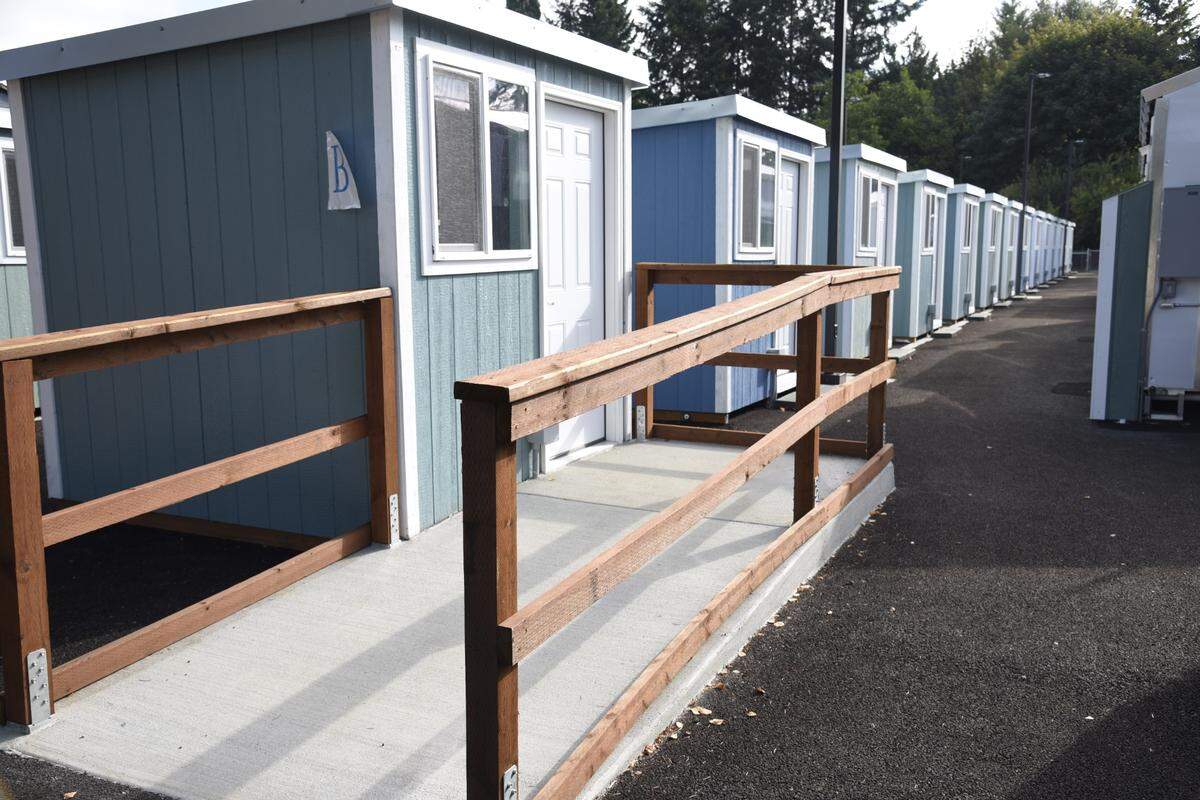
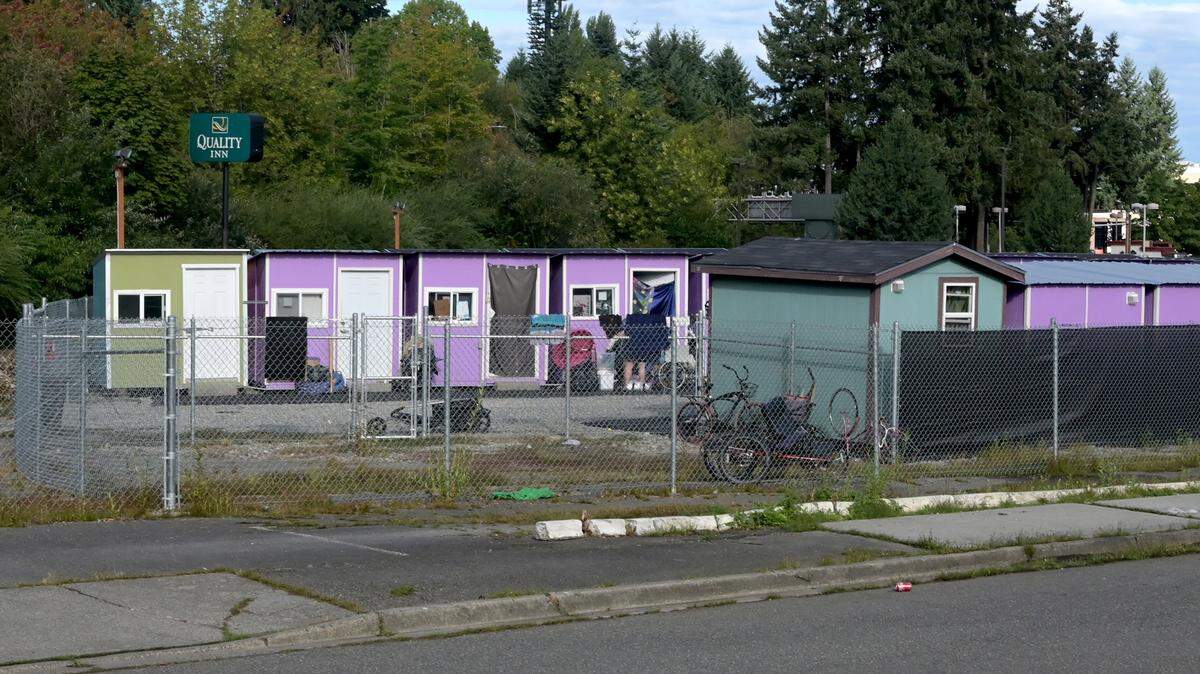
The Quince Street Village, a temporary housing site at 1211 Quince St. SE, opened a year ago to replace the now-defunct Franklin Street Mitigation Site near the downtown Intercity Transit station.
The village is operated around the clock by nonprofit Catholic Community Services at a cost of about $1.3 million a year, according to a presentation city officials made during an Aug. 23 Regional Housing Council meeting.
“This is a really important emergency shelter facility for unhoused residents in our region,” Olympia Assistant City Manager Rich Hoey said. “In fact, it’s one of the largest shelter facilities in the county.”
The problem is the City of Olympia is not sure how to continue paying for it. Hoey said the city anticipated that Thurston County would use about $1.2 million in American Rescue Plan Act dollars to support the village, but county officials have pushed back against that expectation.
The site has 100 tiny homes, six bathrooms, six showers and washers and dryers for residents. Two full-time case managers from Catholic Community Services staff the site, said Darian Lightfoot, the city’s director of affordable housing and homeless response, during the presentation.
If the city does not receive its funding request, Hoey said the city will have to “get creative” about funding Quince Street Village.
“We have got to find a way,” Hoey said. “We’ve been managing this as an emergency … and we do not yet have sustainable finances figured out for how we’re going to support this year after year. We just don’t have it yet. So we’re managing year to year, it feels like crisis to crisis.”
Lightfoot told The Olympian that the city is unable to cover this cost with its Home Fund, a levy-supported fund that brings in about $3 million a year, because it exceeds the $1 million a year the levy brings in for its entire homeless response budget.
About 65% of the Home Fund is dedicated to the construction of affordable housing and shelter while 35% is dedicated to the operations of its homeless and housing programs, according to the city.
Lightfoot said she’s confident the city can figure out a way to fund Quince Street Village for the next year. However, that still leaves the matter of long-term funding in question.
“We definitely do not want to displace residents at Quince Street,” Lightfoot said. “We just need to address some regional projects we have going on, but I’m not concerned.”
How the city and county got here
Thurston County Commissioner Carolina Mejia, who also sits on the Regional Housing Council, said the county has about $600,000 in ARPA funds that the Board of County Commissioners may decide to use for Quince Street Village. That amount falls short of the $1.2 million the City of Olympia anticipated.
“Other than that, we don’t have any other available funding from ARPA to be able to give,” Mejia said. “We can’t cover the full amount. That’s just not a realistic expectation.”
Hoey said the city wants the county to help cover the cost of Quince Street Village because many of its residents came from Ensign Road, a roadway near Providence St. Peter Hospital that city officials cleared of RVs last year.
At the time, Hoey said local officials viewed the situation on Ensign Road as a regional issue because it affected access to the county’s largest hospital.
To address the problem, the city and the county devised a plan to move people from Ensign Road to a property on Franz Anderson Road, which is south of Martin Way and just west of Lilly Road. Through an interlocal agreement, the two parties decided to share the costs of purchasing and preparing the property for that purpose.
However, those plans were significantly altered in mid-2022 when Gov. Jay Inslee announced the Rights-of-Way Initiative, a state effort to clear camps along highways and offer housing to occupants.
Franz Anderson instead became a site for a 50-unit tiny home village for the Rights of Way Initiative. Meanwhile, the city pivoted towards moving Ensign Road occupants to Quince Street Village.
Now, City of Olympia officials are invoking the intent of the previous interlocal agreement (ILA) to request additional funding from the county. The agreement says it’s intended to create a “temporary safe parking site or other emergency housing facility” on Franz Anderson Road.
“The change in which property was being used, because of how the state was directing us to do stuff with the (Rights-of Way Initiative), that doesn’t erase the intent of the ILA that we would work together on it,” Olympia City Council member Dani Madrone said.
County Manager Ramiro Chavez responded that the county has met its obligations in the previous interlocal agreement. He said the county was never involved in the city’s pivot to use Quince Street Village.
“The point, I think, from the county’s point of view, is how we’re going to be addressing the immediate need and the long-term need, but it’s this group (RHC) that needs to have the conversation.”
Mejia said the board would consider the city’s short-term request for the $600,000, but the RHC would revisit discussions on a long-term solution.
Where do the other tiny home villages options stand?
The Franz Anderson Tiny Home Village has begun accepting new residents from an encampment along Interstate 5 near Wheeler Avenue, Lightfoot said.
Unlike Quince Street Village, the state is paying the nearly $1 million per year in operating costs at Franz Anderson as part of the Rights of Way Initiative.
However, Lightfoot said that funding is expected to continue for just three years. The city anticipates transitioning residents there to a planned 70-unit permanent supportive housing project across the street.
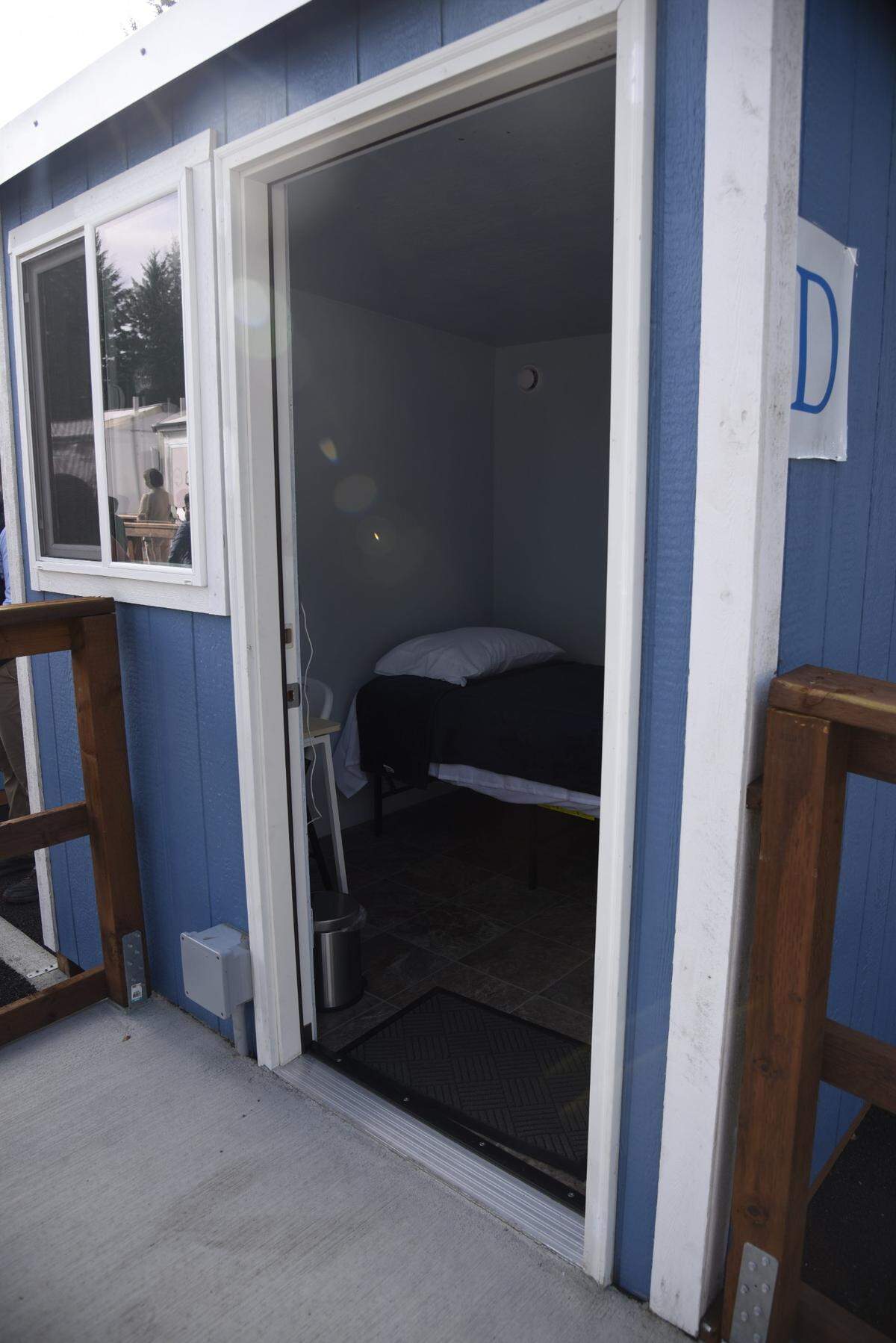
The city also supports Plum Street Village, located near the intersection of Plum Street and Union Avenue, which has 29 tiny homes. The city leases the property to the Low-Income Housing Institute and pays about $500,000 a year for operation costs, Lightfoot said.
Lightfoot said the state will take over the Plum Street Village contract in January as part of the Rights of Way Initiative. That funding should continue for a few years, but Lightfoot said the city will have to “be strategic” about what comes next after that.
There’s also Hope Village, a 12-unit site on Westminster Presbyterian Church grounds on Boulevard Road on the city’s east side. It’s managed by Catholic Community Services, and the City of Olympia pays about $95,000 a year for case and site management services, Lightfoot said.
New Hope Village is at First Christian Church in downtown Olympia. It has seven tiny homes that are managed by Olympia Mutual Aid Partners. Lightfoot said the city only pays utilities and waste management costs for that site.
Lastly, there’s Quixote Village on Mottman Road in west Olympia. This site has 30 units that are managed by nonprofit Quixote Communities, and it’s not supported by the city, Lightfoot said.
Though the homes are still described as tiny, they are larger than those found at other villages, and they are intended to be permanent rather than temporary.