
City adopts new boundaries aimed at keeping people from sleeping on sidewalks during the day
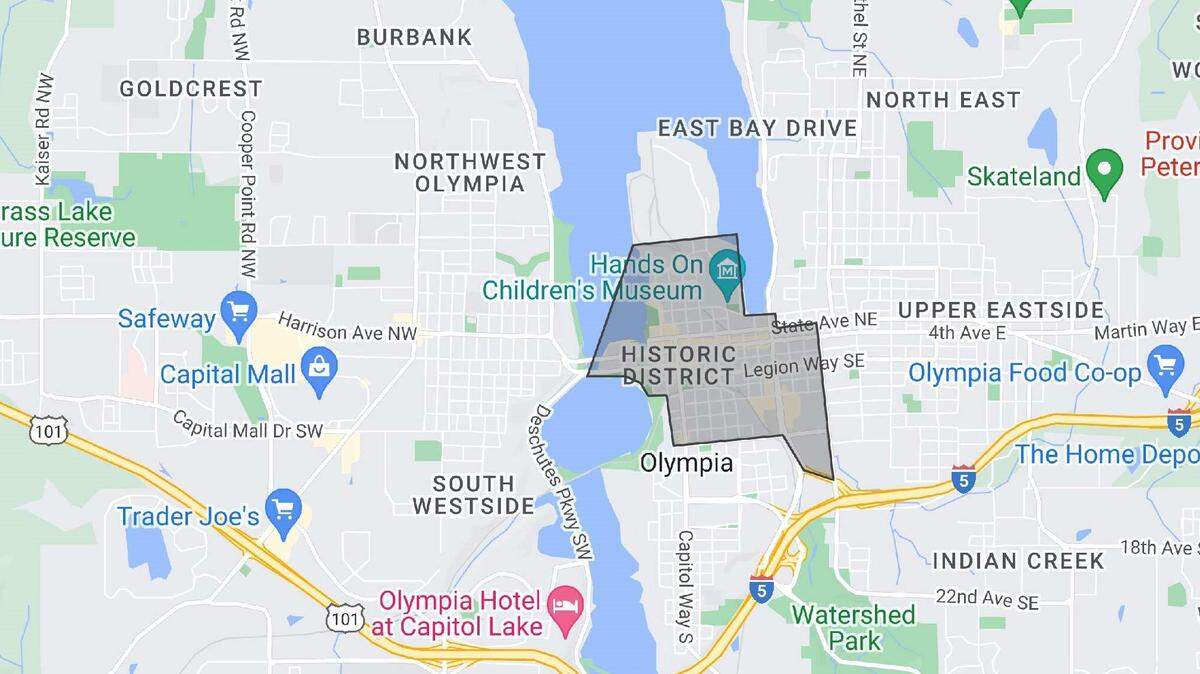
The Olympia City Council has approved a first reading of an ordinance expanding the areas downtown where people are prohibited from sitting or sleeping on the sidewalk, street or alley during the day.
The areas now include the east side of the downtown core, where emergency shelter facilities are located.
There was no council discussion on the matter, and it was forwarded on to second reading.
Assistant City Manager Rich Hoey said on Nov. 21 the boundary forbidding the obstruction of pedestrian or vehicular traffic will extend from Plum Street onto Eastside Street to encompass Quince Street Village, the 100-unit tiny home community. It will forbid people from sleeping, sitting or lying on sidewalks, streets or alleys between the hours of 7 a.m. and midnight.
People will still be allowed to do these activities between the hours of midnight and 7 a.m.
Hoey said the reason the expansion was proposed was because of a number of concerns and complaints the city has received regarding people sleeping outside or near the emergency shelter facilities. Besides Quince Street, the area is also home to Rosie’s Place, which is a youth shelter run by Community Youth Services, the Salvation Army shelter and kitchen, and Pear Blossom Place, a family shelter run by the Family Support Center of South Sound.
He said staff have received complaints from nearby residents, property owners and businesses regarding pedestrian interference and the blocking of sidewalks. He said taking the step to expand the ordinance boundary goes back to the One Community Plan and is an effort to strike a balance between compassion for those suffering and helping them, while holding them accountable for behaviors that affect the broader community.
“It’s really important to note here that the city is highly supportive of all of these facilities, they provide critical services within our community to among the most vulnerable people in our community,” Hoey said. “The city is actively supporting all of these facilities, including providing significant financial support in many cases.”
Hoey said staff have been in contact with leaders of the organizations that run the facilities about the changes. Deputy Police Chief Shelby Parker said enforcement will take more on-the-ground patrolling.
Parker oversees the community policing division and the department’s outreach services, which includes the walking patrol, neighborhood policing units, the Crisis Response Unit and the Familiar Faces outreach program. She said walking patrol units work extensively in the downtown core to build relationships with business owners and people experiencing homelessness.
Parker said the walking patrol units spend time engaging with people who are unhoused and try to learn their stories to better understand their situations. She said they connect people with services and provide them with education and warnings about possible enforcement if they’re staying in the boundary zone. Oftentimes, officers walk with the Crisis Response Unit to make connecting with people easier.
She said if walking patrol units aren’t able to get someone to comply with the new ordinance boundary, they may elect to cite the person for pedestrian interference.
“The intent is to change behavior and encourage community members to opt into community court to access resources,” Parker said.
She said if someone is cited, crisis response services are offered during the interaction and before the officer and community member part ways. She said pedestrian interference cases don’t have any fines, and are typically resolved with community service.
The new boundary will go into effect 30 days after the council approves the ordinance.
.jpg)