For sale: gently used mobile crane at the Port of Olympia’s marine terminal
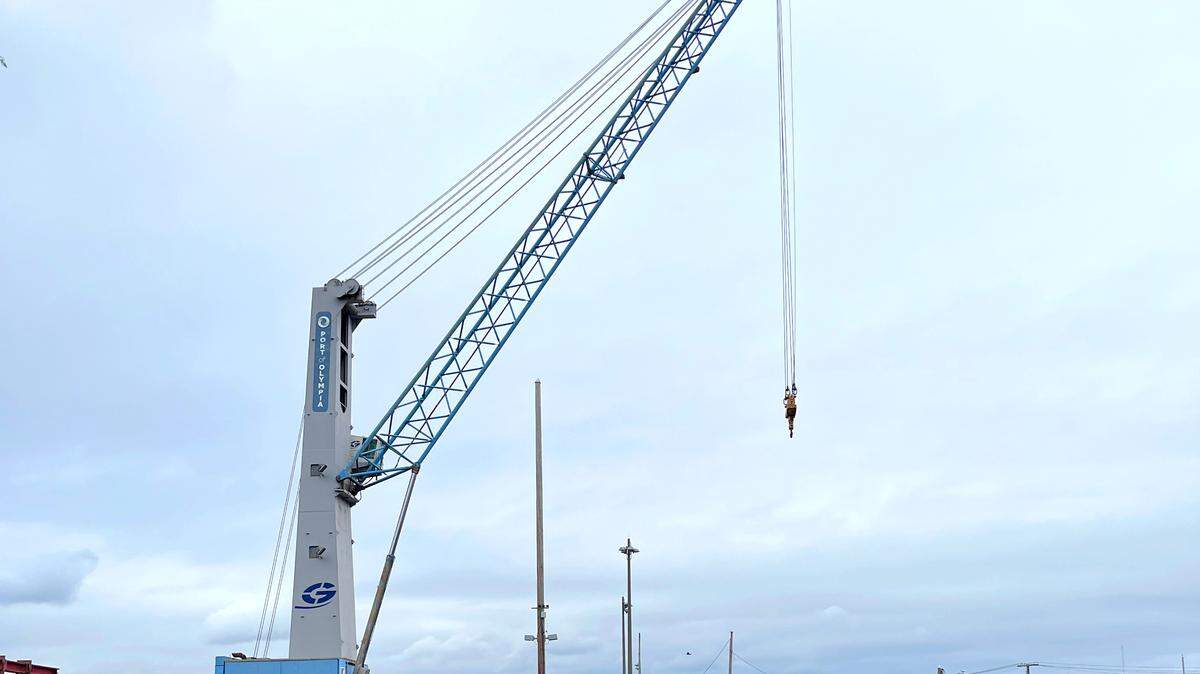
The Port of Olympia commission voted unanimously on Monday to allow the executive director to sell the mobile crane at the marine terminal.
The crane has stood watch over the terminal for 10 years, but that’s about all it has done in that time.
Even the port acknowledged in meeting materials that “the crane has not been used at the anticipated level, nor is there an expectation that it’s needed to serve future cargo.”
The commission’s vote gives port Executive Director Alex Smith the approval to sell the marine terminal crane as “expeditiously as possible and when a suitable purchase offer is received,” port documents read.
The decision was a consent agenda item at Monday’s meeting. The consent agenda typically is reserved for routine items that do not require discussion. The commission did not discuss the crane.
The Olympian reached out to Commissioner Bob Iyall, president of the commission, after the meeting. Iyall said that when the port bought the crane 10 years ago, they envisioned it benefiting the marine terminal.
“But in the long run, it just didn’t work out,” he said. “The best thing for us, if there are buyers out there, is to go ahead and sell it to them.”
On Sept. 10, 2014, the port purchased the Gottwald mobile crane for a base price of $2.17 million. However, when adding in the cost of consultants, staff time and set up costs, the net total purchase expense was closer to $3.3 million, according to port information prepared by Warren Hendrickson, the port’s director of operations.
The crane now is valued at $2.5 million. There is no bond debt associated with the crane, the information shows.
“When sold, it will be sold at a loss; however, a sale will also eliminate ongoing twin burdens of staff time and maintenance expense if it was retained as a port asset,” Hendrickson’s memo reads.
Another challenge: replacement parts for the crane are getting increasingly hard to find.
“Given its minimal revenue-generating use and increased ongoing staff and maintenance expenses, the crane is now unacceptably burdening the marine terminal’s financial performance,” the memo reads.
Before the mobile crane, the port’s marine terminal was home to two cranes, but the cranes had outlived their usefulness since coming to the port in the late 1990s to serve a Russian container line, The Olympian reported.
After the Russian container line business went away, the cranes largely had been inactive. The cranes were later sold for scrap and recycled in British Columbia, according to The Olympian.
This story was originally published October 15, 2024 at 5:00 AM.