
Olympia police plan to add 12 EVs to fleet, express woes with current hybrid models
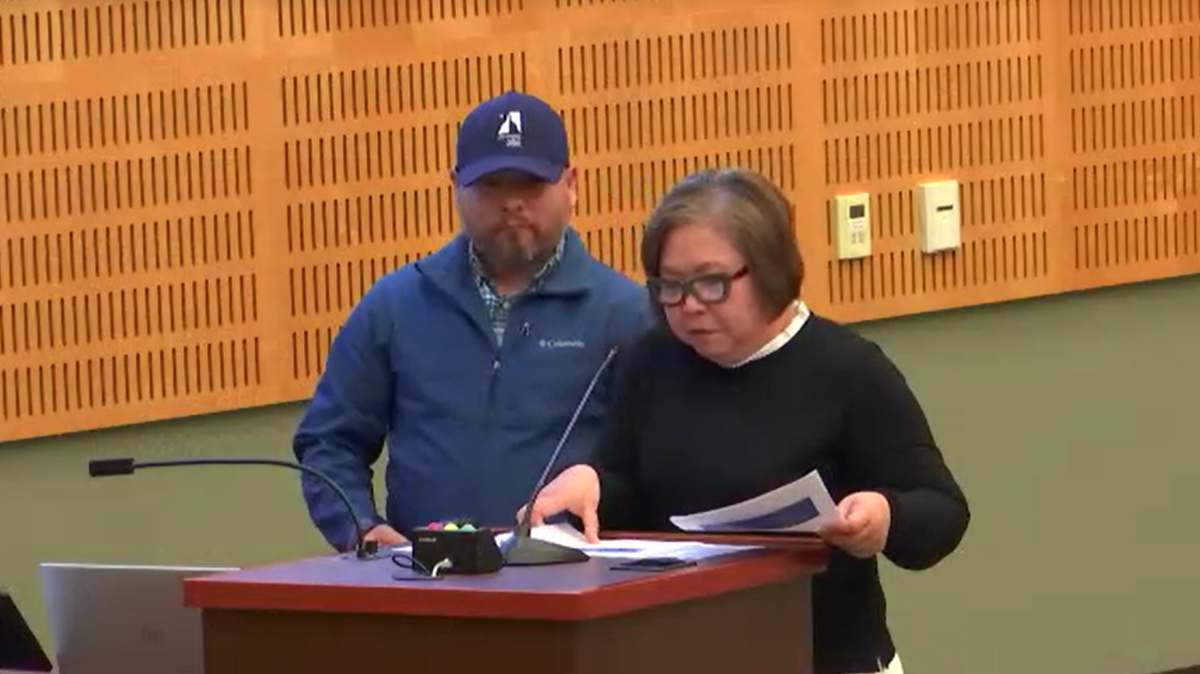
The Olympia Police Department has requested adding 12 new electric vehicles to its fleet. They would be leased and paid for using revenues from the county’s Public Safety Tax.
The Olympia City Council is set to vote on the request at its Dec. 10 meeting. The plan was informally brought to the council at its Nov. 19 meeting by Deputy Police Chief Shelby Parker.
Parker said Thurston County voters approved Proposition 1 to provide dedicated revenue for public safety. OPD is proposing to use a portion of the revenue to expand the department’s fleet of patrol vehicles.
The Public Safety Sales Tax is a 0.2% sales tax that primarily supports law enforcement. Voters approved the tax in the 2023 general election.
Parker said OPD now operates a fleet of 30 pursuit-rated Ford Interceptor vehicles with “power-hungry devices” such as cameras, computers, printers and radios.
Parker said up to 16 of those 30 vehicles are used nearly 24 hours a day as they rotate between day and night shift officers.
“Night Shift officers turn their patrol vehicles over to day shift officers at shift change,” she said. “Patrol vehicles consistently driven 24 hours a day, 365 days a year, are considered hot-seated vehicles.”
Thanh Jeffers, deputy director of the city’s Public Works Department, said the city is working to electrify its fleet to help reduce emissions. The city vehicle fleet is expected to reduce its emissions by 49% by the end of this year, and they’re on track to meet a 59% reduction by 2030.
She said the city’s 2030 target is a 59% emissions reduction from 2019 levels.
Jeffers said 38% of the city’s light-duty vehicles are EVs and hybrids. She said they anticipate being able to transition to fully EV or alternative fuel for their light-duty vehicles by 2034.
“We’re optimistic that technology will be catching up with our operational needs, because right now, full-size trucks or full-size cargo vans are only available in EV,” she said. “We cannot find options for mid-size or smaller trucks.”
Jeffers said the city has made great strides in 2024 by transitioning to renewable diesel for all heavy duty vehicles, which has reduced those vehicles’ greenhouse gas emissions by 75%
The city adopted a policy last year around vehicle acquisition. The vehicles must be fuel efficient with the lowest possible emissions. The city also must prioritize zero-emission vehicles over comparable vehicles powered by internal combustion engines.
They also have to be commercially available, practical and reasonably priced.
Issues with current models
Jaime Mastache, Fleet Operations supervisor, said OPD currently has 13 hybrid Ford Interceptors that were purchased in 2021. He said they’ve had issues throughout the time the OPD has had them.
“We’ve had six vehicles already that had to be replaced; their batteries and multiple warning lights with safety concerns for the officers and for their response times, so we effectively decided to stop ordering hybrid vehicles,” Mastache said.
He said OPD has had to rely on conventional gasoline engine vehicles. They’ve had less downtime, have required less maintenance and were on the road more to help with public safety replacement needs.
That doesn’t mean OPD is switching back to gas. Mastache said OPD has a goal to switch from a depot-based fleet, where all vehicles are stationed at one place, to an assigned vehicle model.
To do that, the fleet would have to expand to at least 70 vehicles. Mastache said it would reduce the likelihood of an officer being without a vehicle because it’s charging or in the shop.
“Overall, it would effectively help with the transition to electric vehicles, with some issues in that process that we’re working towards with DKS (Consulting), who’s recommending that we pursue EV for patrol in 2028 to start with the transition,” he said.
He said in the meantime, the new vehicles would be used by administration.
“Most municipalities that have transitioned some of their police departments into EV vehicles use them for admin vehicles, or use them for detective vehicles,” he said.
Mastache said the Chevy Blazer is currently the only pursuit-rated electric vehicle commercially available. And it’s fairly new, so it’s expensive. There would be infrastructure costs as well, because none of the city’s buildings have 480-volt capabilities.
“The few that have transitioned their entire fleet are very small cities that have long dwell times in between their shifts, and they have the infrastructure in place to support that,” Mastache said. “So we are currently not there, but hopefully in the future, we do get there.”
Some other communities that have begun the switch to EV include Lake Stevens, Mason County, Grays Harbor County and South Kitsap Fire and Rescue.
The cost of fleet expansion
Mastache said it’s approximately $100,000 to uplift an Chevy Blazer EV PPV with the required updates. For 12 of them, that woud be $1.2 million. On top of that would be finding and funding secure parking space for the expanded fleet, and more funds for charging infrastructure.
Parker said the plan for now would be to lease 12 vehicles with unused Public Safety Tax dollars at an initial cost of $186,600. Equipment and radios will cost $250,400.
Altogether the request is for $437,000. Subsequent lease payments are already accounted for in the 2025 budget.
Parker said the lease option reduces upfront costs by about $600,000. In the long run, it would save the city approximately $1.1 million, she said.
Are more officers being hired?
Parker said Public Safety Tax dollars won’t be spent on hiring new officers until sometime next year.
Parker recapped the projects the tax dollars have funded this year:
- The Olympia Downtown Alliance received funds to increase lighting downtown and expand the Downtown Guide program.
- The Municipal Court received funds to help pay for jail alternatives such as electronic home monitoring and alcohol monitoring for people experiencing financial hardship.
According to previous reporting, revenue from the Public Safety Tax is divided into two funds at the county: one labeled “law” and another labeled “justice.”
The county set up the tax so 75% of the money it retains would fund law enforcement services and infrastructure and 25% would fund additional prosecution and public defense services as well as elections security infrastructure.
The county expects the law fund to collect a total of about $3.8 million in 2024 and $6.6 million in 2025, according to the budget. Meanwhile, the justice fund is expected to collect about $1.3 million in 2024 and $2.2 million in 2025.
.jpg)