How might President Trump’s tariffs affect Thurston County? Here are 2 local examples
President Trump has announced trade tariffs on Canada, Mexico and China, and now business leaders, including in Thurston County, are weighing what that might mean for the cost of goods here.
Although Canada and Mexico have worked out one-month delays before the 25% tariffs take effect, a 10% tariff on China was set to go into action Tuesday morning.
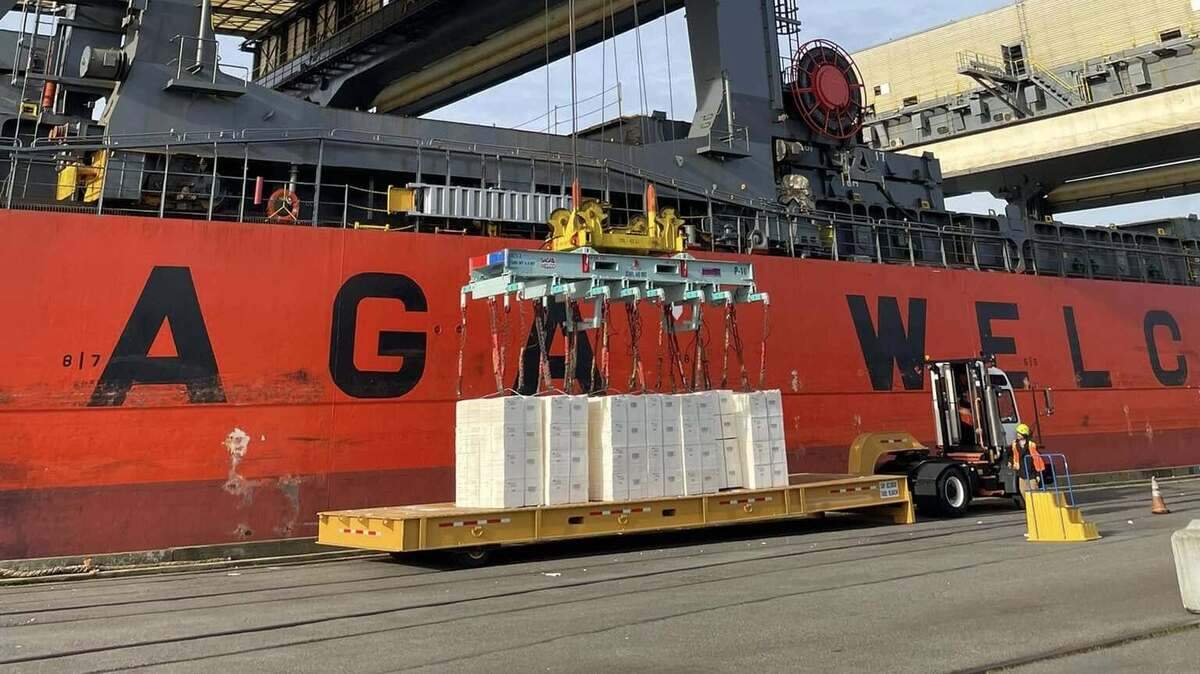
Port of Olympia officials told The Olympian there isn’t a direct impact from the tariffs. However, the kind of trade announcements made by the Trump administration could have a dampening effect on trying to get more business at the port, said Anthony Hemstad, who heads an economic development committee that is part of the port’s citizens advisory committee.
Hemstad, who has a background in international trade, regularly meets with Afsin Yilmaz, the port’s marine terminal senior manager, to talk about increasing business at the marine terminal.
Trump’s trade talk makes that challenging, he said.
“It’s a nightmare,” Hemstad said. “Businesses want certainty, but when you’re changing trade policies every six hours, it makes everything really difficult. Businesses have to take a leap of faith, but in international business they don’t want to be doing that because they’re counting on a certain price or cost.”
There is one possible silver lining for the port, however. If, in fact, the 25% tariff on Canada goes into effect 30 days from now and increases the cost of pulp products, it might open the door for the port to do more business with an existing customer, Hemstad said.
A Brazilian business called Suzano currently ships bulk paper products through the port. Business from that customer has prompted the port to invest in a second marine terminal warehouse.
“It could be a good thing,” Hemstad said.
Lumber
Another industry that could feel the effects of tariffs are Thurston County home builders and the lumber they need for their projects. Much of that, plus other building-related materials, come from Canada and Mexico, according to the National Association of Home Builders.
“On President Trump’s first day in office, he issued an executive order directing departments and agencies to deliver emergency price relief by pursuing actions to lower the cost of housing and increase housing supply,” NAHB officials said in a news release. “This move to raise tariffs by 25% on Canadian and Mexican goods will have the opposite effect. More than 70% of the imports of two essential materials that home builders rely on — softwood lumber and gypsum (used for drywall) — come from Canada and Mexico, respectively.”
And that could mean higher costs here.
“It’s definitely going to impact the cost of putting a project together,” said Chad Johnson, the president and owner of Truss Components of Washington, which manufactures trusses in Tumwater.
Those costs will be passed along to customers, he said.
Then the question becomes: How much of those added costs can a builder absorb and how much more are prospective buyers willing to pay for a new house?
“Anything that raises prices I am not a fan of,” said Jeff Kuster of Kuster Homes and Remodeling LLC about tariffs.
He also is the board president at Olympia Master Builders, which represents about 500 builders, remodelers and others in a five-county area, including Thurston County.
“We advocate to keep the cost of homes and construction as low as possible so people of different demographics can afford some kind of living area, whether it’s a rental or new home,” he said. “I would like to see everyone buy a home.”
He acknowledged the cost of a home today is a “far cry from what I paid 27 years ago.” The median price of a home here in 2024 was $515,000. And Kuster’s cost to build has gone from $80 per square foot to $350 per square foot.
“I do feel the cost of homes needs to have some kind of remedy,” he said, adding that tariffs potentially make the problem worse.
Kuster spoke to The Olympian outside a home improvement store on Monday and he provided a real-world example of what might happen to the cost of building materials. He came across a stack of oriented strand board from Canada, a product that builders often use for walls and roofs.
“We use a lot of it,” he said.
A single sheet was selling for $17.88, Kuster said.
What might that price be a month from now?
This story was originally published February 5, 2025 at 5:00 AM.