
Thanks, spring showers: Cherry blossoms begin blooming at state Capitol Campus in Olympia
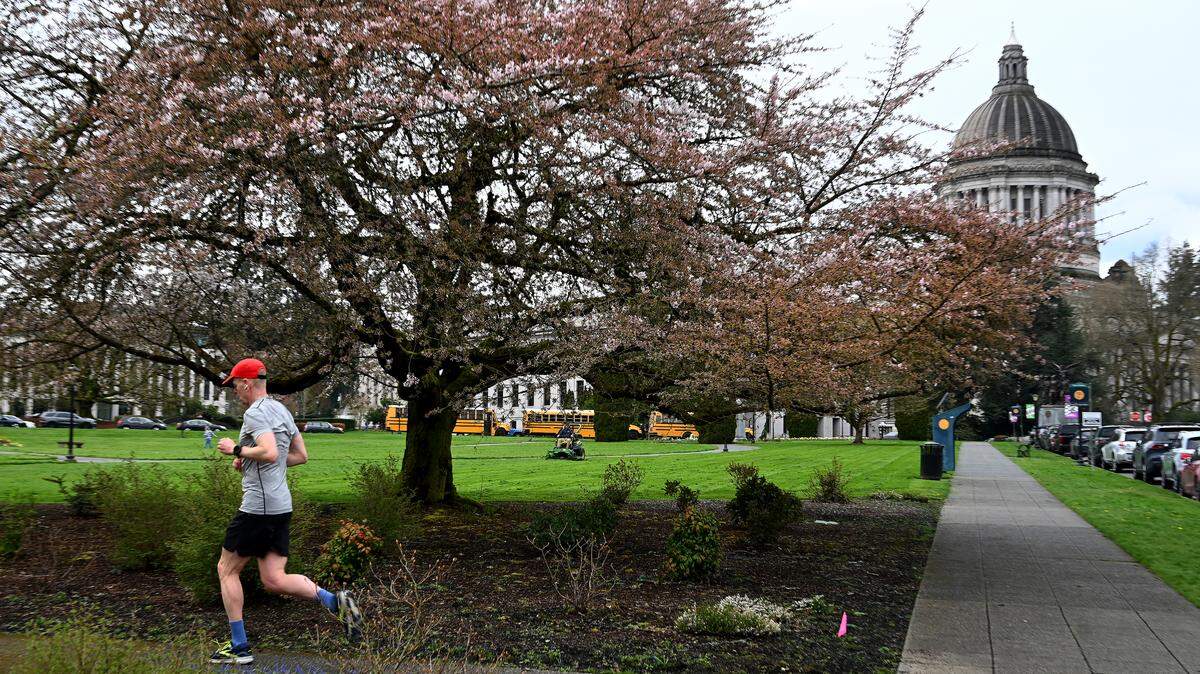
Bursts of white and pink have started to spring up at the Capitol Campus in Olympia. That’s right, blossom-lovers: The cherry trees are beginning to bloom.
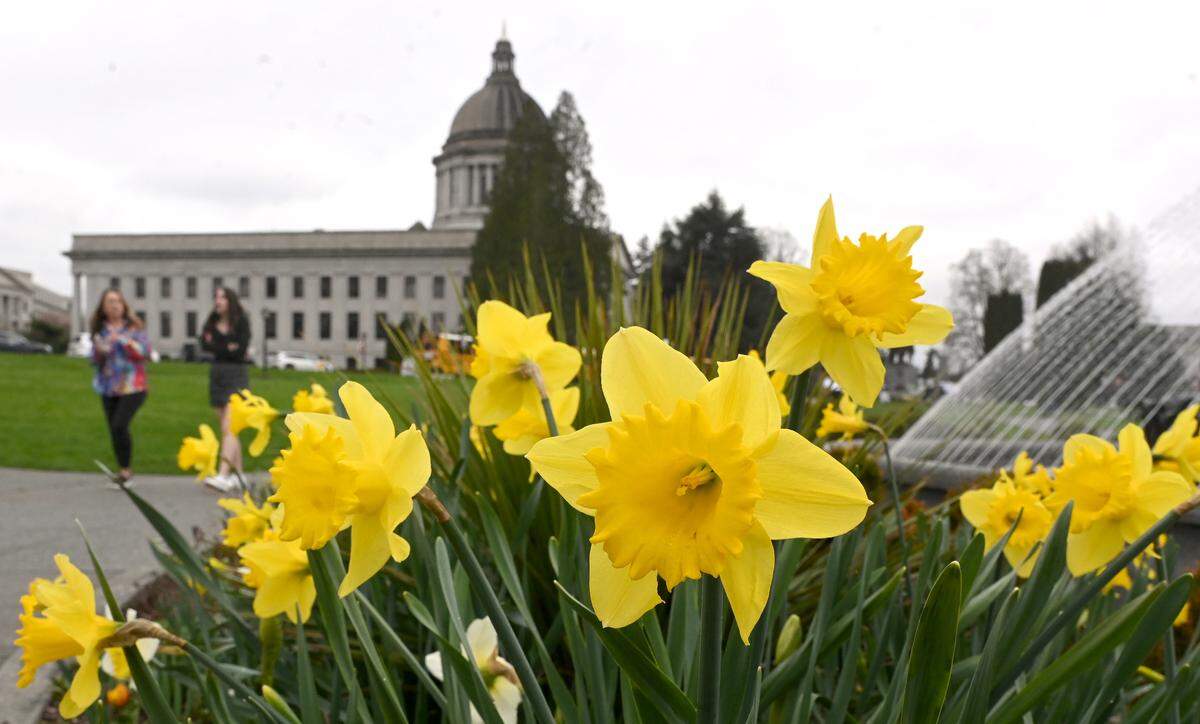
Along with the bright yellow hue of daffodils, cherry blossoms are among Washington state’s quintessential spring harbingers — signs that the dreary winter season is on its last legs. And the cherry blossoms are arriving at a time when the 2025 legislative session is seriously heating up.
The Washington State Capitol Campus features an internationally accredited arboretum, offering visitors a dynamic natural space for relaxation and reflection.
What are the two types of cherry trees at the Capitol?
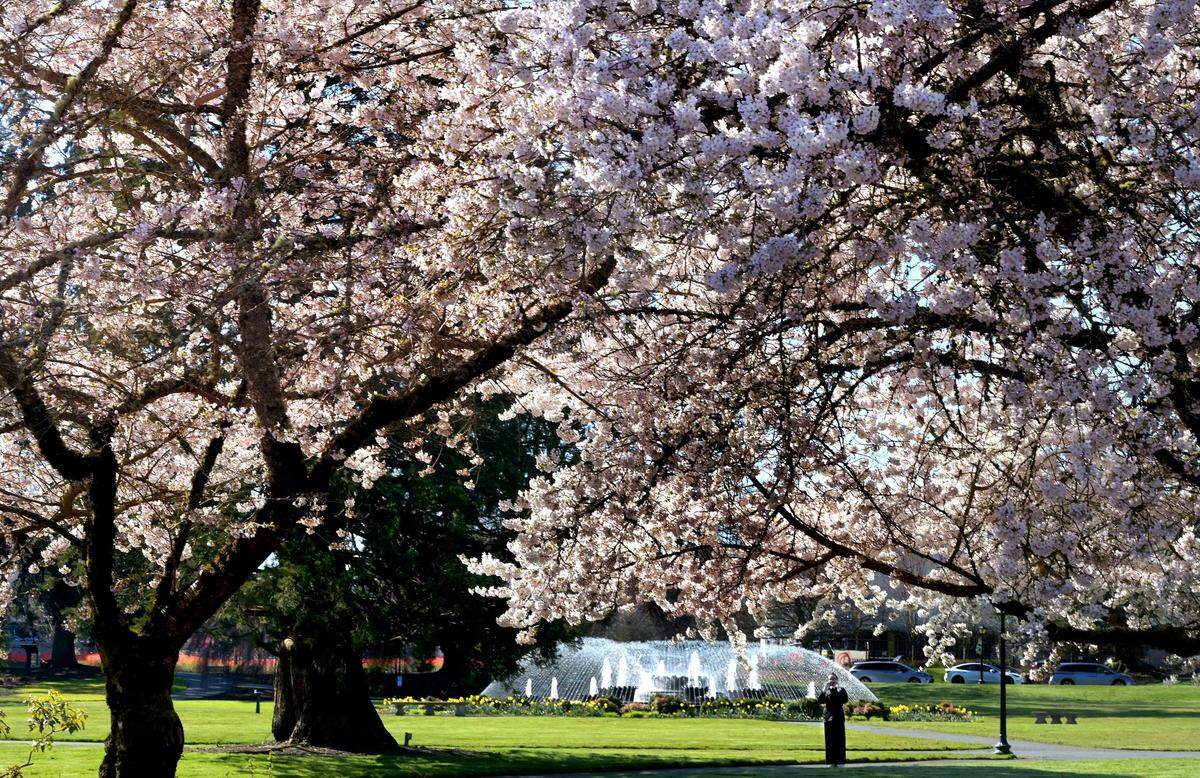
In 1932, four years after the completion of the Legislative Building, the original cherry trees took root in the soil of Cherry Lane: Those are Kwanzan cherry trees, according to the Department of Enterprise Services.
Fast-forward to 1984, the year that the next type of cherry trees made their debut. A Japanese businessman reportedly offered Yoshino cherry trees as a gift: a way to commemorate Washington’s close ties to Japan.
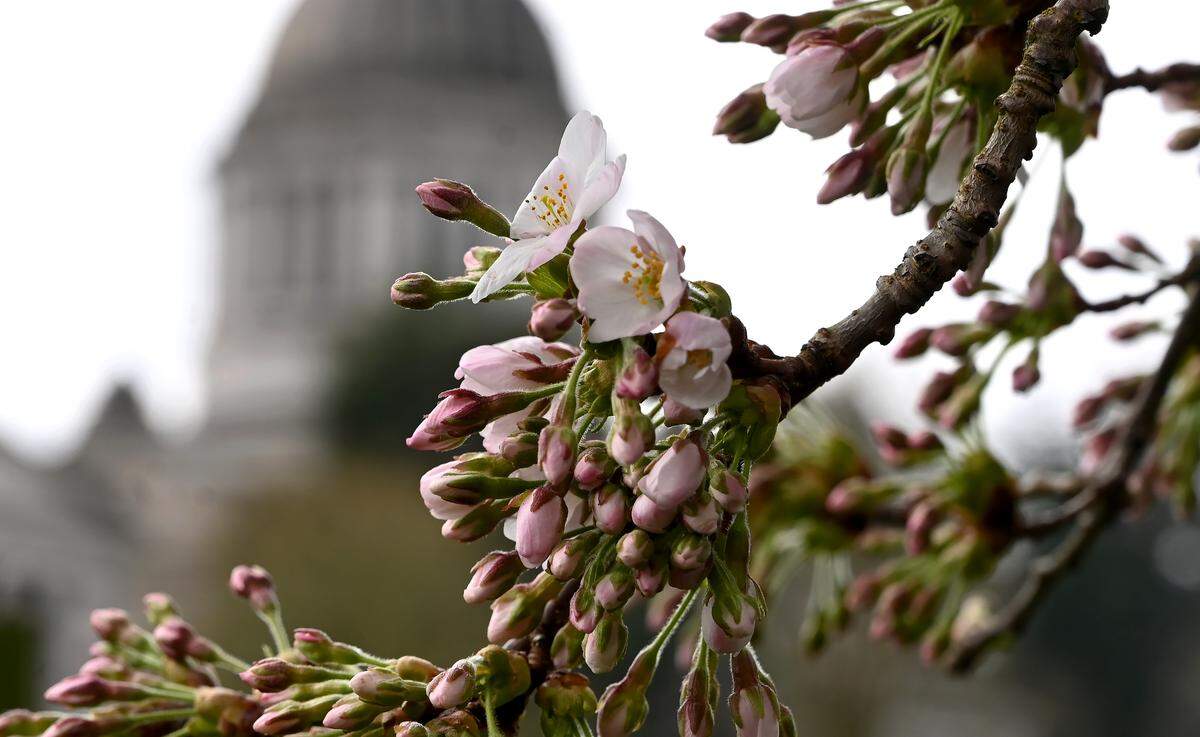
How to tell the difference between Kwanzan and Yoshino?
When the Kwanzan cherry trees flower, they produce deep rosy bouquets, according to DES. The Yoshino cherry trees typically bloom first, with paler petals.
Each year, DES grounds staff prune the trees to ensure they flower to the best of their ability. Chemical treatments are sometimes applied to stop or prevent infection and infestation. The trees are fertilized and receive treatments “as a last resort” to ensure they continue to blossom for years to come.
The Yoshino trees are estimated to be in the middle of their life cycle. They’re anticipated to live anywhere from 75 to 100 years.
Have any cherry trees been removed from the Capitol?
When rot takes root, a limb — or sometimes the entire tree — might need to be removed. Four of the 19 trees on Cherry Lane were taken down in 2023, and were then replaced by 30-year-old Kwanzans.
Five years ago, in 2020, a younger Yoshino also had to be removed near the John L. O’Brien building because of girdling root, a fatal condition.
“In both areas, we’ve planted replacements to take the place of their ancestors, ensuring that cherry trees will bloom at the Capitol Campus for decades to come,” according to the Department of Enterprise Services.
DES asks that visitors who make a trip to see the Capitol blooms:
Tag the state’s Capitol Campus when posting cherry-flower photos on social media.
Refrain from snapping off blossoming branches, a move that could stress out the plant and introduce a way for disease to take hold.
.jpg)