
Olympia Oyster Seed Planting Project helps oysters clean south Puget Sound
AI-generated summary reviewed by our newsroom.
- Volunteers plant oyster seeds at over 200 sites between June 7 and July 20, 2025
- Each planted oyster filters up to 50 gallons of bay water daily, aiding cleanup.
- Olympia Oyster Seed Planting Project reaches 2,700 properties
For decades, Dan Mazur has taken the phrase, “the world is your oyster” literally.
He grew up in Illinois, but took off for Montana the morning after his high school graduation.
“Well, you know, I was young, foot loose and fancy free,” Mazur said. “What do they say? There’s an expression, ‘the world is… the world is your oyster... Make the world your oyster.”
After spending time in Montana, England and Nepal, and even coordinating a few rescues on Mount Everest, including the rescue of Lincoln Hall, Mazur now spends most of his year planting oysters in south Puget Sound through the Olympia Oyster Seed Planting Project, now in its 18th year.
The project plants mesh bags of oyster seeds along the shoreline between Totten Inlet at the Thurston-Mason countyline and the Nisqually Reach near the Thurston-Pierce countyline with the help of volunteers. Each bag costs $27.50 and contains 100 oyster seeds.
While Pacific oyster seeds start out slightly bigger than the size of a quarter, the mature oysters will grow to be about the size of a hand within two years. The project also cultivates the much smaller native Olympia oyster which, according to Mazur, starts out at the size of a match head.
Mazur described oyster seed planting, otherwise known as oyster gardening, as “the best kind of gardening.”
“I like to think of it as the best kind of gardening because you just plant the stuff and walk away. You don’t have to weed it, you know … it’s done,” he said. “In two years, you can take them out of there… and put some more in. It’s pretty easy.”
Not for eating
The Department of Health prohibits people from eating oysters planted in Budd Inlet because of water quality issues, but Mazur said oysters still hold an abundance of benefits for the Puget Sound.
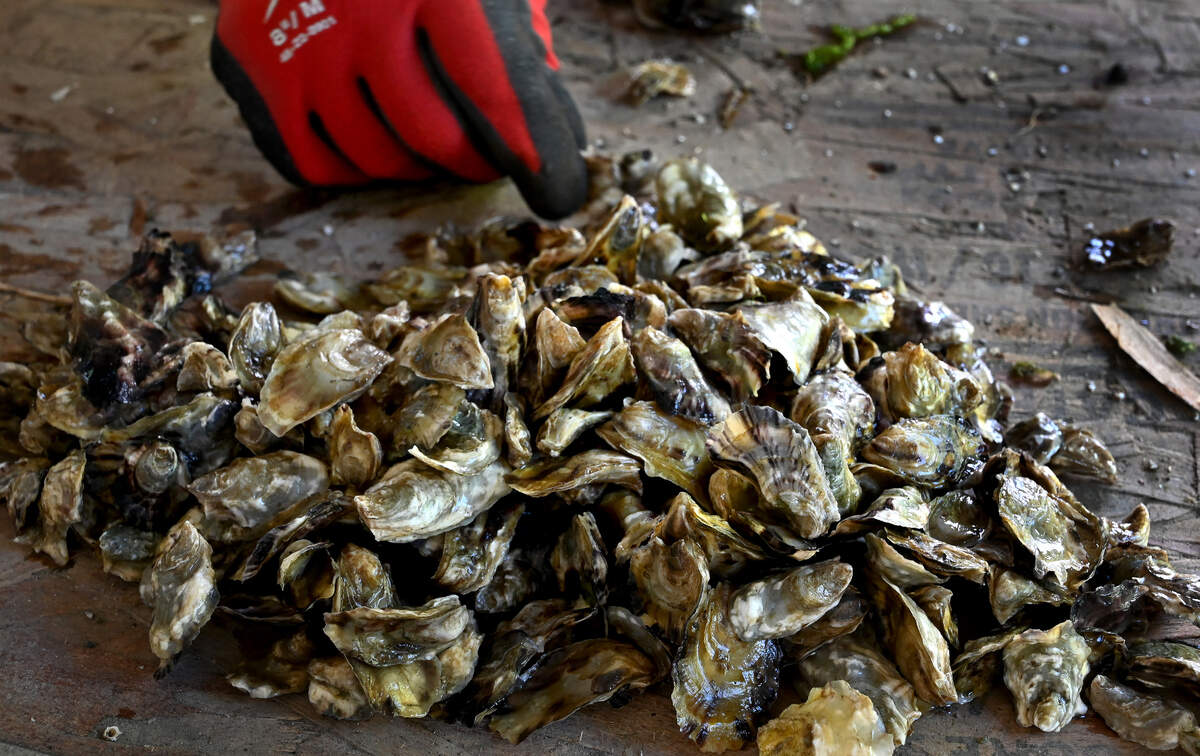
“They eat by filtering out algae… And algae is okay, but if you have too much, it’s not good,” he said, “... It causes weird things in the bay, like too much seaweed, red tides, all kinds of stuff.”
Thankfully, each oyster can clean roughly 50 gallons of water per day by filtering water from the bay to absorb the nutrients they need to survive.
“They take in water with whatever’s in it, filter out what they need and then expel what they don’t… So our bays are perfect for them. We have these estuaries with these big tides that come in and out, and so there’s a constant flow of nutrients, water, and it’s always recirculating,” Mazur said.
This year marks the 18th Olympia Oyster Seed Planting Project. Between June 7 and this Sunday, July 20, volunteers working with the project will have planted oyster seeds at over 200 shoreline properties. This year is also the first year the project has offered its services to all of the properties along Thurston County’s shoreline — roughly 2,700 properties.
“I’m just trying to survive this year,” Mazur said, “Because in different years, we did different bays, like we did Budd Inlet and sent letters to all those people, or we did, like, Henderson Inlet, or we did Eld Inlet, but this year we decided to do the whole county. So we sent letters out to all 2,700 property owners.”
The project has depended on volunteers to help complete each summer’s oyster seed planting.
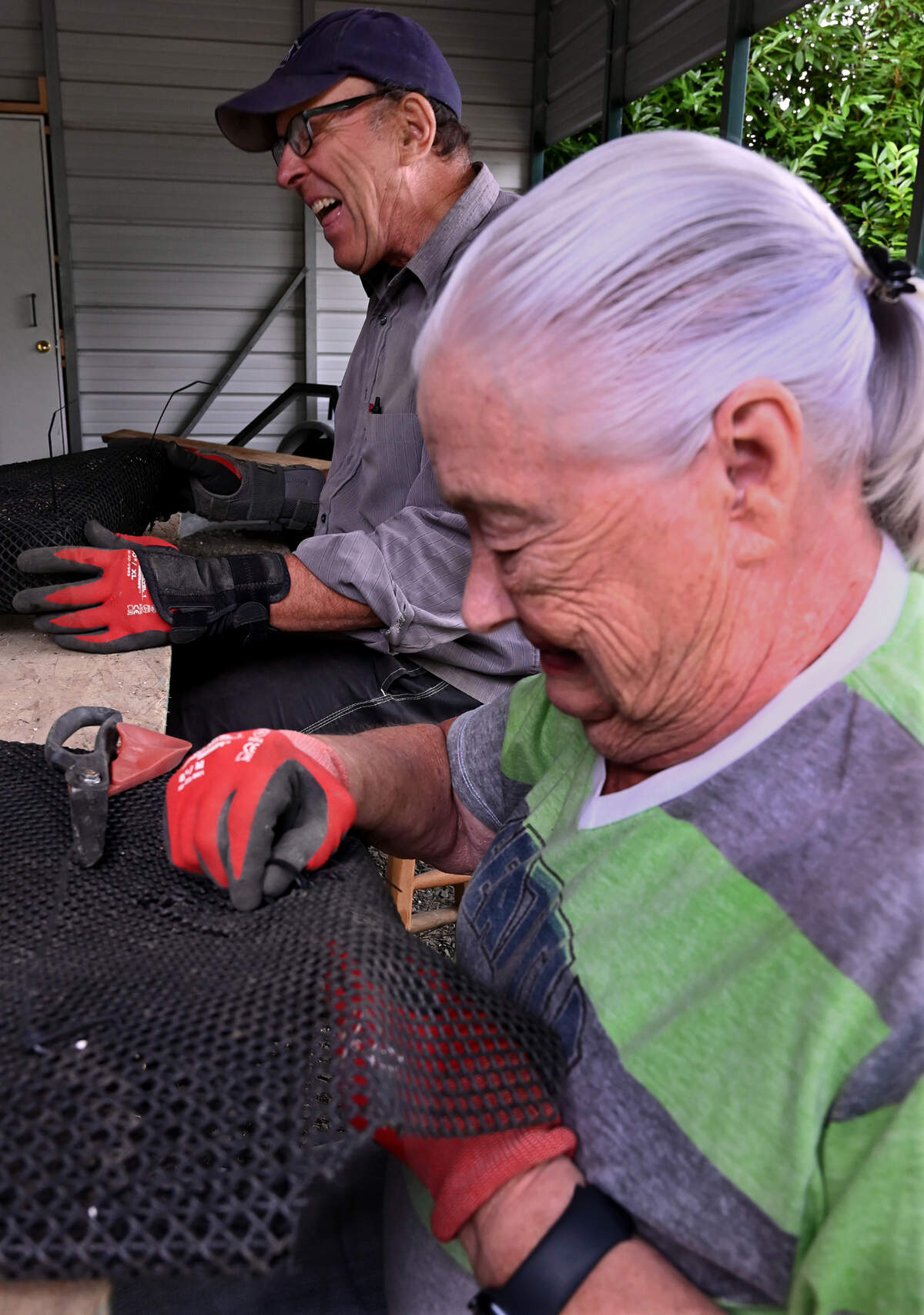
Joan Wubbena, the former owner of Fiddlehead Marina, has lived near Mazur on East Bay Drive for 12 years. While she has been a regular customer, purchasing oyster seeds for roughly the past decade, this year is her first time volunteering with the project.
“I started volunteering yesterday, but I find it kind of fun,” she said while carefully knotting rope around rebars, the steel bars used to stake bags of oysters into the beach.
“I just think it’s a good project.”
As for Mazur, while he still leads tours in Nepal in the spring and fall, he has no plans to leave Washington.
“There’s some great people, really, I get to meet the greatest people doing this,” he said.
“I think no bad people do this. The people that do this are just so interesting, enthusiastic, I’m so warmly welcomed.”
This story was originally published July 18, 2025 at 12:21 PM.