
Olympia seeks to boost food access, security in times of crisis. Here’s how
AI-generated summary reviewed by our newsroom.
- Council approved referral to develop city food system plan, add to 2026 work plan.
- Plan will hire consultant, gather data, engage the Squaxin Tribe, nonprofits and more.
- Plan aims to boost local food access; will consider community gardens, fruit trees.
The Olympia City Council unanimously approved a referral from council member Dani Madrone to develop a food system plan during its Jan. 6 meeting, in an effort to ensure residents have access to local food in times of crisis.
Madrone’s referral states that the work should engage the full council and will touch the work of all committees. Plan development will be added to the council’s 2026 work plan and will also involve hiring a consultant to design and carry out the planning process.
“Food security and its connection to our local food system has come up over the past several years with recent threats to federal food assistance, the empty shelves we experienced during the pandemic, and the city’s purchase of Spooner Farms to develop into soccer fields,” the referral states. “Issues surrounding food security often rise to the surface during a crisis, but there are actions the city can take that can bolster the local food system and soften the impacts when there are disruptions.”
During the meeting, Madrone said one of her first-ever council meetings involved folks expressing frustration over the sale of the Spooner Farms property. She said people have called the city out for having many goals related to urban agriculture and supporting the local food system, but not acting on them.
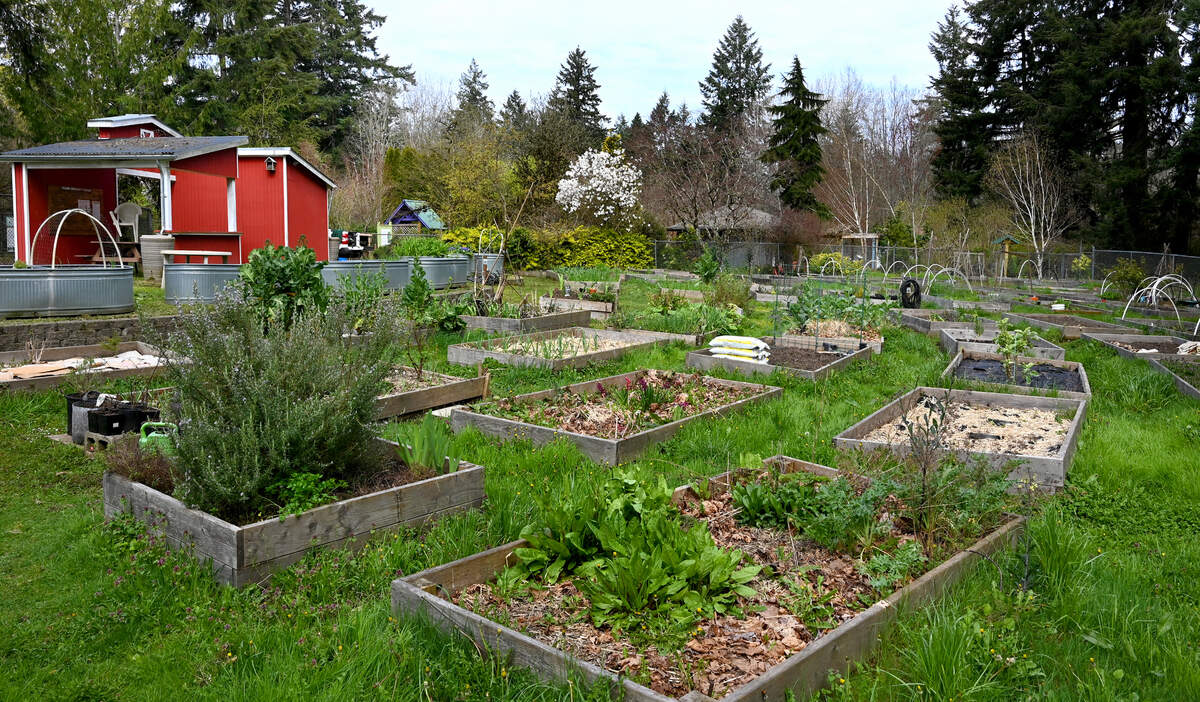
“And I want to say we weren’t doing anything,” Madrone said. “You know, the city’s had a farmers market for a long time. There are two city-sponsored community gardens that have been around for a long time, but we weren’t making forward progress on any long-standing goals in our comprehensive plan.”
Madrone said Thurston County does a lot of work around the local food system, because they have agricultural zoning and most farms are out in unincorporated parts of the county. She said the county has a robust program doing this work, and it’s not something she wants Olympia to take over from them.
“We’re in an urban environment, and our role in the food system is different,” she said.
Madrone said the kinds of places Olympia has to grow food and the kinds of access people have to local food are different.
“What people can do in their own backyards is very different,” she said. “The ways that people can come together in community around food is very different. And so yes, we do need a food system plan specifically for the city to address our unique role in the original food system.”
She said there’s been a lot of work done already around boosting access to local, healthy food, including updating code to allow urban agriculture in more zoning districts. She said the city now has an agreement with the Thurston Conservation District to help with establishing more community gardens.
Madrone said her “hopeful outcome” for the referral is to have more than just a list of ideas, but that the council “clearly articulate the real needs in our community.”
A community-driven approach
Olympia resident Grace Fletcher said during the meeting that she supports the development of a local food system plan, and she brought some ideas along with her that she said “can meaningfully expand food access while strengthening neighborhood connections.”
Her first idea was an expanded community garden program, beyond individual plots. She said the city should establish dedicated garden areas specifically for growing food for local food banks and mutual aid efforts.
“Seattle’s P-Patch Program offers a proven model where gardeners contribute thousands of pounds of food annually, while building community ownership and stewardship,” Fletcher said.
Her second idea was to better manage forest and neighborhood trees that bear edible fruit. She said many neighborhoods already have mature fruit trees that go unharvested each year.
“With coordinated tree cleaning and maintenance efforts, we can turn that excess into a reliable source of fresh produce,” she said.
Fletcher also supports the city investing in community fridges, which are a free, anonymous source of food with 24/7 accessibility. She said programs have seen success in cities such as Chicago and Los Angeles.
Fletcher said these fridges allow neighborhoods with extra produce from their gardens and trees or groups that volunteer to feed people for free to directly contribute to the local food system.
“Local government does not need to solve these challenges alone,” she said. “Residents are ready to help.”
John Ficker, executive director of the Thurston County Food Bank, said during the meeting he wanted to thank the council for its recent contribution of $30,000 after a pause in SNAP funding. He said the funds have come at a time when they’re seeing nearly a 30% increase in the number of visits.
“I also want to share with you that of that 30% increase that we’ve seen in visits, 25% of our total visits are first time users, recently to the food bank,” Ficker said. “And so I am certainly concerned about what this next year looks like for us, as we continue to see a rise in demand and, unfortunately, a decrease in federal funding.”
He said he also wanted to commend the council for considering the food system plan and asked that the food bank be included in its planning and preparations for the work.
“Even some of the ideas from the previous speaker are programs that we are currently involved in, and would really like to make sure that we’re not duplicating efforts and that we can work together to build more community collaboration and create a system that really provides hunger relief to the entire community,” he said.
Specifics of the referral
The referral specifically requests that the council and a consultant develop a food system plan for Olympia that includes several points:
- It has to describe the importance of food to the city’s culture and heritage.
- It includes data on current trends and needs of the food system, such as food production, consumption, and accessibility issues.
- It includes information on similar programs in cities of a similar size, such as Tumwater; Cottage Grove, Oregon; Kingston, New York; and Rochester, New York.
- The plan has to include clear next steps and identify the resources needed to advance a food system plan in Olympia.
- It must also include engaging with local organizations, neighborhood associations, the Squaxin Island Tribe and immigrant communities and other stakeholders.
Madrone told The Olympian she would have a better idea of next steps and a timeline and cost for hiring a consultant for the work after the council’s Jan. 9 and Jan. 10 retreat.
.jpg)