Thurston Co. school district’s cellphone rule was cutting edge. Is it working?
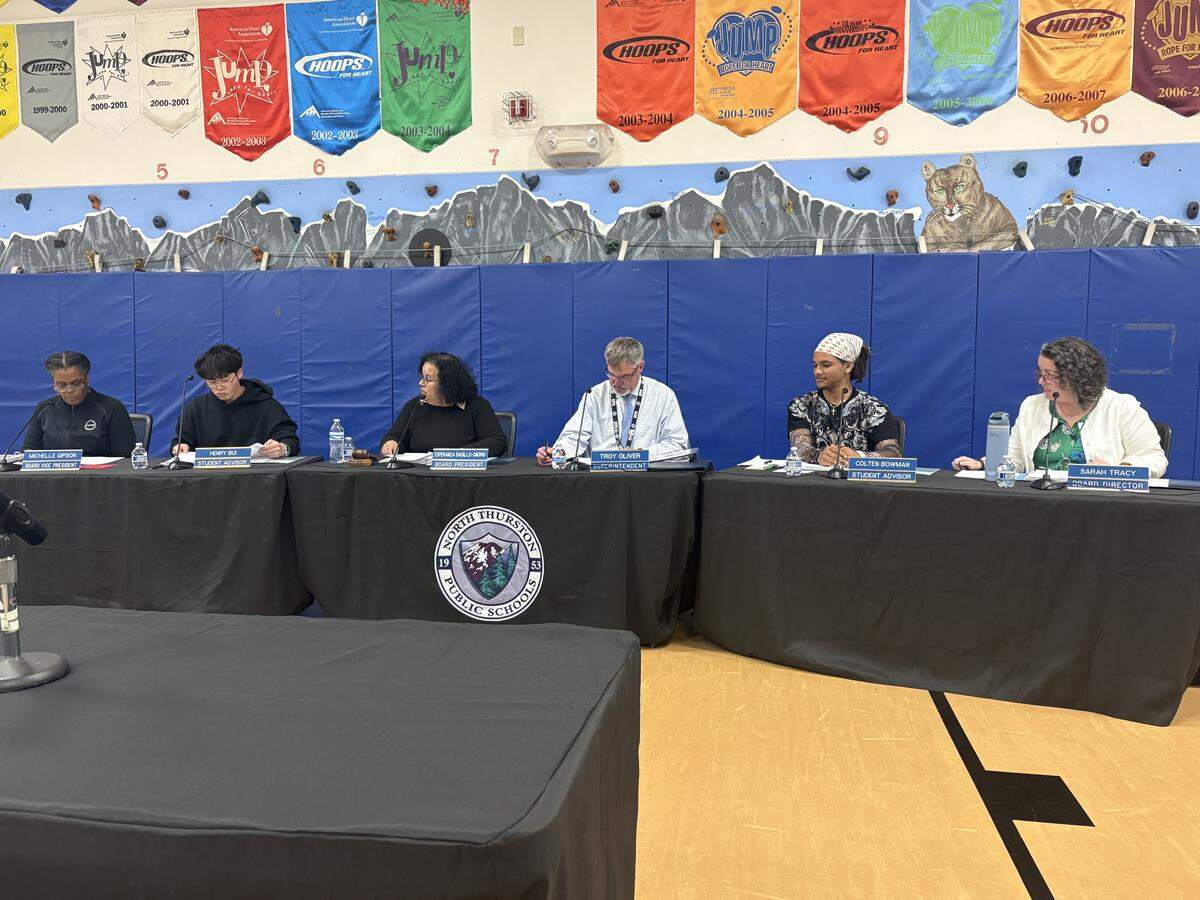
An agreement that established an “off and away all day” cell phone policy at North Thurston Public Schools is set to expire this summer, and that prompted questions and reflection during Tuesday’s school board meeting.
North Thurston is believed to be one of the first districts in the area and state to have such a policy.
Two years ago the North Thurston Education Association – the union that represents teachers – and the district came to terms on a memorandum of understanding (MOU) about cell phones.
Students are allowed to bring phones to school, but they must be off and put away during the school day, including at lunch.
Teachers wanted the MOU because phones had become a distraction in the classroom, and for union President Ray Nelson, there also were sociological concerns about young people and their dependence on the digital devices.
“I don’t know that there has been talk about renewing it,” said Nelson to the board about the MOU. “... I think it would be really important to engage in a conversation again, and to strengthen what was already there in that MOU.”
The policy has largely been successful, especially in middle schools, but has been less so in high schools, Nelson said.
High school teachers want more “teeth” to the policy, he said.
“And so a lot of staff are like, ‘If it’s not going to be enforced, and we have no enforcement tools, why bother?’” Nelson said.
Nelson agrees that there should be some consequences for students who violate the cell phone rule. It doesn’t need to be draconian, but students should be held accountable, he said.
Some possible enforcement ideas, as suggested to Nelson by the Phone-Free Schools Movement, a national nonprofit:
- First offense: the phone gets taken to the office and safely secured somewhere, so that the student can pick it up at the end of the day.
- Second offense: a parent needs to come pick it up.
- Third offense: the phone is returned after a meeting with a parent or guardian, and the student has to come up with a plan for how they’re going to stop violating the policy.
“That does take a lot of work, but those schools that have done it this way have said it’s worth the upfront effort because it pays off dividends later,” said Nelson.
Although a date hasn’t been set for the MOU discussion, it is likely to come before the board, district spokeswoman Amy Blondin said Tuesday.
Student voices
The school board has two high school student representatives – Henry Bui and Colten Bowman – and both spoke about the cell phone rule during the meeting.
Both expressed support for it, but they and others wish it didn’t apply to lunchtime.
“I think it’s great that there is a little bit of a restriction on our phone usage, especially because it’s so easy to get like pulled away from my academics nowadays with a lot of more technology going on,” Bui said.
“One thing I do have to say is, I don’t think that we should have it banned during lunch,” he added. “I think students should have their break, especially after a long day of school, but I think in a classroom, for sure, phones should be restricted from students.”
Bowman recalled the early days of the rule causing problems.
“When the expectations were first put in place, I saw a lot of conflict between teachers and students, which was pretty expected, and I think that it’s definitely died down now, because everybody is getting used to the expectations, and I think overall it is a good thing that it’s enacted,” he said.
Are students too attached to their phones?
Nelson shared a story during his public comments to the board.
He recently saw two high school-age girls riding bicycles, which was great, he said, except that in one hand they were looking at their phones while steering their bikes with the other hand. He saw an elementary school-age boy do the same.
“These devices, we need to help them to regulate how they use them,” Nelson said.