
Is it legal to rescue pets, kids from locked cars? What an updated WA law says
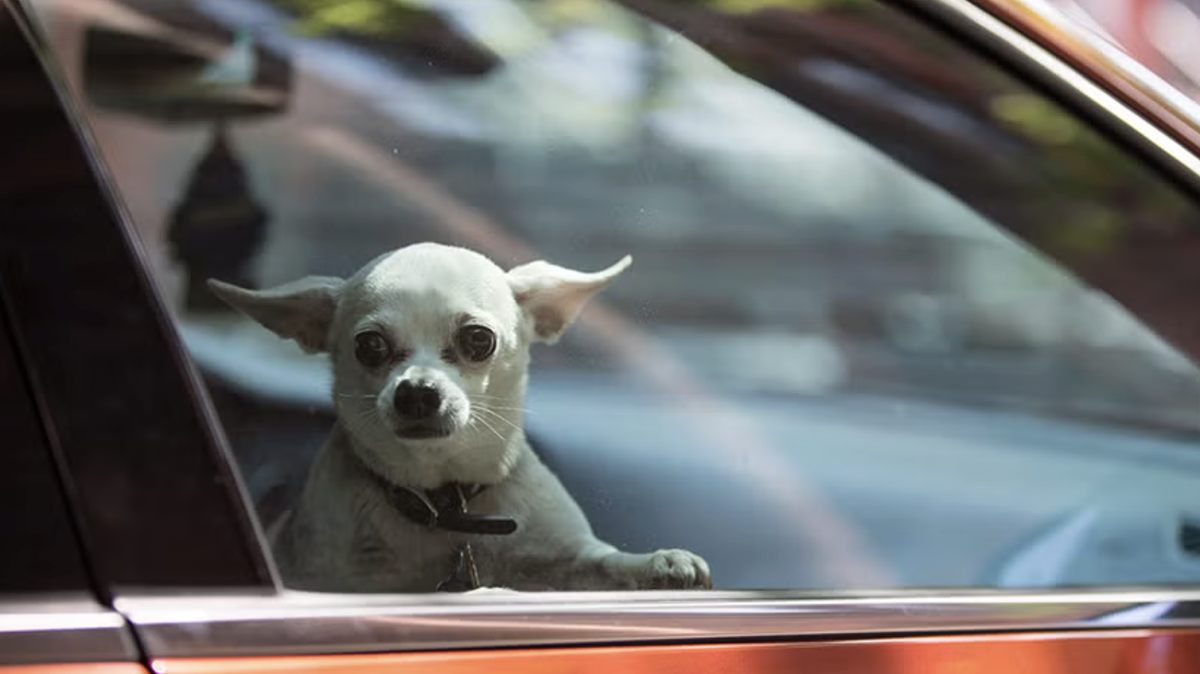
Summer is fast approaching in Washington state.
While parts of the state warm up more quickly than others, sunny days and balmy nights are just around the corner for much of the Evergreen State.
But the heat can be a safety hazard. While heat exhaustion and stroke are possible out in the open, tragedy can also strike quickly inside a hot parked car.
Good Samaritans may want to rescue animals or kids left unattended in hot vehicles. Just last year, Washington state law was updated protecting the actions of those Good Samaritans.
Here’s what to know:
How hot can a parked car get?
When it’s warm outside, temperatures inside a parked car can reach dangerous and potentially deadly levels in as little as 10 minutes, according to the National Weather Service.
When the temperature outside is 70 degrees, the inside of a vehicle can exceed 115 degrees in just minutes, according to a 2005 study from the American Academy of Pediatrics.
Deadly conditions can exist within an hour in the sun or even in the shade on a hot day, according to a 2018 study from Live Science. This is when a vehicle is unoccupied — with a person or animal inside, each breath adds humidity to the car’s interior, which can add to the rising temperatures.
“We’ve all gone back to our cars on hot days and have been barely able to touch the steering wheel,” said the study’s co-researcher Nancy Selover, an Arizona State University climatologist. “But imagine what that would be like to a child trapped in a car seat.”
For children, heat stroke can occur when their core body temperature exceeds 104 degrees for an extended period of time, according to Live Science.
Dogs experience heat exhaustion when their body temperature hits 103 degrees, according to Hill’s Pet Nutrition.
If temperatures are below freezing or above 70 degrees, it’s recommended you don’t leave a dog alone in a vehicle at all. Between those temperatures, Hill’s Pet says you still shouldn’t leave a dog in the vehicle for more than five minutes.
It is not recommended to leave cats alone in a car for any period of time.
Is it legal to leave pets or kids in a parked car in WA?
It is against Washington state law to leave any child under the age of 16 unattended in a vehicle — no matter the circumstance, temperature or period of time. Doing so comes with a misdemeanor charge, and a second offense comes with license suspension.
In Washington state, it’s against the law to leave any animal alone in a car or another enclosed space if they could be killed by excessive heat, excessive cold, lack of ventilation or lack of water.
Anyone in violation could face a $125 fine.
Some electric cars have safety modes that keep them cool, although these modes are not recommended for extended use.
For example, Tesla owners can control the inside of their car’s temperature with an app. According to Tesla, the “dog” function maintains a comfortable cabin temperature for pets left alone inside the vehicle.
When in dog mode, the vehicle’s touchscreen will display the inside temperature to inform those walking by that the pet is safe.
According to Tesla, the setting should only be used for short periods of time while the pet owner is close by.
Rivian has a similar feature. The electric vehicle’s “pet comfort” mode allows owners to set their car’s internal temperature between 68 degrees and 72 degrees. Similar to the Tesla design, those passing by the car can read a message that the pet is safe and comfortable inside.
But most cars do not have this option. Officials say people commonly use auto-start to keep their car cool while leaving an animal inside. But this feature generally comes with a time limit before it shuts off.
What are symptoms of heat stroke in pets and children?
It’s important to know the signs of heat stroke. It looks different in dogs, cats and children.
Instead of sweating across their entire body, dogs mainly sweat through the merocrine glands in their paws, according to the American Kennel Club.
They also pant and rely on the expansion of their blood vessels to regulate their body temperature.
Signs of heat stroke in dogs include:
- Dehydration
- Body temperature of more 105.8 degrees and the dog feels warm to the touch
- Bright red gums
- Rapid or irregular heart rate
- Muscle tremors
- Lack of coordination
If you’re outside a locked car and cannot physically assess the dog, look for these symptoms:
- Unconsciousness
- Seizures
- Vomiting
- Excessive drooling
- Heavy, frantic panting
Signs of heat stroke in cats include:
- Panting, labored breathing and wheezing
- Drooling
- Sweaty paws
- Excessive grooming
- Disorientation
- Reddened gums
- Vomiting or diarrhea with blood
- Pinpoint bleeding
- Seizures
- Collapsing or an inability to stand
Signs of heat stroke in children include:
- Confusion, disorientation
- Flushed, hot and dry skin
- Loss of consciousness
- Body temperature above 104 degrees
- Nausea, vomiting, diarrhea
- Rapid heartbeat and breathing
- Severe headache
- Seizures
- Weakness, dizziness
Can I break into a car to rescue pets, children in Washington state?
Before 2025, it was illegal for passersby in Washington state to break into a locked car, even if a pet or child inside was considered at risk. You had to contact animal control to respond to the trapped pet.
But updated legislation took effect in July 2025 expanding the protections for Good Samaritans, giving legal protection to those who enter a locked vehicle to rescue a vulnerable pet or person.
One of the bill’s sponsors, Washington state Rep. Mari Leavitt of Pierce County, said the law is intended to “protect the most vulnerable in our communities.”
“Too often, people hesitate to act in emergencies because they fear legal consequences,” Leavitt said in a May 2025 Facebook post. “HB 1046 ensures that doing the right thing won’t be punished when someone’s life — or a pet’s — is on the line.”
You must meet certain criteria in order to be protected through the law:
- Check that the vehicle is locked, and that the vulnerable person or pet can’t exit without assistance
- Act in good faith that the person or pet is in danger, and that breaking into the car is necessary for their protection
- Do not use more force than necessary to gain entrance into the vehicle
- Notify law enforcement
- After removing the person or pet from the vehicle, wait with them until help arrives
This story is based on previous coverage from June 2025 and includes additional reporting by former service reporter Daniel Schrager.
This story was originally published June 8, 2026 at 5:00 AM with the headline "Is it legal to rescue pets, kids from locked cars? What an updated WA law says."