Protesters occupy WA Capitol Campus building in Olympia, disrupt meeting
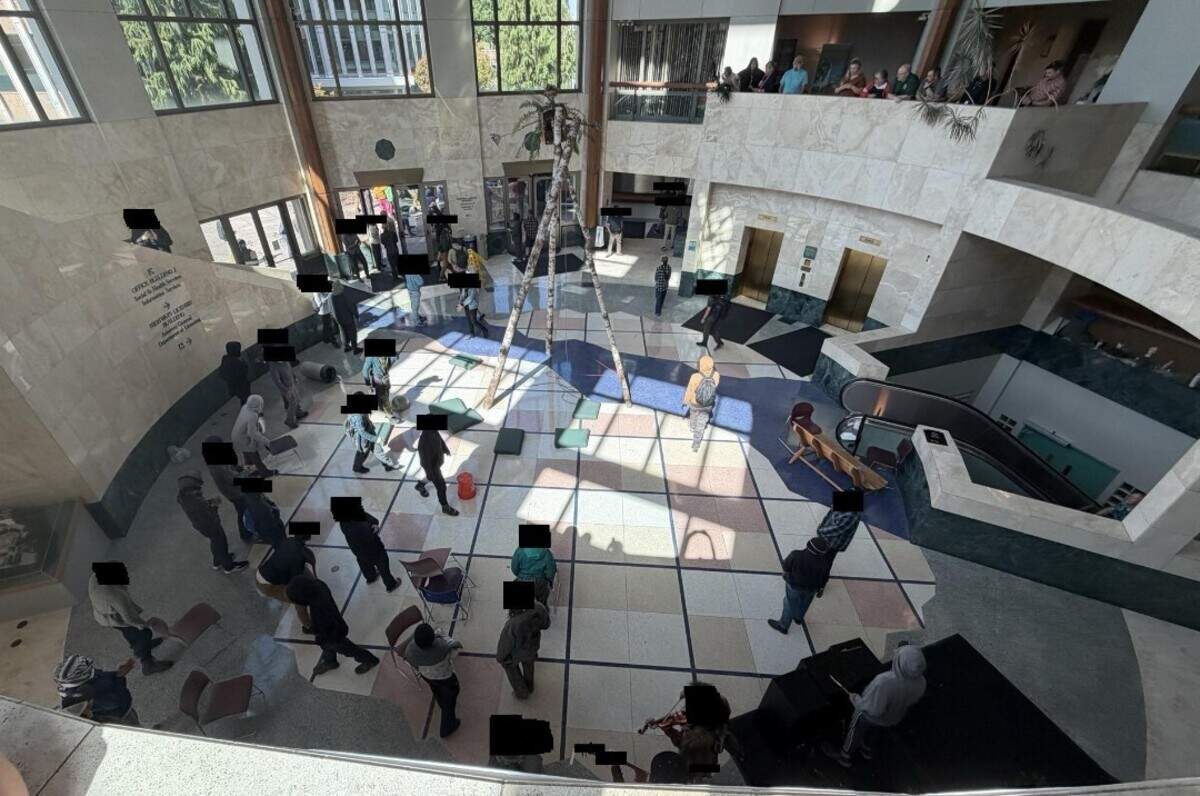
A group of protesters occupied the Washington state Department of Natural Resources headquarters this week.
The group disrupted a monthly Board of Natural Resources meeting at around 10 a.m. Tuesday and then remained in the building for about an hour, DNR Communications Director Michael Kelly said in a statement emailed to The Olympian Thursday.
The six-member board is chaired by Commissioner of Public Lands Dave Upthegrove. A TVW recording of the meeting shows at least two people stand up and address the board from the audience without following the public comment process. In response, the board temporarily adjourned the meeting until 10:20 a.m.
Kelly alleged the group damaged furniture, pulled down wall signs and vandalized property. He further alleged the elevator and escalator to the parking area was blocked with furniture from the rotunda.
No arrests were made, he added.
The Olympian received a news release about the incident as well as photos from the scene from an anonymous email sender on Tuesday. The sender did not respond to a request to identify themselves.
The release describes the group as activists who protested DNR’s practices of cutting legacy forests as well as spraying herbicides from the air on state lands.
“Activists erected a tripod in the lobby, displayed art, banners and creative fun and whimsy at the building,” the anonymous release states. “They demanded that Dave Upthegrove stop aerial herbicide sprays and drop the ‘More Gooder’ timber sale.”
The More Gooder Timber sale and an associated forest practice application is a proposal to harvest about 5,123 thousand board feet of timber across 79 acres in a location about 13 miles by road northwest of Chehalis in Lewis County, according to DNR documents.
A notice of final determination for the project indicates the Cowlitz Indian Tribe and the Confederated Tribes of the Chehalis Reservation shared concerns about unidentified historical and cultural resources potentially being on the property.
An organization known as the Legacy Forest Defense Coalition also shared concerns that the property contained trees that meet DNR’s criteria for old growth forests and should be conserved. DNR’s response indicates staff found no old growth stands during an assessment of the affected trees.
Another organization, the Center for Sustainable Economy, also objected to the proposal, citing adverse environmental, social and economic impacts due to DNR’s logging program.
The anonymous release references each of these objections.
When reached for comment, Kelly said the More Gooder Timber Sale is on hold from consideration by the Board of Natural Resources as DNR is “engaged with Tribal consultation” about the sale.
With respect to potential habitat loss, Kell said DNR is a “recognized leader in sustainable forest management” that draws upon various staff, scientists and experts.
“All 2.4 million acres of DNR-managed forested lands are certified under the Sustainable Forestry Initiative (SFI), and 176,000 acres of those lands are also certified by the Forest Stewardship Council (FSC),” Kelly said. “Activities on trust lands are managed to protect habitat for native plant and animal species, provide clean and abundant water, and offer diverse public recreation opportunities.”
On the topic of herbicides, Kelly said DNR avoids or minimizes using them whenever feasible. When the agency does use them, it is to prepare a site for replanting after a timber harvest, he said.
“The reason we use herbicides at times is to provide seedlings the best chance of survival and developing into a healthy forest,” Kelly said. “Noxious weeds and other invasive species often crowd out and out-compete our seedlings, making weed control necessary, and some areas are too remote for manual weed removal to be effective or too costly to be viable.”
Kelly said DNR relies on experts from relevant regulatory agencies to determine the safety and proper use of herbicides. DNR, he said, does not regulate chemical-based herbicides and pesticides.
“Any herbicide we use has already been approved as safe for use by scientists at the Washington State Department of Agriculture and the US Environmental Protection Agency,” Kelly said.
The Olympian asked Chris Loftis, Director of Public Affairs for Washington State Patrol if it’s investigating any of the people who took part in the Tuesday protest.
Loftis said State Patrol is collecting video evidence and witness statements from people who were in the building. He confirmed no arrests have been made as of Thursday.
“Charges for criminal damage to property are being considered depending on the evidence we are able to collect,” Loftis said.
Troopers in the Special Operations Division responded to the building Tuesday, Loftis said.
Due to the size of the protest, the troopers called for help from so-called Rapid Deployment Teams, which specialize in crowd control and other large scale, urgent incidents, Loftis said.
“However, as the RDT began to assemble in the numbers needed for a safe deployment for both officers and protestors alike, the crowd dispersed,” Loftis said.
This story was originally published July 9, 2026 at 5:15 AM.