
10 most toxic Thurston County properties have worst threat rating
At the end of Buckeye Court sits an abandoned property with a dirty backstory.
This uninhabitable half-acre parcel near Black Lake was under investigation more than a decade ago for its role in a gasoline theft operation. The site reeked of gasoline when four 55-gallon drums full of stolen fuel were found alongside hand-operated pumps and plastic tubes.
Gasoline had spilled on the soil and, at the time, an environmental report warned of the potential for toxic chemicals to wash downhill into the wetlands less than 1,000 feet away.
Thurston County deputies arrested suspects Jason J. Sallee and Terry Alan Wilson in November 2005. According to court documents, the men admitted to swiping thousands of dollars worth of tools and pumping at least $7,000 worth of gasoline with stolen credit cards.
Sallee and Wilson were later sentenced to 60 and 36 months, respectively, on multiple theft convictions — but their environmental crime remains unsolved.
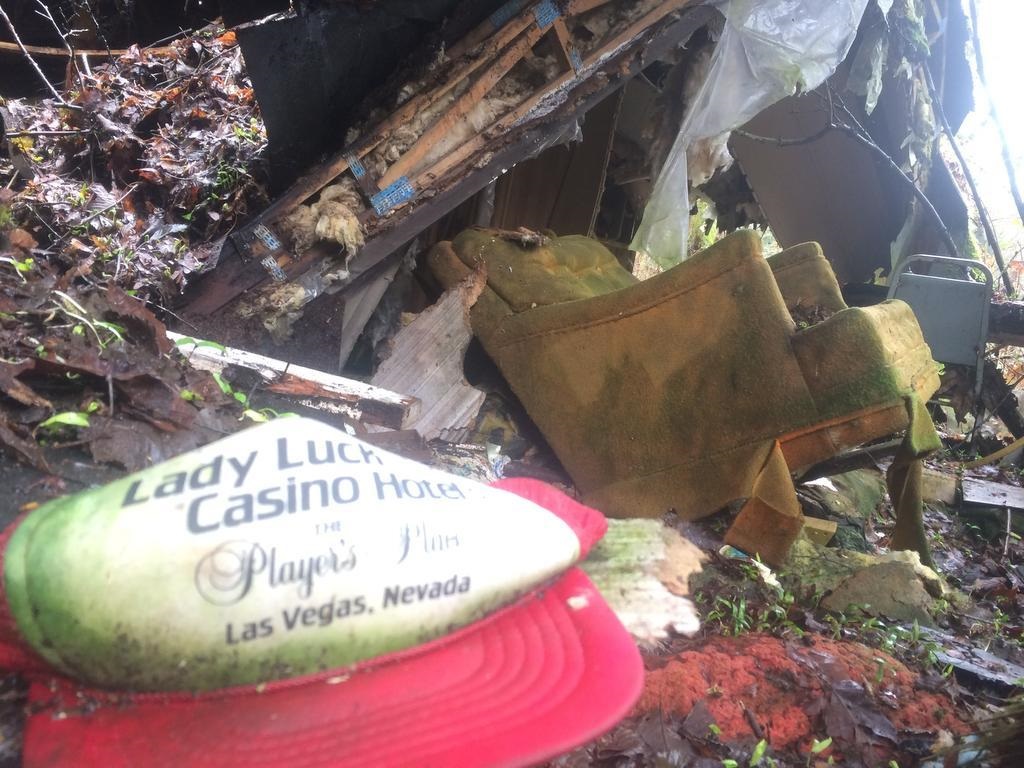
Today, the vacant property at 8113 Buckeye Court SW acts as a de facto dumping ground where small piles of trash coexist with a crumbling mobile home and assorted junk. Rusted steel drums and plastic gasoline containers are reminders of the site’s shady past.
Nature has wrapped its tendrils around the man-made debris, including the front half of a truck. Vegetation has sprouted through the mobile home floor, and moss thrives on what’s left of the walls and sagging roof.
Property owners are responsible for removing contamination, but enforcement is another story. Unless the owner volunteers to clean it up, the site will stay the way it is indefinitely.
The Buckeye Court property has been on the state Department of Ecology’s Hazardous Sites List since 2006.
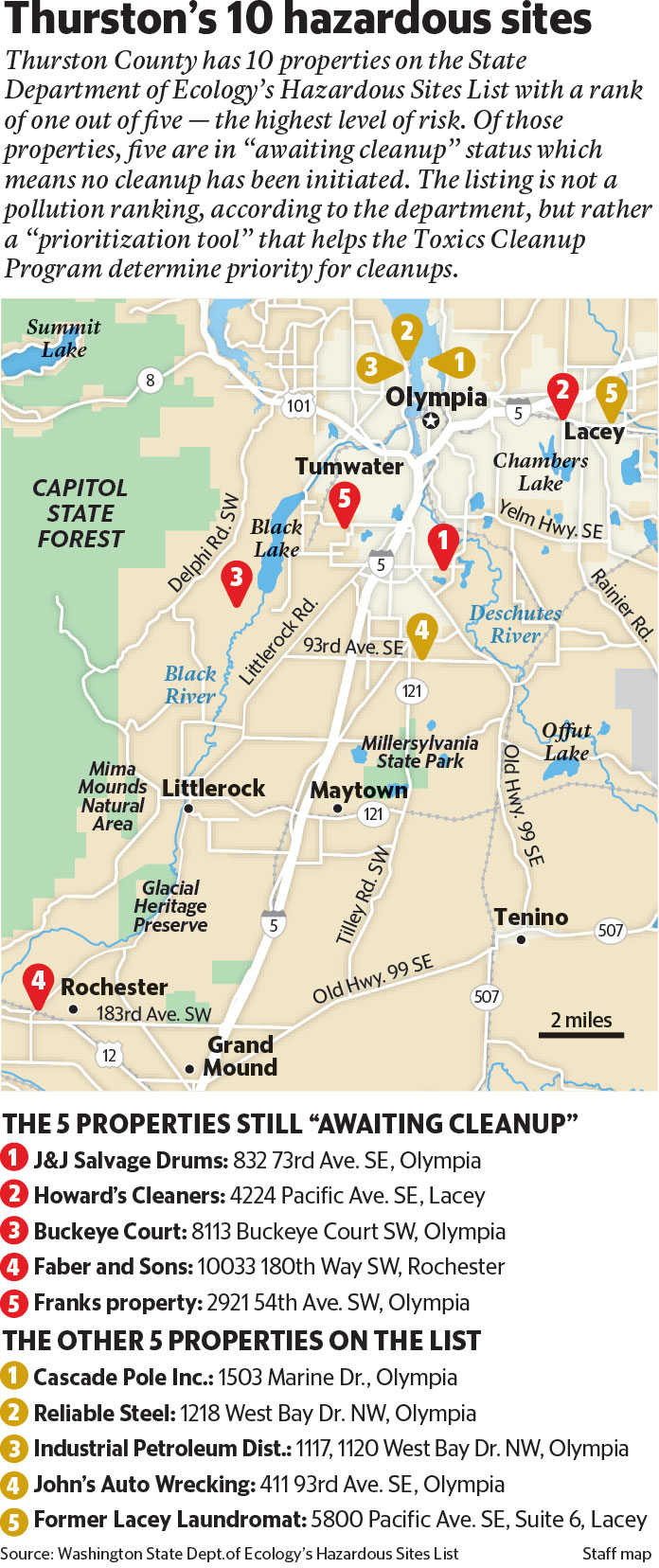
Of the 96 Thurston County properties on the list, 10 properties have a rank of 1, which represents the highest degree of contamination and threat to human health. Of those 10 properties, five are still awaiting cleanup, including Buckeye Court.
The list is a “prioritization tool” for the Toxics Cleanup Program, according to the department. Each property is ranked from 1 to 5, depending on how they compare with other sites on the statewide list.
Confirmation of contamination is usually enough to qualify a property for the Hazardous Sites List, said Rebecca Lawson, who manages the Department of Ecology’s Toxic Cleanup Program for the southwest region.
Of the roughly 12,300 sites on the list, about 53 percent have been cleaned up, with another 31 percent seeing some cleanup. The state has 1,838 sites awaiting cleanup on the list and is chipping away at the backlog, Lawson said.
Sometimes the department will take emergency action if a site presents an immediate threat to human health, such as contaminating drinking water. Otherwise, the rest of the sites must wait their turn, if it ever comes.
“There are more sites than we can work on at any given time,” Lawson said.
Fortunately for residents near the Buckeye Court property, the water well is 4,000 feet uphill and has escaped contamination, according to the state.
Julie Nelson-Ray has lived in the neighborhood for more than 22 years and has never seen any effort to clean up the site. She remembers when James and Margery Anthony lived in the old double-wide trailer on Buckeye Court and how everyone called him Grandpa.
Outside of fond memories of the couple, she said there’s a general feeling of indifference toward the property they left behind.
“We know it’s there,” she said. “We just all kind of ignore it.”
According to the Department of Ecology, a privately owned site requires a privately funded cleanup, with a range of variables that play into the potential cost.
An entity named Buck Eagle LLC bought the Buckeye Court property at a real estate auction in 2012, adding to its small inventory of residential sites in Thurston County. Co-owner Aruna Souri said that at the time of sale, she was unaware of the property’s status on the Hazardous Sites List.
Souri’s family business owns two adjacent lots on Buckeye Court. She said the family wants to eventually sell the site and has been researching what needs to be done. No timeline has been set for cleanup.
“We are trying to clean it up,” Souri told The Olympian. “We didn’t know it was polluted in the first place.”
Buckeye Court is one of two Thurston County properties on the list where some of the pollution is tied to a crime.
“Watch out for rats,” said Ken “Bud” Franks about the mounds of trash on his 4.16-acre property just west of Tumwater city limits.
The trash was dumped illegally as part of a scheme tied to his son’s substance abuse problems, said Franks, who said he doesn’t have the money to haul it away.
Franks lives about a half-mile east of the Bonneville power station at 2921 54th Ave. SW. The property has been on the Department of Ecology’s Hazardous Sites List since 2013 because of soil and groundwater contamination from petroleum, lead and other metals.
He has been cited for multiple county code violations related to junk vehicles, solid waste and unpermitted structures. The site’s current risk to human health is minimal, according to a Department of Ecology assessment, because of the limited number of nearby residential properties.
Franks and his wife live in a house on the property with a handful of friends and family members who stay in trailers and motorhomes — people who need help getting back on their feet, he said.
He likely won’t get a chance to clean up the property because it faces foreclosure in July over a default on a reverse mortgage, according to documents. Franks is trying to scrape together enough money to save his house before focusing on the trash.
“I want it cleaned up too. They don’t have to tell me,” said Franks, 85. “It’s a mess.”
Junkyard blues
When viewed from the sky, the Faber and Sons Recycling property in Rochester twinkles in the sunlight as if it were covered in glitter.
When viewed from the ground, it’s obvious the 0.39-acre site has been left for dead.
In fact, property owner Ted Faber did just that when he moved to Mexico in 2014, leaving his wife and family behind.
Faber now runs a boat storage business in Playa del Carmen that has even been featured in an English-language newspaper. The Olympian was unable to reach Faber for comment.
Meanwhile, his ex-wife, Rhonda Kindred, got stuck with Faber’s mess.
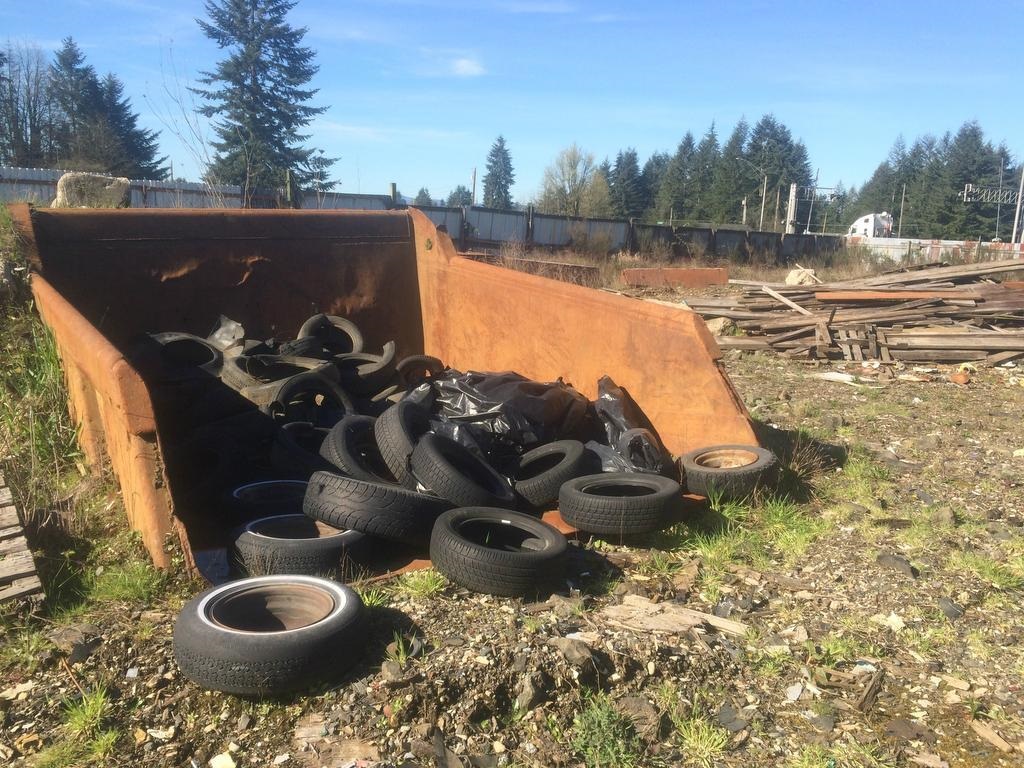
And the now-defunct Faber and Sons Recycling site at 10033 180th Way SW is still trashed. Broken glass and plastic pepper the gravel lot, along with old tires and scattered auto parts.
An inspection in 2011 showed significant soil contamination from oil and gasoline. Inspectors also found containers of used oil that were improperly labeled and stored — presumably the same kind of containers found inside the property’s now-shuttered shop.
Much of the site’s pollution stems from scrapped vehicles and other related work, said Kindred, who was married to Faber for 17 years and at one time lived on the property.
However, Faber ran into tax trouble that was compounded by pollution issues at another business in Grays Harbor County.
Documents from the Thurston County auditor show Faber has a federal tax lien from the IRS for $85,160 and that the couple’s house in Rochester — where Kindred lives — is facing foreclosure in August. She has a job cleaning houses, but struggles to stay afloat amid the financial turmoil she inherited.
“It’s not my debt. I was just married to him. That’s it,” Kindred told The Olympian. “This man needs to be held accountable.”
Wherever you have a scrap yard, there’s going to be some pollution People are delusional if they think you can run that kind of business without polluting something.
John Faber
owner of half of the Faber and Sons Recycling propertyFaber’s father, John Faber, owns the east half — the clean half — of the Rochester property on 180th Way. John Faber said his son had been mired in lawsuits because of a recycling facility in Grays Harbor County that allegedly discharged polluted water into the Chehalis River.
“Wherever you have a scrap yard, there’s going to be some pollution,” he said. “People are delusional if they think you can run that kind of business without polluting something.”
In addition to the lawsuits, John Faber said his son took a financial hit in 2008 when investment bank Lehman Brothers went bankrupt, and that moving to Mexico may have been a way of simply giving up the fight.
“He went broke,” John Faber said of his son, with whom he has lost contact. “I don’t know how anybody is going to hold him accountable.”
The most recently added property on the Hazardous Sites List for Thurston County is the former J&J Salvage, near the Olympia Regional Airport at 832 73rd Ave. SE.
Construction equipment, including an excavator and bulldozer, sit dormant behind the locked rusty gate that blocks access to the 8.69-acre site. A spray-painted message on the outside of one structure warns trespassers and dumpers to keep out of the former scrap yard.
Longtime owner James Chapman died in 2009, leaving the property to his family. That same year, the Thurston County Environmental Health Department found 12 partially buried steel drums along the roadway across from the main entrance.
According to an environmental investigation, the drums were several decades old and had completely rusted through. No chemical odors or soil stains were found near the drums. Multiple soil and groundwater samples showed no contamination.
Nevertheless, the property was recommended for the Hazardous Sites List because of the potential for contamination with petroleum and raw metals. Part of the reason stems from not knowing what substances were buried in those steel drums.
“It would appear unlikely that the drums were empty upon burial,” the report says, “since the steel would have been a marketable commodity.”
The property was used as an auto wrecking yard before Chapman bought it in 1984. Documents show that the Chapman family removed more than 700 tons of scrap metal, more than 15 tons of garbage, and about 12,000 tires during an initial cleanup in 2009.
In 2012, the family sold the site to Chris Taylor, who owns a landscaping equipment business called Commodities Unlimited. Taylor said he uses the former J&J Salvage site as a storage yard.
Taylor said the property should be removed from the Hazardous Sites List based on the environmental investigation. He criticized the state for requiring him to instead go through a time-consuming voluntary cleanup process to get off the list.
“I don’t see any reason why we’re still on the list,” Taylor told The Olympian. “Once you’re on the list, it’s up to you as a landowner and citizen to try and prove your innocence.”
Not-so-clean dry cleaners
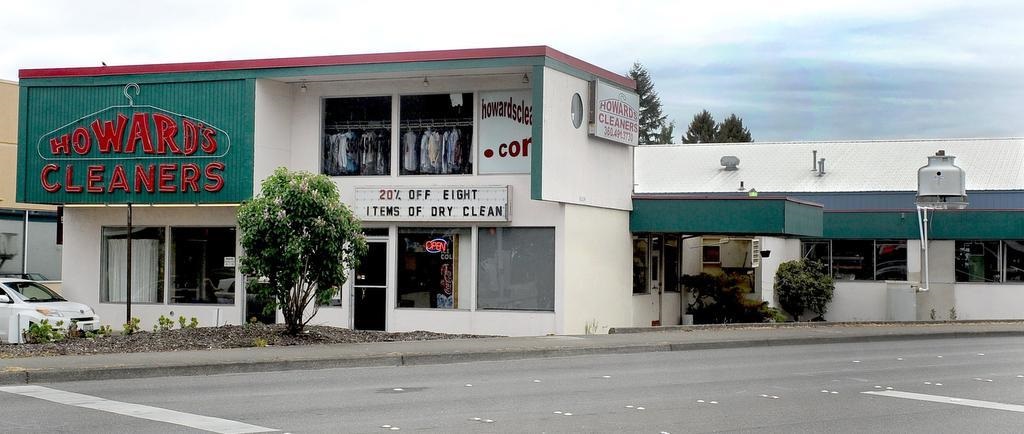
Two properties in Thurston County that have been the sites of dry cleaning businesses have received a rank of 1 on the Hazardous Sites List: Howard’s Cleaners at 4224 Pacific Ave. SE, and the former Lacey Laundromat, which has since been replaced by new businesses at 5800 Pacific Ave. SE.
The main culprit is a sweet-smelling chemical solvent known as tetrachloroethene (PCE). High concentrations of this nonflammable colorless liquid and its vapors can cause nausea, dizziness and headaches.
The U.S. Environmental Protection Agency also has classified PCE as likely to be carcinogenic, which means it could cause cancer in humans with long-term exposure.
The use of PCE has declined significantly since the early 1980s. But according to a 2014 report by the U.S. Department of Health and Human Services, an estimated 28,000 U.S. dry cleaners still use PCE.
The report shows a 50 percent decline in PCE production in the U.S. between 1983 (547 million pounds) and 1993 (271 million pounds), although by 2006, the amount had increased to near the 1983 levels. Beginning in 2020, federal regulations will start banning the use of PCE in urban dry cleaning locations.
Ecology’s Lawson said that over the years, new regulations have led to better management practices for dry cleaners when it comes to PCE use and disposal. That includes equipment maintenance and inspections.
“At one time, some seemed like they just dumped the stuff out the back door,” she said.
Of the two Thurston County dry cleaners with a rank of 1 on the Hazardous Sites List, Howard’s Cleaners still has “awaiting cleanup” status.
Property owners Howard and Diana McCullough did not respond to multiple requests for comment for this story. According to posts on Facebook, the McCulloughs opened the business in 1975, sold the business, then reacquired it in February 2015 after a 10-year gap.
However, the pollution is linked to the original owners.
The Department of Ecology had cited Howard’s Cleaners in 2002 for illegally dumping more than 10 gallons of corrosive chemicals into the storm drain catch basin behind the business, according to documents.
A 2003 investigation by California-based Waterstone Environmental concluded that the business had released dry cleaning chemicals that contaminated soil and groundwater on the adjacent Market Square shopping center property.
PCE was found in 8 out of 10 soil samples and was detected in all groundwater samples. In 2007, a follow-up investigation found similar results.
Howard’s Cleaners was added to the Hazardous Sites List in 2010. Because an official Environmental Site Assessment has not been completed, the department reports that it has been unable to officially confirm that Howard’s Cleaners is the source of the contamination.
The Lacey Laundromat site was identified in 1991 as a source of contamination of a water well about 600 feet away. The well was removed from service after samples kept showing PCE contamination, according to the Department of Ecology.
Lacey Laundromat had operated from 1961 to 1976. Voluntary cleanup of the site began in 2006 and has included removal of a contaminated septic tank, the installation of a soil vapor extraction system and using chemical oxidation to treat the PCE contamination in groundwater.
While the site is still contaminated, the concentration of PCE in the soil has been reduced to below the threshold established by the Model Toxics Control Act. The reduction of PCE concentrations in groundwater has been reduced as much as 90 percent in some samples.
And while cleanup has moved at a snail’s pace, the Department of Ecology told property owner Joe Illing in a letter that “upon completion of your proposed cleanup, no further remedial action will likely be necessary to clean up contamination at the site.”
The final step of the cleanup at the former Lacey Laundromat site will involve the commonplace practice of “monitored natural attenuation.” This describes a long-term method for relying on natural processes to reduce the remaining contaminants in soil and groundwater — and eventually remove a property from the Hazardous Sites List. The process requires regular sample collections and can take several years.
In a similar local example, the Department of Ecology removed nearly 400 tons of PCE-contaminated soil in 2015 at the former Olympia Dry Cleaners site at 606 Union Ave. SE. That property has a rank of 2 on the Hazardous Sites List, and the total cost for cleanup will be about $475,000 when considering future monitoring of the site.
Contamination is expected to decline naturally below the cleanup threshold in the next 10 years.
The damage was done by previous dry cleaning tenants dating back to 1970. The department reports that all tenants at the site since 2004, including current tenant Howard’s Prestige Cleaners, have operated without using PCE.
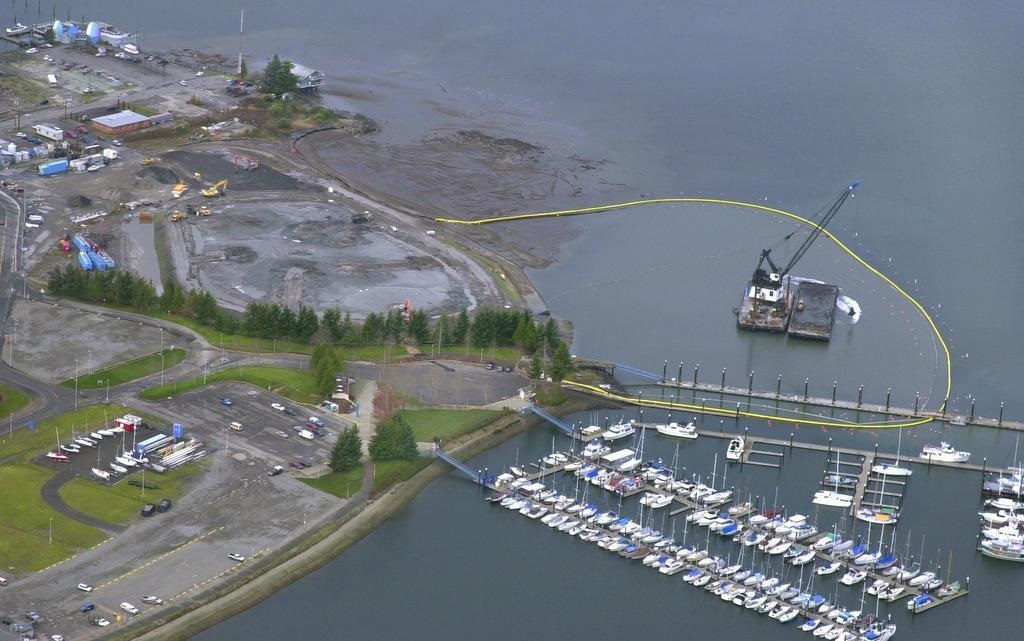
Cascade Pole and other cleanups
The former Cascade Pole site is considered the poster child for local environmental cleanups.
The 17-acre property is at the north end of the Port of Olympia peninsula at 1503 Marine Drive. From 1957 to 1986, the former company operated a wood-treatment facility that spilled toxic chemicals such as creosote, wood preservatives and petroleum byproducts into Budd Inlet.
A cleanup effort kicked off in 1990 and lasted almost 20 years at a total cost of about $26 million. The cleanup required significant dredging of contaminated sediment along with construction of an underground containment wall along the shoreline.
“I can’t think of a site in Thurston County that was worse than that,” said Ecology’s Lawson. “It was a pretty bad site.”
In addition to Cascade Pole and the Lacey Laundromat, there are three more Thurston County properties with a rank of 1 on the Hazardous Sites List that are undergoing cleanup.
At 1218 West Bay Drive NW is the old Reliable Steel site, where crews have removed contaminated soil and metal debris — including a leaking underground storage tank that was used for heating oil. From 1941 to 2009, the site was used for making steel, boats and storage tanks. The Department of Ecology is still working on decontaminating sediment on the abandoned property and estimates the entire cleanup will cost about $3.8 million.
Next to Reliable Steel is the former Industrial Petroleum Distributors site at 1117 West Bay Drive. The west side of the property stored waste oil through the early 1990s. Leaks and spills ended up contaminating the soil and groundwater, according to the department.
The property occupies land on both sides of West Bay Drive. The property owner finished cleaning the area west of West Bay Drive in 2003, and is now working on cleaning the side that abuts the water, according to the department. The plan calls for removing as much as 2,250 cubic yards of contaminated soil and backfilling the area with clean soil.
The final property on the list undergoing cleanup is the now-defunct John’s Auto Wrecking at 411 93rd Ave. SE. The site of about 16 acres is just south of the Olympia Regional Airport.
Contaminants such as metals and petroleum were detected in soil and groundwater samples. Property owners from the John Havens estate enrolled the site in the voluntary cleanup program in 2008.
The owners cleared most of the wrecked vehicles, batteries, tires, debris and hazardous waste. In 2009, a company was hired to remove “800 gallons of used oil, three tons of sludge, two large industrial lead-acid batteries, four automotive batteries and several empty containers” that had stored some of the oil and sludge, according to documents.
However, the Department of Ecology has determined that cleanup of the site was insufficient — and that potential contamination sources remain.
Dollars and sense
In 1988, Washington voters approved the Model Toxics Control Act, which is credited for streamlining cleanup rules and standards.
The state law makes property owners financially responsible for cleaning up contamination, but also grants the Department of Ecology the authority to oversee a site’s cleanup.
The department reports that 70 percent of its total budget of nearly $1.38 billion goes toward funding environmental projects across the state. The 2015-2017 budget devotes $227 million for toxic cleanups along with about $35 million to reduce hazardous waste.
In addition, the recent budget calls for $22.5 million to clean up toxic sites along the shores of Puget Sound at sites that provide habitat restoration opportunities.
The department will provide financial assistance only to cleanup projects that involve local governments.
Ecology has the power to enforce cleanups when dealing with an emergency or a noncompliant property owner. According to the Model Toxics Control Act, the department can clean up a site, then recover the cost at up to three times the amount from the liable party.
Lawson said the fastest and most effective way to reduce the backlog of hazardous sites is through good old-fashioned cooperation.
“We can issue enforcement orders,” she said, “but it’s nice to be able to work with people cooperatively to get something done.”
Andy Hobbs: 360-704-6869, @andyhobbs
See the list
The state Department of Ecology puts out an updated Hazardous Sites List twice a year, with the most recent released in February. The lists can be viewed on the department’s website at ecy.wa.gov under the link for programs.
The Hazardous Sites List ranking is the fourth of seven steps in the cleanup process, following discovery of contamination and early assessments. After a property is added to the list, a remedial investigation will identify the degree of contamination, followed by identifying a cleanup method, then finally cleaning the site.
This story was originally published May 7, 2016 at 4:49 PM with the headline "10 most toxic Thurston County properties have worst threat rating."