
Man sentenced to more than 13 years for fatally shooting panhandler in Grand Mound
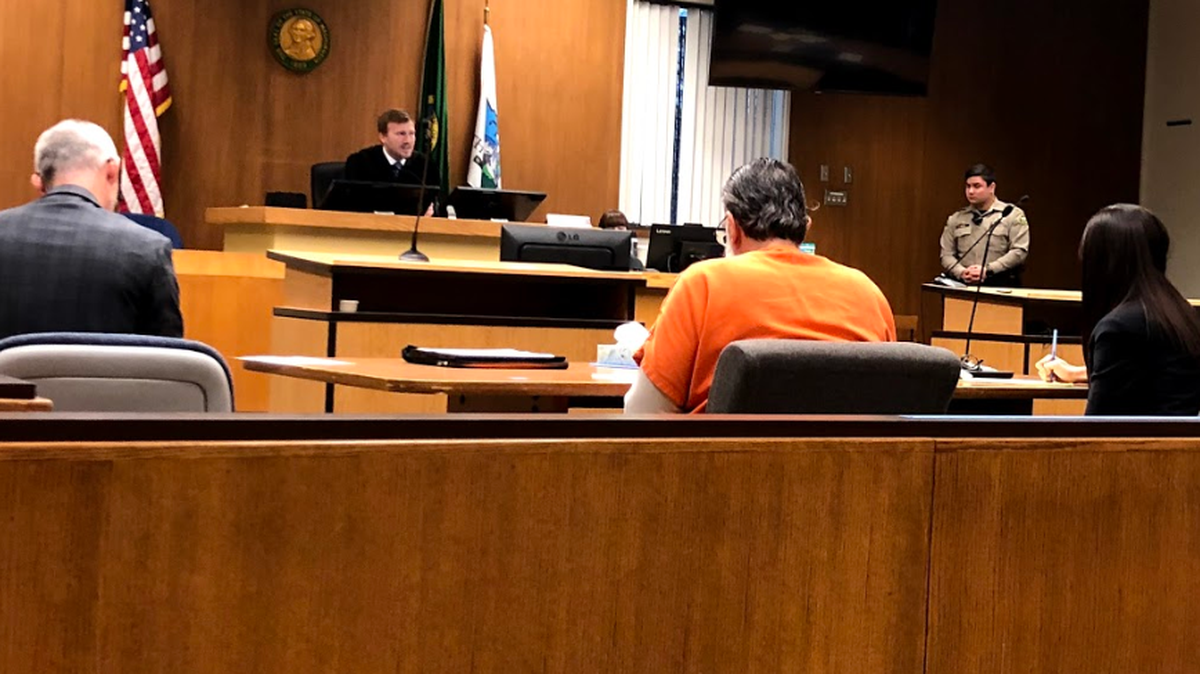
A 60-year-old Rochester man was sentenced to 13-1/2 years in prison Wednesday for fatally shooting a man who was panhandling outside McDonald’s near Grand Mound in September 2019.
Last month, a jury found Bryan M. Owens guilty of first-degree manslaughter while armed with a firearm.
The state had charged Owens with second-degree murder, but jurors left the verdict form for that charge blank, found him guilty of the lesser crime, and found he was armed with a firearm in a special verdict.
Owens had no previous criminal convictions on his record, and the sentence issued by Thurston County Superior Court Judge Chris Lanese on Wednesday is at the high end of the standard range for someone with his offender score: 78 to 102 months of confinement plus 60 months for the firearm verdict, so 11-1/2 to 13-1/2 years total.
The sentence aligns with what prosecutors recommended based on the nature of the crime, and with requests made by family members of Corey Meyer, the man Owens shot and killed, in victim impact statements filed with the court.
Meyer, 37, was from Texas, and family and friends say he wasn’t homeless, but would travel to northern states and pick up work where it was cooler during summer. The Thurston County Sheriff’s Office believes Meyer had been in the area for about a week before he died Sept. 3, according to The Olympian’s previous reporting.
According to court documents, on Sept. 3 Owens approached a man who regularly panhandles at the McDonald’s near Grand Mound and asked whether he was a veteran and if he was from the area. The men began to argue, and Meyer at some point approached.
An argument between Owens and Meyer became physical and a witness intervened to separate the men, according to court documents. Owens took out his gun.
At trial, defense argued Owens told Meyer to stay away and that Meyer got mad and lunged at Owens when he saw the gun — that he killed Meyer in self defense. Prosecutors argued nothing happened in the fight that warranted lethal force.
In the end, Owens shot Meyer, who witnesses say was unarmed, once in the chest and once in the head.
“The range is there for a top end and for a bottom end for a reason,” Deputy Prosecuting Attorney Wayne Graham said at sentencing. “And I think and believe that I have to stand before this court and ask for the top end of the sentence in respect to Mr. Meyer’s family.”
Defense attorneys recommended a sentence of three years, below the standard range, arguing it was appropriate in part because Meyer was an initiator, aggressor, or willing participant in the incident. Defense also requested the firearm enhancement not be added because the jury wasn’t properly instructed on the definition of a “firearm.”
“What we’re trying to do is carefully put together a recommendation that respects the jury’s verdict but doesn’t ignore all of the factors that contributed to this. This did not occur in a vacuum,” Defense Attorney Kevin Griffin said during sentencing. “Mr. Owens didn’t just walk up to someone and shoot the person or act recklessly and cause someone to die. A lot of things went into this.”
Griffin also mentioned Owens’ law-abiding history and the support he has from his family and community members, many of whom wrote letters filed with the court.
Owens himself addressed Judge Lanese for about 10 minutes Wednesday. He spoke of his upbringing and history, vouched for his character, reiterated his version of what happened, and expressed his disappointment in how law enforcement handled their investigation, saying they lied, cheated, and manipulated facts to get a conviction.
He expressed remorse while saying Meyer would still be alive if he hadn’t confronted him “aggressively, violently.”
“Your honor, I can’t tell you enough how sorry I am that this whole process took place,” Owens said. “I regret it, every minute I’ve been here I’ve regretted it happened. Not just for what it’s done to my family, but for the sorrow and the heartache that it’s caused Corey’s family. I’m sure it’s immense. But it was his choice, and I did what I had to do after he made that choice.”
Judge Lanese said that, while much of the conversation surrounding the case had focused on homelessness and whether Owens seeks out people who are perceived to be homeless to criticize and harass them, that wasn’t his focus.
“While homelessness is something that is a severely crisis-level issue in our society, and our community specifically, I think the operative moment in this case was when the gun came out,” Lanese said.
Lanese rejected the defense’s request regarding the firearm enhancement and determined it was appropriate to stay in the standard range.
Manslaughter requires a reckless cause of a death, Lanese explained, which could cover a wide range of behaviors. In this case, he said, “the defendant brought a gun to a fist fight.”
Available physical evidence showed Owens appeared to be faring better than Meyer, physically, before he brought the gun out, Lanese said. He didn’t need to take out the gun, and the choice to do so escalated the situation, he said, before he fatally shot Meyer twice.
“The series of events in this case makes this of the most serious type of manslaughter that this court can see without becoming murder,” Lanese said. “The court, as a result, is giving the top of the range in this case: 102 months plus the 60 months for the enhancement in this case.”
Court records show Griffin has filed a notice of appeal requesting review of this case by the state Court of Appeals.
This story was originally published April 23, 2020 at 8:30 AM.
.jpg)