Nisqually Tribe finding its ‘sense of pride’ working with WA schools on cultural teachings
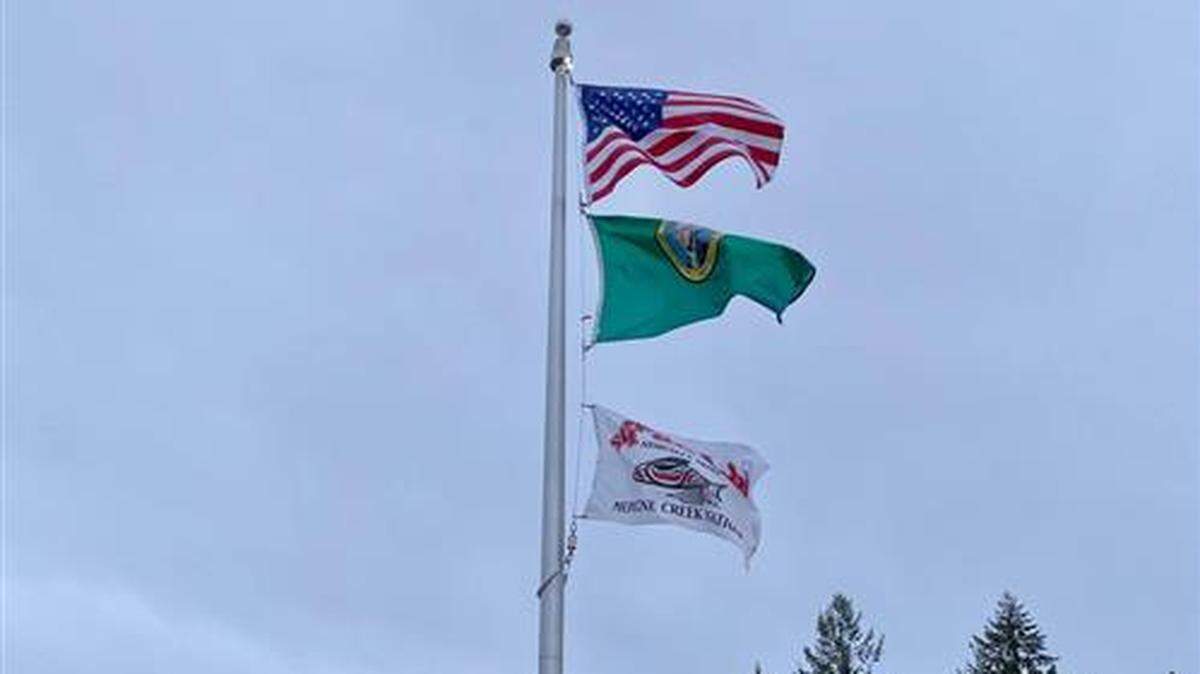
In front of every school in the North Thurston Public Schools district, the American flag can be found flying high, just like most other public schools in the country. But in the North Thurston school district, right below the red, white and blue of the U.S., there’s a second flag: A stark white background with the red and black fish of the Nisqually Tribe emblazoned in the middle.
Above the fish in bright red lettering reads “Nisqually Indian Tribe” in the native Nisqually language, Lushootseed. North Thurston Public Schools acknowledges that the district sits on the traditional lands of the Nisqually people and has made strides in recent years to work with the tribe to educate its students on the culture and history of the Nisqually.
“That right there is the biggest piece,” Willie Frank III, chairman of the Nisqually Tribal Council, told The Olympian last week. “Having that flag being hung next to the American flag, you know, being respected.”
But the work to educate North Thurston students doesn’t stop there. Frank is working with the school district to offer a Nisqually language program by 2023 that will be worth dual credit for high school and college.
Frank graduated from North Thurston High School in 2000. He’s one of about 850 enrolled members of the Nisqually Tribe, who have continuously lived in the area for 10,000 years. Today, the Nisqually Indian Reservation is located just south of the Billy Frank Jr. Nisqually National Wildlife Refuge, named for Frank’s father, the iconic tribal fishing activist.
Willie Frank III has become a prominent member of the Nisqually Tribe, just like his father, and his father before him, Willie Frank Sr.
Frank Sr. lived until he was 104 years old, passing away in 1983, and experienced the U.S. Army moving into Nisqually lands in 1917 and ordering them from their homes. Billy Frank Jr., who died at 83 in 2015, and his father were active in the Fish Wars, which saw tribes win the right to fish outside reservation borders.
Frank Sr. was the last native speaker of Lushootseed. He didn’t teach it to his son, who in turn wasn’t able to teach it to Frank III, because “(Frank Sr.) didn’t want us to be treated the way he was,” Frank said.
But Frank is ready to “bring that sense of pride” back to the Nisqually Tribe.
Along with the help of Nisqually Tribe council member Hanford McCloud and Bill Kallapa, a Nisqually tribal member appointed to the Washington State Board of Education by Gov. Jay Inslee, Frank has worked to integrate Nisqually studies into the North Thurston curriculum.
High school students now have the opportunity to take a Nisqually civics class. Fourth-graders in the district are enrolled in a program that teaches them some Lushootseed words, Nisqually history and how to weave Nisqually patterns. Every March 9, the school district celebrates Billy Frank Jr. Day.
“The biggest need for us is instilling that sense of pride back in our own people,” Frank said. “I see over the years we’ve just been worn down so much, but now I see that with this younger generation coming up as ‘yeah, teach us, we’re ready to learn.’”
Opening your eyes to another community
In 2018, on Frank’s niece’s first day at River Ridge High School, Frank said he wasn’t sure whether he or his 14-year-old niece was more nervous.
Frank and his wife had recently won custody of their niece, and with no children of their own, it was Frank’s first time since his own teenage years experiencing having a family member enter high school.
Frank recalls he met Michael Smith, River Ridge’s assistant principal, that day.
“Hey, Mr. Frank, you don’t know me, but I want to let you know that your niece is going to be okay,” Frank recalls Smith saying. “Anything you need, please reach out. And if she’s feeling any kind of, you know, anything, please don’t hesitate.”
Smith, now the principal at Rochester High School, told The Olympian that he knew of Frank but didn’t know him personally at the time. But before that meeting, Smith had already begun to study the history of the area’s native tribes and how indigenous children experienced public schools.
“No matter what we did — initiatives, what programs we brought, all that kind of fun stuff — the numbers never moved for certain populations,” Smith said. “So then you have to kind of ask yourself, you know, why aren’t these numbers moving? And what isn’t right.”
Smith and Frank struck up a friendship that allowed Smith to continue to learn about the tribe. Frank would invite him to tribal events to see what it is like for tribe members to live in two different communities at once.
“You start opening your eyes to a community that’s running parallel to another community,” Smith said. “And these kids are living with a foot in both of these worlds, in both of these parallel communities, with at times diverging beliefs. So damn, it must be hard to graduate high school or go to school or focus when you’ve got different pulls on you.”
In return, Smith invited Frank into River Ridge to talk to students about his life and the trials, tribulations and successes of living as a tribal member in modern-day America. Whenever Frank would talk to the students, Smith would notice many Native American students on campus liven up and wear a smile he didn’t usually see.
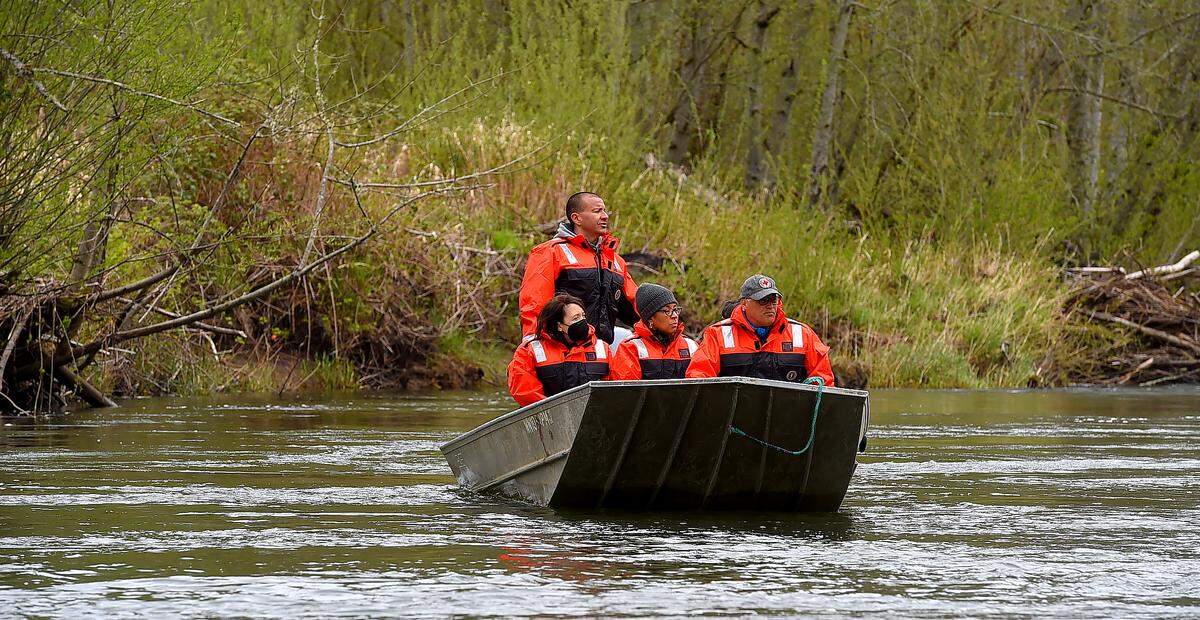
North Thurston Public Schools earned a grant in 2019 to support and sustain native communities. One of the projects the district worked on was students building underwater drones that cleaned out the bottom of the Nisqually River without disrupting the natural habitat.
Students also create care packages for native elders and make themselves visible in the community by wearing shirts supporting the Nisqually Tribe.
Frank also works with the teaching staff through professional development workshops and once invited the staff to the cultural center for traditional learning and teachings. Soon after the trip to the cultural center, staff members had cedar roses that they wove with a Nisqually elder pinned up on their whiteboards.
“It was really cool to see staff who interact with their children every day interact with the community, “ Smith said. “And that paid immediate dividends back in the classroom.”
Looking forward
Frank’s niece graduated from River Ridge last June. She read the land acknowledgment at graduation, which is also read before sporting events and other school-related activities.
For Frank, that was the “best thing about graduation.”
In addition to working to see the Lushootseed language taught in North Thurston schools, Frank also has his mind set on 2024, which marks the 50th anniversary of U.S. vs. Washington, which ended the Fish Wars.
“We haven’t done a lot of great things in the last 50 years. And I think this is a prime example of co-management right here,” Frank said. “This is an example of a school, being a governmental school, willing to come to the table with the tribes and sit there and listen.
“Listen to who we are and about why it’s important,” he continued. “Why we want our culture and our language and our way of life to be taught, not to our own, but to non-natives as well, because it’s important for everybody to know.”