WA school leaders back bills giving billions more to K-12 schools. Why the push
Tri-City school superintendents testified in support of bills last week that would put more money into the state’s 295 public school districts.
The bills considered the Washington Senate Early Learning and K-12 Education Committee would reform state funding for school transportation, expand funding for special education to more students and increase money for materials, supplies and operating costs.
“In order to provide our students with the special services they need, deserve and have a right to, districts like ours need adequate funding and the current funding models do not often fully cover the costs of providing the services,” Kennewick Superintendent Traci Pierce said in support of Senate Bill 5263.
Richland School District Superintendent Shelley Redinger says the bill would ensure all students have the resources needed to thrive in the classroom, and it’s a recognition that special education is a critical part of the state’s commitment to fund basic education.
Together with Pasco, the Tri-City school districts educate several thousand students on individualized education plans, or IEPs.
The bill, sponsored by Sen. Jamie Pedersen, D-Seattle, would eliminate a state cap on special education funding of just 16% of school enrollment, increase multipliers districts receive to serve special education students, eliminate multipliers for time spent in general education settings and decrease the threshold for safety net eligibility.
The committee also heard a bill that would make similar changes to special education from its chair, Sen. Lisa Wellman, D-Mercer Island.
Senate Bill 5307 differs from Pedersen’s in that it includes higher funding multipliers for K-12 special ed students who spend more time in the general education setting, and tweaks safety net policies and payments, among other changes.
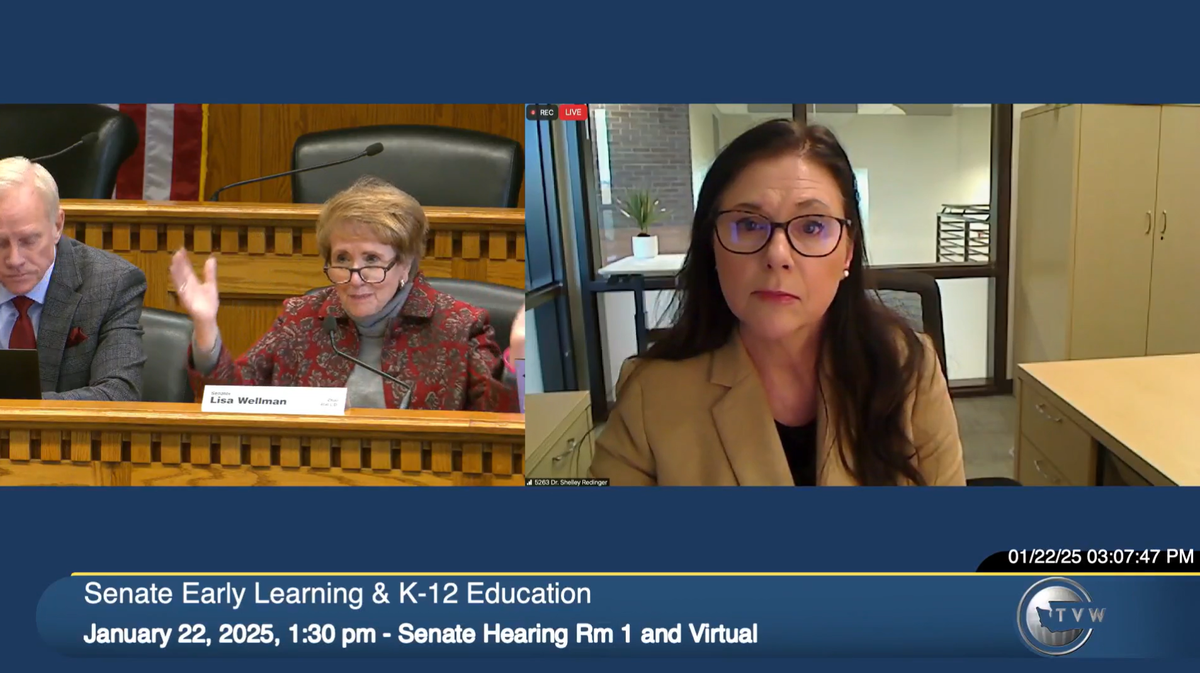
The financial impact on the state during the 2025-27 biennium would be $1.55 billion for Wellman’s bill and $1.64 billion for Pedersen’s bill.
Wellman said she appreciated the chorus of support for bills to increase investments to the state’s public schools.
Bills presented during Tuesday’s hearing were supported by several stakeholder organizations — including the Washington Association of School Administrators, Washington State School Directors’ Association and the state PTA — as well as superintendents at Seattle and Bellevue public school districts.
“I think it really is a demonstration and an acknowledgment of what we must do as a Legislature in order to fulfill our paramount duty to the state of Washington, and to our children, and to our future, to fully fund education,” she said.
Over the last five years, the share of the state’s general fund dedicated to funding K-12 education shrank from 52% to 43%.
This comes at a time when Washington lawmakers are trying to patch a $12 billion budget shortfall, and as the state’s school superintendent, Chris Reykdal, has warned that the state is at risk of another lawsuit over public education funding that could have landmark implications.
Bills boosting other funds
Another bill in the Legislature would increase funding for district materials, supplies and operating costs, or MSOC. Those expenses makes up a bulk of costs school districts pay that are not related to payroll and salaries.
Senate Bill 5192, sponsored by Sen. T’wina Nobles, D-Fircrest, would increase the allocations districts receive from the state on a per-student basis by 10%.
It would also require calculations use a three-year rolling average of student enrollment, which would provide more stable funding, and that adjustments are made annually using a price index to account for inflation.
“In Richland, we’ve seen the cost of essential items like school supplies, technology and curriculum rise significantly while state funding has not kept pace,” Redinger said. “Last year’s $20-per-student increase in MSOC funding was helpful, but it’s far from the estimated $600 per student we actually need.”
Redinger says this bill won’t close the gap of what their district needs, but will ensure that local levy dollars are focused on the district’s critical education needs.
Like other school districts, Richland faced large cuts this school year to account for rising student needs, lower state funding, higher insurance costs, lower enrollment and inflation.
Last month, it began implementing $3 million in budget cuts that included buyouts for more than a dozen basic education paraeducators.
Pierce says Kennewick has seen double-digit increases in certain supplies costs over the years.
“Without the ample funding from the state, we continue to over-rely on our local levies to fund those gaps, and this is at a time where it’s becoming increasingly difficult to explain to our local voters why the levy funding is needed when they hear the state is funding basic education,” she said.
Another bill backed by educators, Senate Bill 5187, would direct OSPI to study the cost of school district transportation costs and develop a new state funding model that “addresses the diverse needs of students and the unique characteristics of school districts.”
It would also provide an additional $400 per homeless student for students that require special transportation under requirements laid out in the McKinney-Venton Act.
Fiscal notes were not provided by deadline for SB 5187 and SB 5192.
This story was originally published January 27, 2025 at 12:23 PM with the headline "WA school leaders back bills giving billions more to K-12 schools. Why the push."