200+ new homes planned for JBLM. How will it impact the surrounding housing market?
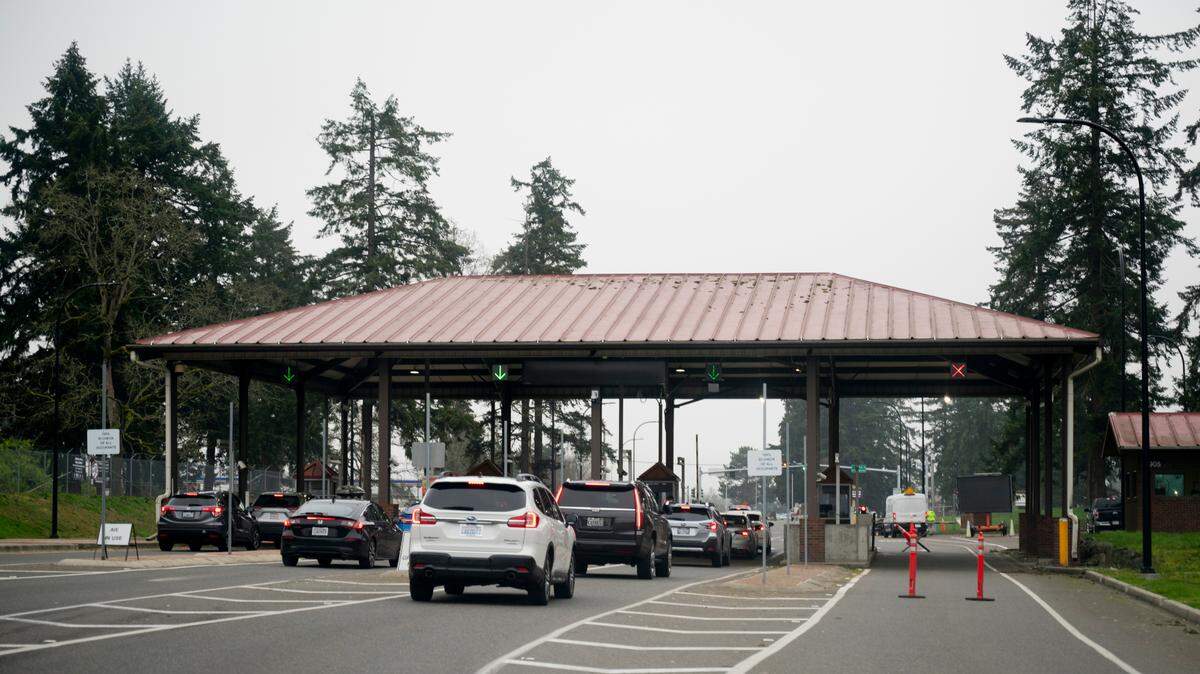
Plans are underway to build more than 200 new homes at Joint Base Lewis-McChord, addressing increased demand for affordable housing as the overwhelming majority of stationed service members live off base.
Liberty Military Housing, a private provider of military housing at installations nationwide including JBLM, plans to add 212 houses to the Meriwether Landing community on Lewis North, two spokespeople told The News Tribune on Feb. 14. Housing employees anticipate breaking ground this spring.
“Everything’s going through all the approvals with the Army, and once the bids come back we are actually already doing clearing, tree clearing, brush clearing out there to get the land prepped for the development,” said Brian Brager, Liberty Military Housing senior construction manager.
He added that Liberty Military Housing anticipates it will start moving families in from the beginning of 2026 and that it will take about two and a half years to build all 212 houses.
Asked if they’ll consider building more houses in the future, he said it’s possible.
“We’re working closely with our government partners to make sure that we’re meeting the demand of what is needed out here, and we’re constantly having conversations about future developments and what needs to be in place to help our service members,” Brager said.
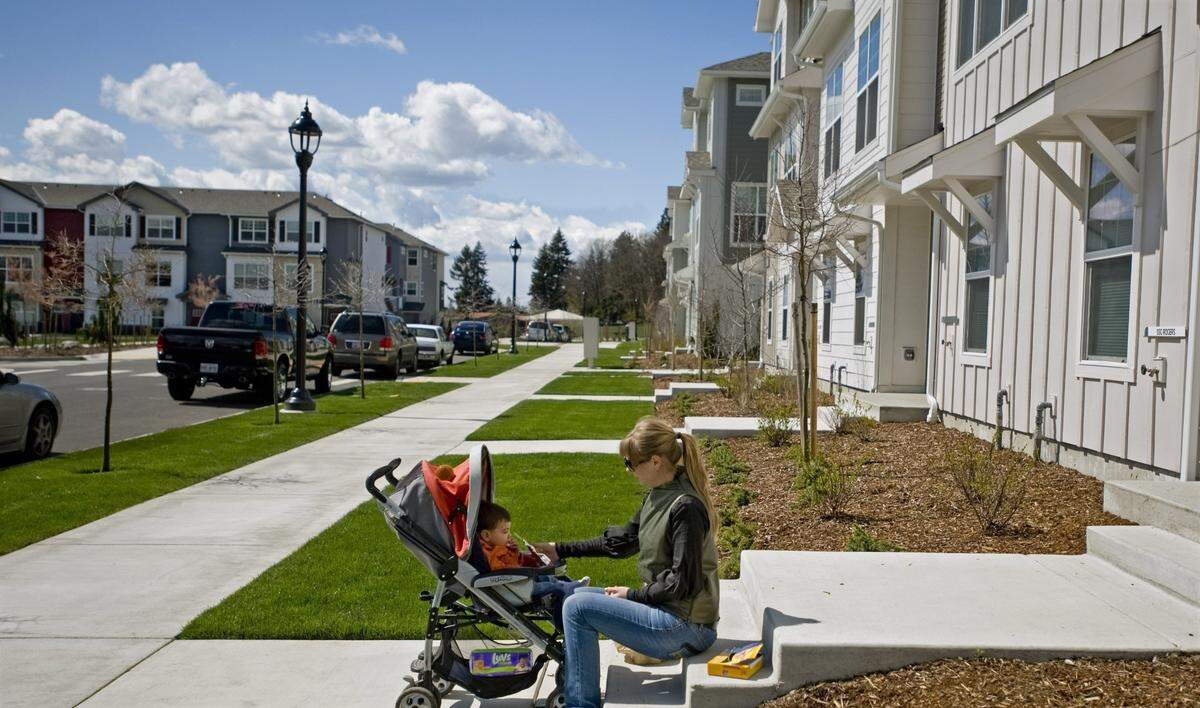
70% of service members live off base
The project was announced last year and completes a master plan for Meriwether Landing approved several years ago. The first phase of Meriwether Landing, constructing the existing 266 units, was completed in 2013, according to the U.S. Army website.
JBLM currently has 5,159 units, mostly homes for single families, spread across 22 housing communities. About 115,000 people live or work on the base, including 40,000 active duty service members, 60,000 family members and 15,000 civilian and contract employees, according to the U.S. Army website.
A housing study conducted in 2020 found that approximately 70% of service members lived off base, and there was a shortage of over 8,800 housing units in the JBLM study area. It also found that most new housing being constructed is unaffordable to lower ranked service members.
Most of the units on base are designed for single families. The range includes single-family homes, duplexes and townhomes, according to Brager.
Brager told The News Tribune there have been more than $107 million in renovations and investments into existing housing stock on the base in an effort to keep homes and amenities modern and market competitive.
When asked about the demand for housing among service members stationed at JBLM, Liberty’s regional vice president for the West Army region Beth Peterson said while there are waiting lists for on-base housing, there are nearly 60 available housing units as of Feb. 14.
“There has been a narrative that has been communicated between service members,” Peterson told The News Tribune. “New families are coming, waiting for homes, and being placed on waitlists. There is this commentary that we don’t have homes available and there is going to be a long wait.”
According to housing-stock data from Liberty Military Housing, wait times for families looking for on-base housing can sometimes exceed six to nine months.
“I believe that a lot of those service members have not even given us the opportunity to say, ‘Hey, we want to be on your waiting list,’” Peterson said. “They jump automatically to go outside of the base and look for homes there.”
She said that is why they have the number of open homes they have. She told The News Tribune that Lakewood and Olympia have the majority of service members living off-base.
According to Peterson, the cost of on-base housing is dependent on a service members’ rank and housing allowance.
A JBLM housing study published at the beginning of 2024 stated the Department of Defense (DoD) maintains an “off-base first” housing policy, meaning it depends on local communities and the free market to provide quality affordable housing for service members and their families.
The housing study cited data from 2021, which found the median active-duty household reported an income of $73,747 in Pierce County and $91,274 in Thurston County. Consistent with that income gap, the active-duty home-ownership rate was 52% in Thurston County but 27% in Pierce County.
“The housing shortage had far-reaching consequences,” the housing study stated, “Forcing some service members to expand their housing search to neighborhoods located beyond the immediate vicinity of the installation, such as Auburn, Eatonville, Bellevue, and Shelton, and, in turn, endure long commutes.”
Will it impact the local housing market?
The City of Tacoma says the new homes at Meriwether Landing will not have a significant impact on the city’s housing market.
“While new housing on Joint Base Lewis-McChord for military personnel and civilians is a positive step towards addressing the critical housing shortage across the South Sound, the anticipated impact of 200 units is not expected to significantly alter Tacoma’s market conditions on its own,” Maria Lee, a spokesperson for the City of Tacoma told The News Tribune.
Lee said the city has been involved with planning housing development and affordable housing as it relates to the base and active service members. Tacoma is a member of the South Sound Military and Communities Partnership (SSMCP), an organization of more than 50 members comprised of cities, counties, tribes, non-profits and Joint Base Lewis-McChord.
The City of Lakewood is also involved with the SSMCP. Brynn Grimley, a spokesperson for Lakewood, said through their work with SSMCP, Lakewood officials know on-base housing is limited and wait lists are long.
“Lakewood has a strong relationship with Joint Base Lewis-McChord both as a neighbor to the base and through its membership in the South Sound Military & Communities Partnership,” Grimley wrote to The News Tribune in an email. “We know how important the military installation is for number of reasons, including its support of our local economy and that we need affordable, off-base housing available for military families transitioning into the area.”
The JBLM base commander attended a meeting with city managers from across Pierce County in January and said JBLM is committed to partnering with local jurisdictions, Gig Harbor City Administrator Katrina Knutson said at a City Council meeting Jan. 27.
Property owners may raise rents to keep pace with increases in the housing allowance given to military service members, so JBLM believes “that it’s a factor that’s leading to housing unaffordability in particular in the South Puget Sound,” Knutson said at the meeting.
The Department of Defense sets the Basic Housing Allowance (BAH) rate for military service members across the country, factoring in the costs of rent and utilities in local housing markets around their installations, according to the Defense Travel Management Office website. The U.S. Army website says BAH rates increased an average of 5.4% across the country on Jan. 1.
“Hearing from the JBLM base commander that hundreds of additional housing units will be built on base is welcomed news,” Knutson wrote in an email to The News Tribune. “JBLM is one of Washington State’s largest employers and the more housing they can provide for their employees the better.”
A 2023 report from SSMCP said that service members stationed at JBLM collectively received $1.3 billion in basic housing allowance in 2022 which they used to pay for housing costs both on- and off-base.
This story was originally published February 26, 2025 at 5:00 AM with the headline "200+ new homes planned for JBLM. How will it impact the surrounding housing market?."