
With wary eye on China, US military reconfigures Pacific war machine
Satoshi Yamamoto took his 13-year-old daughter to the edge of the U.S. Air Force’s busiest runway in the Pacific on their summer vacation, hoping to give her a thrill while looking at the front lines of a military standoff in the western Pacific.
It worked.
After seeing four fighter jets roar into the skies of the East China Sea, she declared herself ready to enlist in the American military.
THE SERIES
- U.S. military reconfigures its Pacific war machine.
- Stalemate over Marines on Okinawa persists, decades after deal to close base.
- Wartime memories shape veteran's opposition to Japan’s new military buildup.
- Endangered symbol of anti-military movement may already be gone.
- Guam quietly slated to become massive new U.S. base.
Yamamoto looked just as excited, but he turned sober when he described why he wanted to spend a day watching jets take off from an American base on Okinawa, the fortified Japanese island that sits closer to Shanghai than Tokyo.
“If the American bases were not here, then China might take over Okinawa,” the 52-year-old banker from Tokyo said.
He’s one of many Japanese nervously eying China’s push into the nearby South and East China seas, where Beijing has rapidly expanded islands for military bases and staked claims in international waters.
A fear of conflict in those waters is driving Japan to swell its defense spending and lending a sense of urgency to the “Pacific pivot,” which the Obama administration announced four years ago to refocus the American military after long wars in Iraq and Afghanistan.
The military expansion in China affects every country, not only Japan, not only the countries near the South and East China Sea. It’s important for everyone to get China engaged and check their military.
Japanese lawmaker Taro Kono
On Okinawa, that buildup is as tangible as the headquarters for a new Japanese air force squadron, on a runway that already lights up almost twice a day with fighter jets rushing off to intercept Chinese planes testing Japan’s airspace.
“This is real-world,” said Marine Capt. Caleb Eames, an American military spokesman here.
Japan is bulking up with new conventional weapons and searching for amphibious training grounds where it can practice beach assaults it may need to take an island. Its main ally, the United States, is matching the moves by steering more troops and newer weapons to the Pacific.
And Japan is signaling for the first time since World War II that it’s ready to use the expensive military it’s building as a hedge against China.
Click to enlarge:
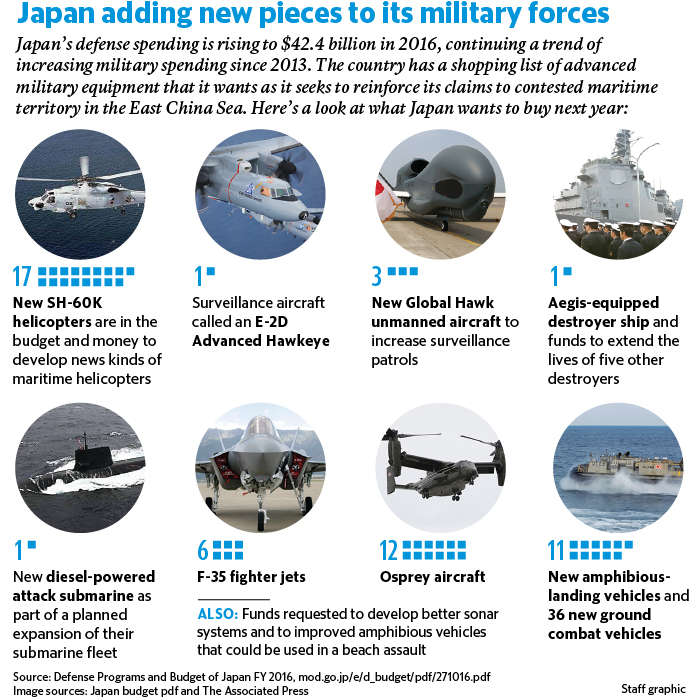
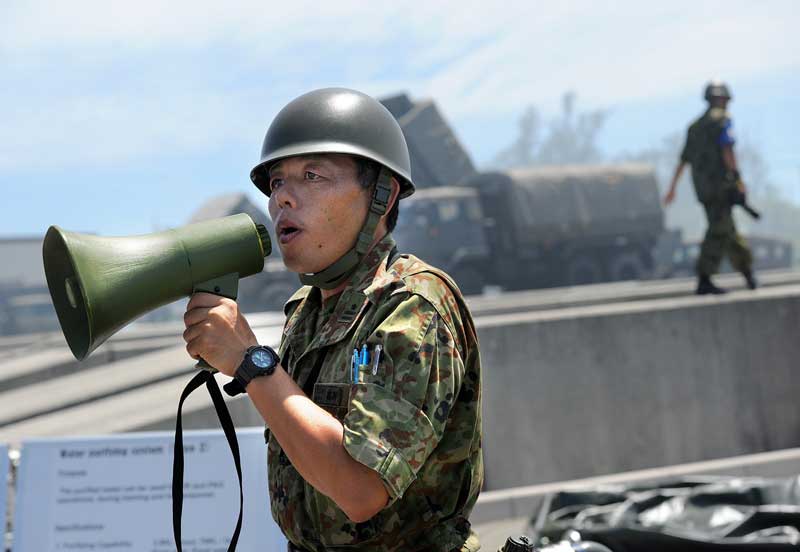
In September, Japan’s Parliament lifted longstanding military restrictions that have prevented it from going to war for reasons other than defending itself. That means it can now fight alongside the U.S. and other friendly countries if they come under attack in the region.
“The military expansion in China affects every country, not only Japan, not only the countries near the South and East China Sea. It’s important for everyone to get China engaged and check their military,” said Japanese lawmaker Taro Kono, a member of Prime Minister Shinzo Abe’s Liberal Democratic Party who has supported Japan’s efforts to create a more muscular military.
To the U.S. and its partners in the Pacific, the buildup represents a counterweight to China’s growing defense spending, which is reported to be climbing at a rate of 7 percent a year.
Since 2013, China added some 2,900 acres of land to atolls in the South China Sea, laying what appears to be an airstrip on at least one of the islands, according to the Pentagon. That expansion puts it in conflict with Vietnam, Malaysia, Taiwan and the Philippines.
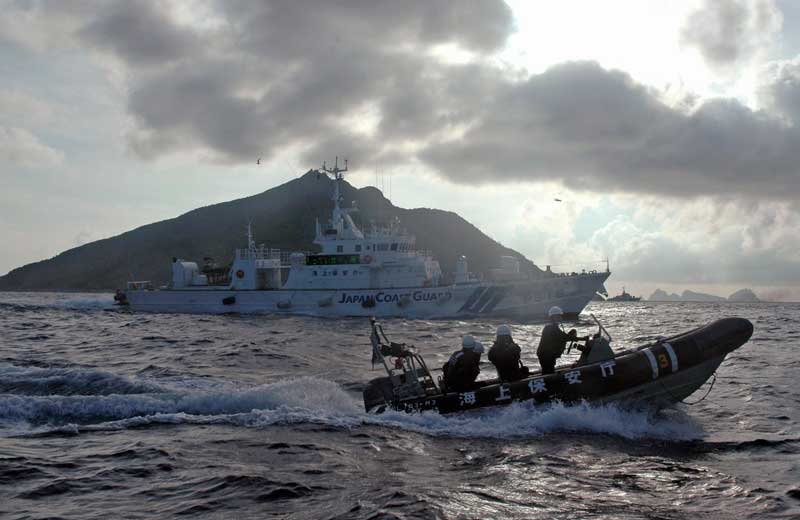
A similar conflict is playing out in the East China Sea, where China and Japan have competing claims to a group of islands known as the Senkaku in Japan and the Diaoyu in China.
China’s navy has 303 ships to Japan’s 67, and Chinese leaders are bullish about their power.
“In whichever corner of the water there is blue water, we will stand guard,” a Chinese navy recruitment video declared in August.
None of the American allies in the region individually could afford to keep up with China, yet each wants to protect its territory.
It is inflaming an already intense situation. Adding U.S. military power to this situation encourages China to boost its military spending.
American University Professor David Vine
Accordingly, they’re joining ever-larger military exercises with American forces. Two years ago, Japanese troops practiced beach landings with Marines in Southern California.
In September, Japanese pilots stepped up their participation in an annual military exercise in Central Washington by trying helicopter assaults with infantrymen from Joint Base Lewis-McChord for the first time.
“That’s part of the clumsy and aggressive way the Chinese are acting in the South China Sea. In many ways, they’re driving key players into the American security fold,” said Republican Sen. Dan Sullivan of Alaska, a Marine Reserve officer who sits on the Senate Armed Services Committee.
Despite the palpable sense of concern over China’s military expansion, the Japanese and American countermoves stoke fears among critics in both countries that they may be too costly and could trigger the kind of conflict its proponents hope to prevent.
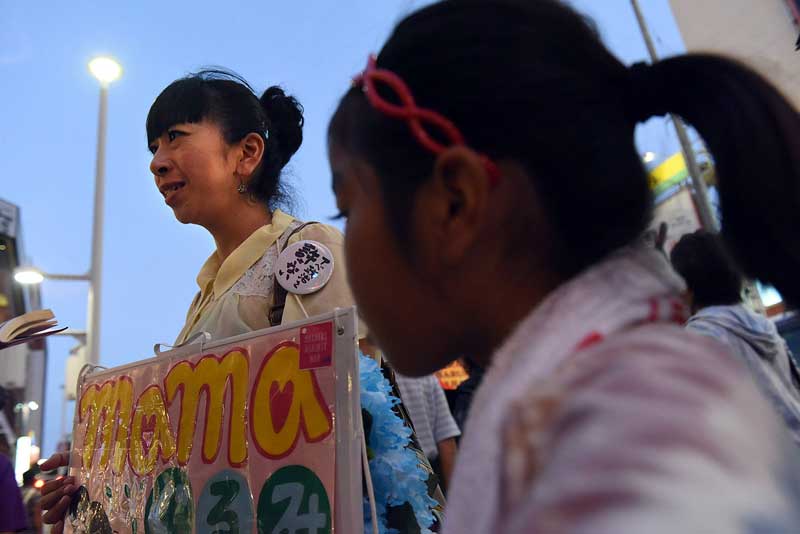
“They’re going to make a new base and it’s going to have the latest technology,” said Miyumi Shiroma, 36, who in August joined a protest against a Japan-supported expansion of one of the U.S. Marine bases on Okinawa. “That means Okinawa is going to be a target for a military attack. I don’t want our children and grandchildren to live with the most dangerous base in the world on this island.”
In Washington, questions still linger about whether the U.S. can afford the Pacific pivot while the military remains tied to conflicts in Iraq and Afghanistan.
Some are also concerned that the U.S. efforts in the region may be contributing to a “spiraling escalation” of military power. The Navy plans to place almost two-thirds of the 300-ship fleet it expects to have by 2020 in the Pacific, breaking from a traditional even split between Pacific- and Atlantic-based fleets.
“It is inflaming an already intense situation. Adding U.S. military power to this situation encourages China to boost its military spending,” said David Vine, an American University professor who recently published a book, “Base Nation,” that analyzes the costs of the U.S. military’s foreign bases.
The military’s ability to live up to its commitments in the region depends partly on whether the Navy can keep pace with an aggressive shipbuilding plan that would raise the size of the fleet from today’s 273 ships to more than 300.
If the American bases were not here, then China might take over Okinawa.
Tokyo banker Satoshi Yamamoto
speaking from OkinawaThat’s expected to cost an average of $16.7 billion a year for 30 years, according to the Navy. The Congressional Budget Office in late 2014 called that estimate too low, projecting a total cost closer to $21 billion a year.
Another obstacle to the buildup comes from residents on Pacific islands that have held a continual presence of U.S. Armed Forces since the end of World War II. They’re losing patience with a military expansion that they believe will harm their way of life while making them a more probable target if war ever breaks out.
“We’re just part of this big plan in the Pacific,” said Leevin Camacho, 37, an attorney on Guam who wants the Pentagon to reduce its footprint on his island. “They use the South China Sea as a justification for all these projects.”
He’s one of the founding members of We Are Guahan, a group of mostly young Guam natives who in 2010 filed a lawsuit against the Defense Department. The suit challenged a proposal that would have swelled Guam’s population, seized privately owned land and disrupted a protected site that holds an ancient village by placing a machine gun firing range next to it.
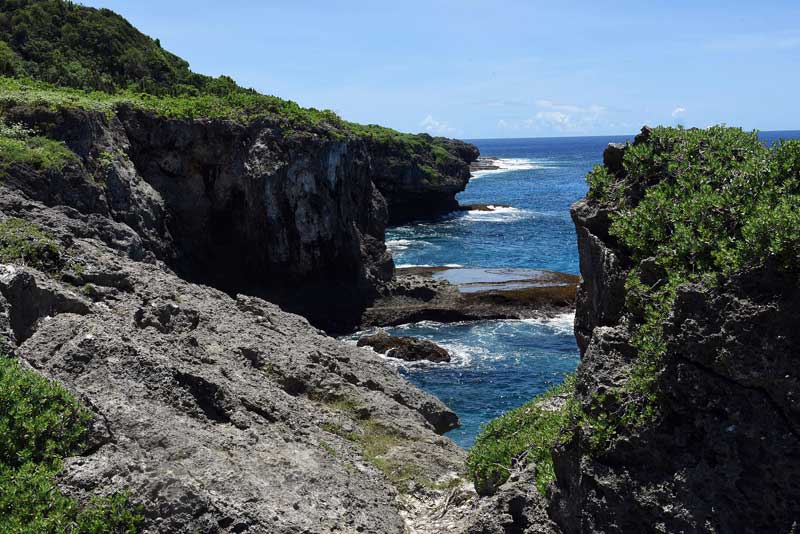
Back then, the idea was for the Pentagon to get as many Marines to Guam as fast as possible, so it could reduce the number of troops at bases in urban parts of Okinawa while keeping them close to where they may be needed in an emergency.
That’s part of the clumsy and aggressive way the Chinese are acting in the South China Sea. In many ways, they’re driving key players into the American security fold.
Sen. Dan Sullivan
R-AlaskaJapan supported the shift; this year it has spent $56.1 million to pay for Japan-based American military units to train on Guam. It also has agreed to pay for more than a third of the Marine relocation to Guam.
The activists’ lawsuit compelled the Pentagon to rewrite its plans for Guam. The newer version, adopted this summer, calls for fewer Marines and does not disturb the archeological site.
Many residents on Guam and Okinawa insist the Pentagon would never even propose such a massive project in the mainland United States, where voters would compel the Defense Department to balance military training with impacts on civilians.

Guam, a U.S. territory with about 160,000 residents, does not have a voting member of Congress.
“We’re out of sight, out of mind from the rest of the world, and a lot can be done without anyone knowing about it till later,” said Judith Won Pat, speaker of Guam’s Legislature.
Some of the new Pacific forces are already in place.
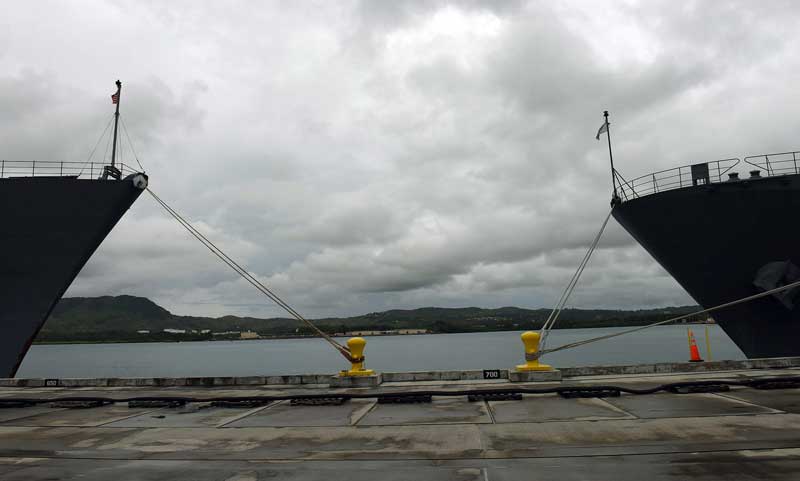
In late August, the Navy sent the California-based USS Ronald Reagan aircraft carrier to a new home port in Yokosuka, Japan. It’s considered the most modern U.S. aircraft carrier in the Pacific; it’s replacing the older USS George Washington.
Another new rotation of four Navy littoral combat ships is expected to begin porting in Singapore by 2018. They’re ships that are designed for combat missions in shallow seas, such as mine-clearing or running down fast-moving boats.
When the Navy started receiving a new class of submarine-hunting jets called the P-8A Poseidon three years ago, it chose to keep at least six of them in the Pacific while Boeing filled orders for dozens more.
Now the sophisticated P-8A is on the prowl, conducting surveillance missions out of Okinawa’s Kadena Air Base, which also hosts more than 50 fighter jets. The P-8A is one of the aircraft the Navy has used to document China’s military construction on disputed atolls in the South China Sea, as well as to search for its growing fleet of submarines.
We’re just part of this big plan in the Pacific. They use the South China Sea as a justification for all these projects.
Leevin Camacho
an attorney in Guam who wants the Pentagon to reduce its footprint on his island“We’ve made the Pacific pivot. As part of the pivot, we’re getting our latest technology, our best equipment, in this theater,” said Navy Cmdr. John Weidner, who recently completed a deployment leading a P-8A squadron on Okinawa.
On Guam, the Pentagon and Japan are spending hundreds of millions of dollars to improve the harbor at Naval Base Guam so it can handle more ships and more Marines, as well as to modernize the underused Andersen Air Force Base at the northern end of the island.
The projects at Andersen cost more than $550 million. About $332 million has gone into the Navy base since 2010.
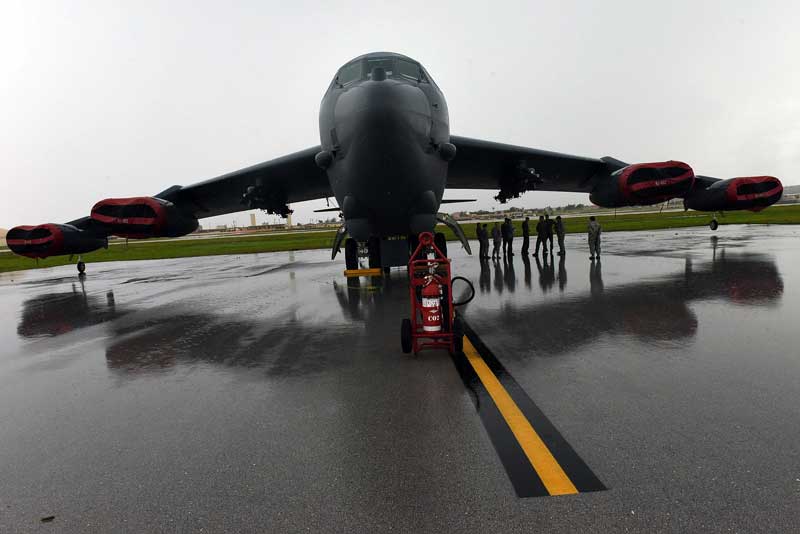
The Air Force base once held the B-52 bombers that rained explosives on Hanoi during the Vietnam War. A smaller number of them are still stationed at Andersen, where they fly around the Pacific as a demonstration of U.S. air power.
In 2013, when China declared a new “air defense identification zone” over islands in the East China Sea that it and Japan have both claimed, the U.S. sent two B-52 bombers from Guam over the contested waters. The U.S. refused to acknowledge China’s declared airspace, and it continues to fly through it.
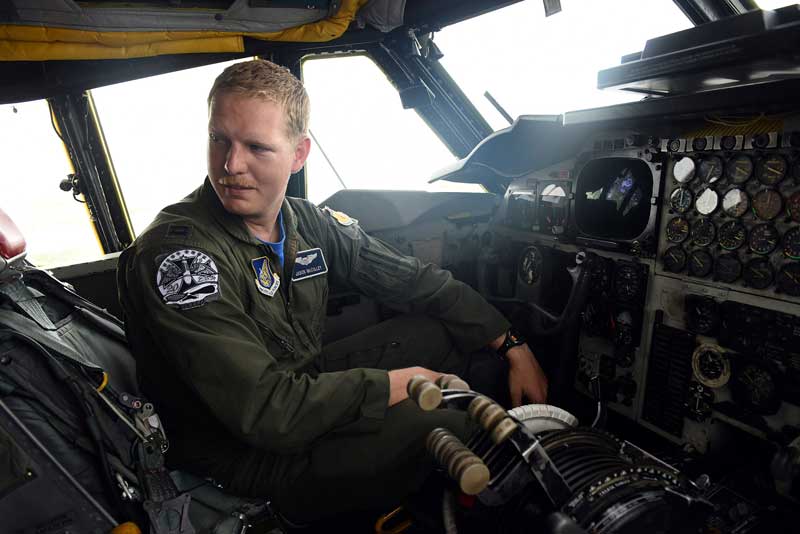
“We’re trying to be noticed,” said Air Force Capt. Jason McCulley, 30, of Yelm, a B-52 pilot who was stationed at Guam this summer.
Adam Ashton: 253-597-8646; @TNTMilitary
The TNT goes to East Asia
News Tribune military reporter Adam Ashton spent three weeks in Japan and Guam this summer on a McClatchy project exploring what President Obama has called the “Pacific pivot.” Ashton has also written extensively the last few years about how JBLM troops are part of the pivot, shifting much of their attention from Iraq and Afghanistan to East Asia partnerships.
This story was originally published November 21, 2015 at 7:00 PM with the headline "With wary eye on China, US military reconfigures Pacific war machine."