
Hordes of bloodthirsty ticks drinking animals dry in Vermont: 90,000 found on 1 moose
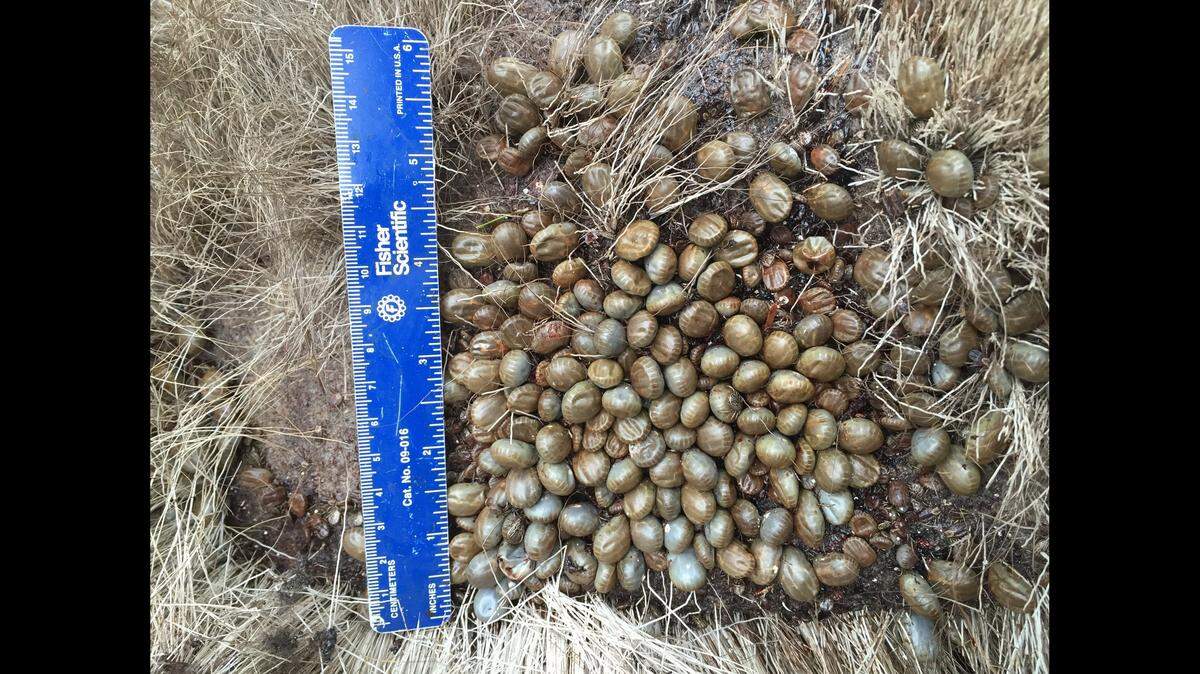
Hordes of large, bloodthirsty ticks are mercilessly drinking animals to death in New England, according to Vermont Fish & Wildlife.
“As many as 90,000 winter ticks have been found on one moose,” the department said in a Feb. 20 Facebook post.
“More than half of moose calves have died in recent winters due to blood loss caused by the winter ticks.”
A chilling photo shared by the department showed a patch of skin on a moose on which engorged ticks outnumber hairs.
The ticks “attach themselves in the fall and feed throughout the winter” on the animal’s blood, according to Science Daily.
Climate change is among the chief causes, according to a 2018 report from the University of New Hampshire.
“The iconic moose is rapidly becoming the new poster child for climate change in parts of the Northeast,” wildlife ecologist Pete Pekins said in a university press release in 2018. “The changing environmental conditions associated with climate change are increasing and are favorable for winter ticks.”
Winter ticks are partial to feeding on moose and deer, and the species “differs from other ticks in terms of its impressive size” — just over half an inch, according to Quebec.ca.
Vermont wildlife biologists say thinning the moose population could thwart the blood feast, at least temporarily. Experts want to reduce the number of moose by at least 33 animals, via limited hunting.
“Research has shown that lower moose densities, like in the rest of Vermont, support relatively few winter ticks that do not impact moose populations,” Nick Fortin of Vermont Fish & Wildlife said in a post on Facebook.
“Reducing moose density decreases the number of available hosts which in turn decreases the number of winter ticks on the landscape.”
This story was originally published February 24, 2020 at 3:52 AM with the headline "Hordes of bloodthirsty ticks drinking animals dry in Vermont: 90,000 found on 1 moose."