
Huge insects seen in Texas aren’t murder hornets — but they are killers, experts say
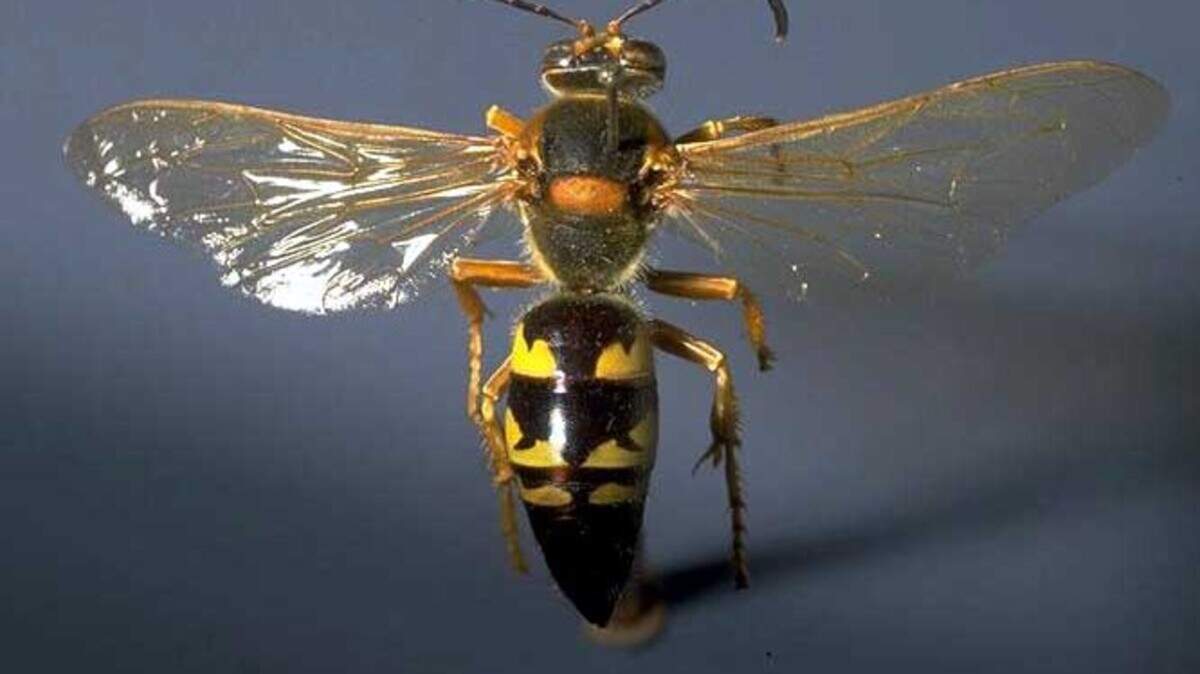
What seems like a lifetime ago, the icing on top of the dumpster-fire year that is 2020 appeared to be a nefarious species appropriately named “Murder hornets,” a breed of Asian giant hornet that seemed to have dive bombed into our newly dubbed social distancing world.
The question many Texans have been wondering: Have they made their way into the Lone Star State?
To put minds at ease - no, that’s not a honey bee colony destroying super predator you’re seeing, according to Texas Parks and Wildlife.
It’s what’s known as a cicada killer.
“Don’t panic!” Parks and Wildlife posted on its Facebook page on Aug. 22. “Those large wasps you’re seeing are cicada killers, a native insect that paralyzes cicadas with their stings and then drags them to their nests for their larvae to eat.”
According to the Houston Chronicle, entomologists at Texas A&M AgriLife had received a lot of calls and emails from alarmed Texans, worried that they were seeing the murder hornet in their own backyards. A&M put together a video explaining the differences between the murder hornet and Texas insects that could possibly be mistaken for the predator.
While, yes, the cicada killer is “one of the largest wasps encountered,” according to A&M, they are not a concern for Texans. The females are “capable of stinging,” but are “rarely aggressive” toward humans or animals. “Males are incapable of stinging, but can be more aggressive,” per A&M.
Earlier this summer, an Asian giant hornet was trapped by the Washington State Department of Agriculture near the U.S.-Canadian border, according to the Sacramento Bee.
This story was originally published August 25, 2020 at 10:15 AM with the headline "Huge insects seen in Texas aren’t murder hornets — but they are killers, experts say."