Living near oil and gas wells exposes you to toxic gases. CA study shows just how much
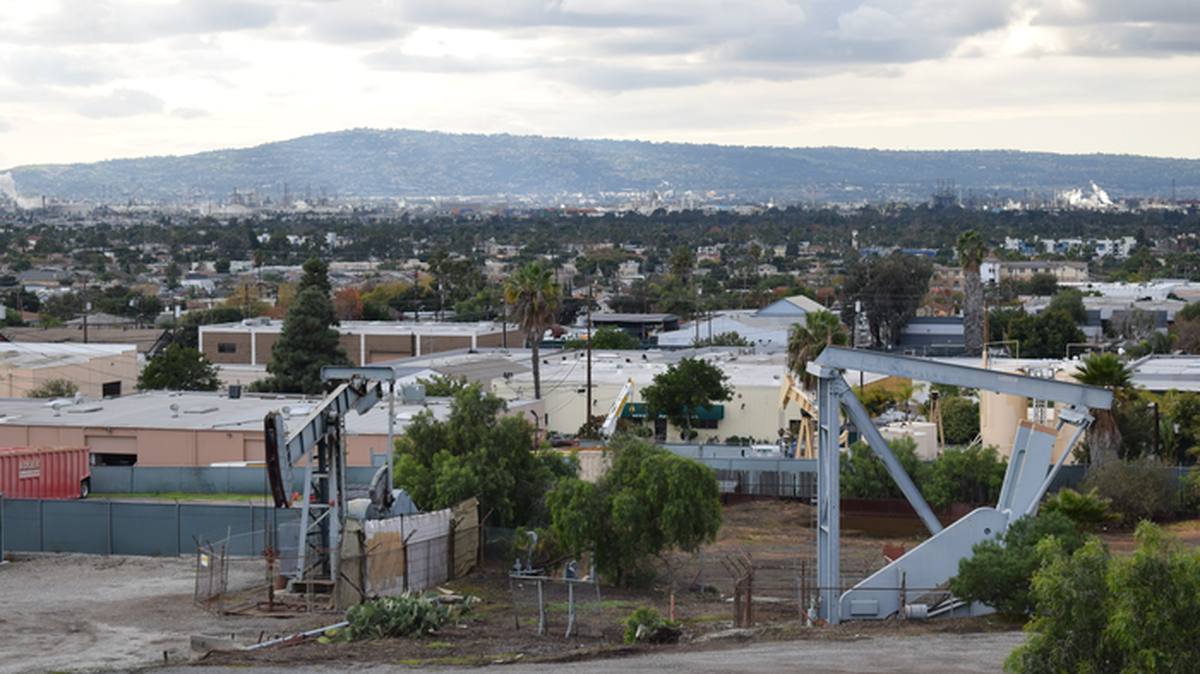
A 14-year analysis of air quality data across California revealed residents who live within 2.5 miles of oil and gas wells are exposed to higher levels of toxic gases — such as carbon monoxide, ozone and nitrous oxide — compared to people who live further away.
Long-term exposure to this harmful air pollution, which also includes particulate matter and volatile organic compounds, could harm people’s health, causing asthma, cognitive decline, heart disease and preterm birth, among other conditions.
At least 2 million Californians live within a mile of an active oil or gas well, according to the Stanford University researchers behind the analysis. However, communities of color, particularly Black and Latinx communities, face the brunt of the harmful exposure because they tend to live closer to oil and gas wells.
“If we care about environmental justice and making sure every kid has a chance to be healthy, we should care about this,” study lead author David Gonzalez, who conducted the research as a Ph.D. student in Stanford, said in a news release posted Oct. 12.
But the exact effects on the health of residents who live near oil or gas wells remain unknown, according to the study published in September in the journal Science of the Total Environment.
About 38,000 wells that were actively being drilled and 90,000 wells “in production” in California between 2006 and 2019 were included in the study. Researchers created a model that comprised more than a million daily observations from 314 air monitors and combined it with global wind data from the National Oceanic and Atmospheric Administration.
Although data was from oil and gas wells in California, the researchers say their findings “are likely applicable” to other regions in the U.S. with oil and gas operations. Texas, Oklahoma and North Dakota are also leaders in oil and natural gas production.
“While it’s not necessarily surprising that drilling and operating oil and gas wells emit air pollutants, knowing the magnitude of the effect improves our broader understanding of who is exposed to what and how to intervene to improve health outcomes,” study senior author Marshall Burke, an associate professor of earth system science at Stanford in California, said in the release.
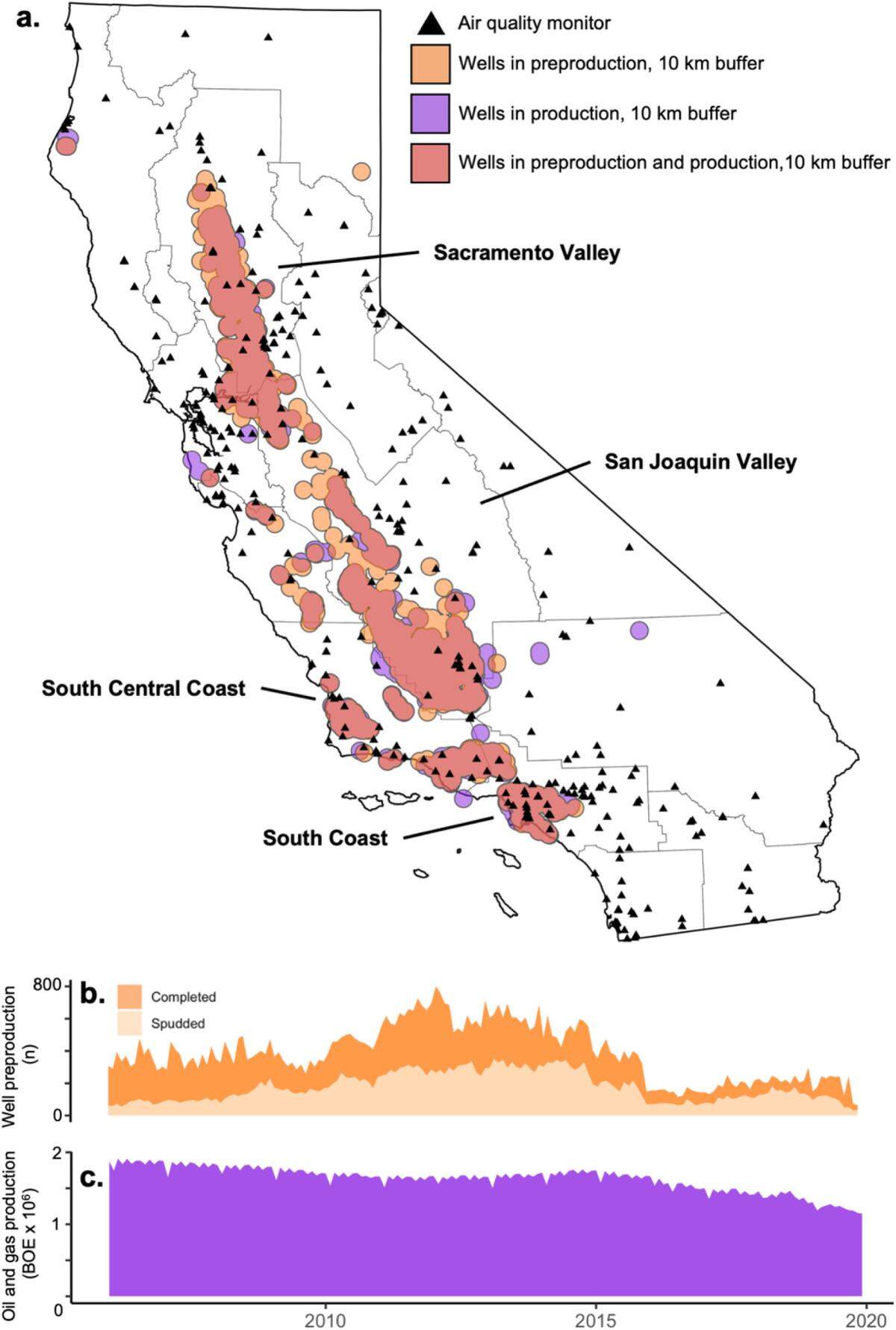
When oil or gas wells reach 100 barrels of production a day, concentrations of particulate matter — an invisible mixture of dust, dirt, soot, or smoke and other particles — in the air increase by two micrograms per cubic meter about a mile away from the site, the study found.
Separate research published last year found that just one extra microgram per cubic meter of particulate matter raises the risk of dying from COVID-19 by 11%.
Particulate matter comes in many sizes, but particles less than 10 micrometers across can get stuck in your lungs and enter your bloodstream when inhaled, potentially causing irregular heartbeat, nonfatal heart attacks and decreased lung function, the Environmental Protection Agency says.
Ozone was also present within 2.5 miles from oil and gas wells, the researchers found.
Inhalation of low amounts of the toxic gas can cause chest pain, coughing, throat irritation and shortness of breath, the EPA says. It could also aggravate chronic respiratory diseases and prevent people from properly fighting respiratory infections like the coronavirus.
People typically recover well from short-term exposure to ozone, but long-term exposure can make recovery less certain because it could cause more damaging effects. Children are especially at risk of ozone exposure because their lungs are still developing.
“Many of California’s oil fields have been operating for decades. People that live near them have been chronically exposed to higher levels of pollution — and a lot of these wells are located in neighborhoods that are already burdened by pollution,” Gonzalez said. “Our study adds to the evidence that public health policies are needed to reduce residents’ exposure to air pollution from wells.”
In September, Los Angeles County supervisors voted to phase out oil and gas drilling and ban new sites, The Associated Press reported, potentially closing more than 1,600 wells. Other California cities are discussing similar interventions in neighborhood drilling regulations, the researchers said.
Wildfire smoke and industrial activities, both complicated by changing wind patterns, could also contribute to elevated levels of air pollution, but the researchers controlled for these factors.
“Sometimes the wind is blowing from the well, sometimes it’s not, and we found significantly higher pollution on days when the wind is blowing from the wells,” Gonzalez said. “As a control, we assumed wells that are downwind of the air monitor shouldn’t contribute any pollution — and that is indeed what we saw.”
This story was originally published October 18, 2021 at 9:11 AM with the headline "Living near oil and gas wells exposes you to toxic gases. CA study shows just how much."