Man spent 2 years in Hawaii psychiatric hospital in mistaken identity case, suit says
Joshua Spriestersbach had fallen asleep outside of a homeless shelter in Honolulu while waiting for food when he suddenly found himself awoken by a police officer, according to federal court filings.
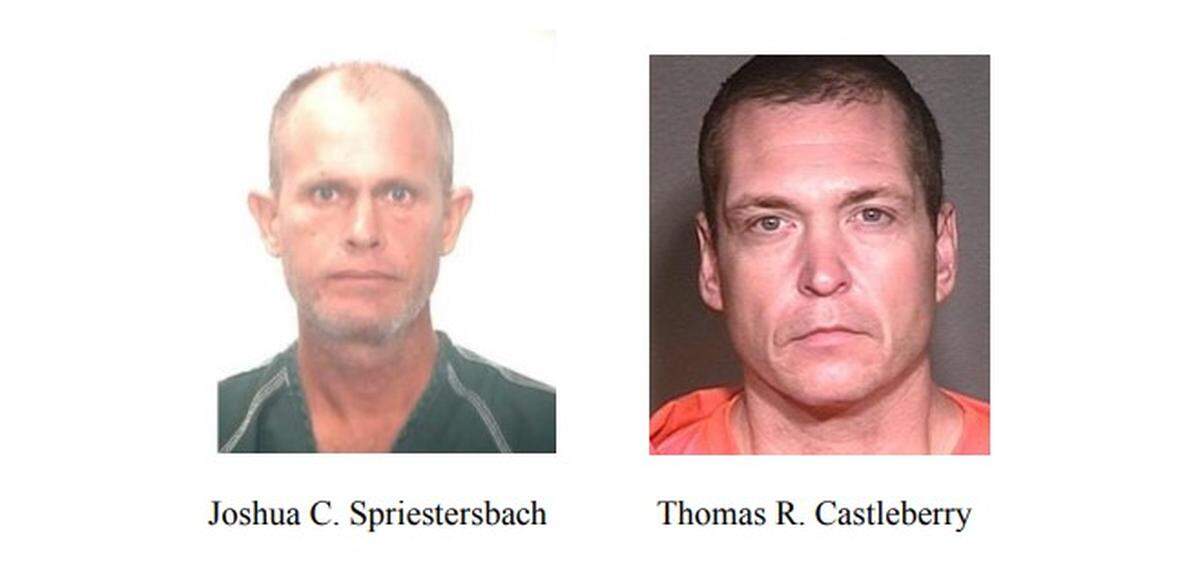
The officer placed Spriestersbach under arrest on an eight-year-old bench warrant and he was booked in to the Oahu Community Correctional Center, his attorney said. There was just one problem: the warrant wasn’t for Spriestersbach, it was for someone named Thomas R. Castleberry.
Spriestersbach reportedly spent the next two years and eight months trying to convince police, public defenders, a judge and several doctors they had the wrong guy.
Attorneys representing Spriestersbach said it took until January 2020 for officials to realize their mistake and release him.
Now he’s suing.
The Hawaii Innocence Project filed a federal civil rights lawsuit on Spriestersbach’s behalf on Nov. 21, court documents show.
“Prior to January 2020, not a single person acted on the available information to determine that Joshua was telling the truth – that he was not Thomas R. Castleberry,” his lawyers said in the complaint. “Instead, they determined that Joshua was delusional and incompetent just because he refused to admit that he was Thomas R. Castleberry and refused to acknowledge Thomas R. Castleberry’s crimes.”
The lawsuit lists the city of Honolulu, the Department of Public Safety, the Public Defender’s Office, several officers with the Honolulu Police Department and the Hawaii State hospital — among others — as defendants.
The city attorney, director of DPS, State Public Defender James S. Tabe and a representative from the hospital did not immediately respond to McClatchy News’ request for comment.
Interim Chief Rade Vanic for the Honolulu Police Department said they are investigating the claims.
“The HPD is currently reviewing department policies and procedures to determine if changes are needed,” Vanic said. “We are also continuing to work with city attorneys to fully investigate and address the allegations in the lawsuit.”
Spriestersbach vs. Castleberry
Spriestersbach was born in Sacramento, California, in 1979 and spent some time in Kentucky and Tennessee before moving to Hawaii in 2003, his lawyers said.
He reportedly developed some “mental health problems” as an adult and was periodically hospitalized or homeless, but his attorneys said Spriestersbach “remained nonviolent, law abiding, and he was a free citizen.”
“The only ‘crimes’ that Joshua has ever been charged or convicted of were crimes of poverty, such as trespass and sitting or lying on public sidewalks because he was houseless,” the lawsuit states.
Castleberry, meanwhile, was arrested in Honolulu in 2006 on vehicle theft and drug charges, attorneys said. He pleaded guilty the following year and was placed on probation until 2009, when a judge issued a bench warrant for his arrest on charges of failure to appear.
Lawyers for Spriestersbach said Castleberry left the state in 2009 and moved to Arizona before he was arrested in Alaska, where he remains in prison with a release date in 2022. He could not be reached for comment by McClatchy News.
Spriestersbach and Castleberry have “completely different” birth dates and social security numbers, but do “share the same birth year,” according to the lawsuit.
In 2011, Spriestersbach was sleeping in the stairwell of a middle school in Honolulu when police approached him and asked for his name, according to the complaint. He gave them his grandfather’s last name — Castleberry — and officers found the warrant for the real Castleberry.
Spriestersbach was arrested, but his attorney said the officers must have realized “at some point during the booking process” that he wasn’t Thomas R. Castleberry and he was released.
A case of mistaken identity
Because of the 2011 incident, the Hawaii Innocence Project said, Thomas R. Castleberry was listed as an alias of Spriestersbach.
That meant when officers arrested Spriestersbach in 2017, Castleberry’s name and the outstanding bench warrant resurfaced, the lawsuit states.
“(Spriestersbach) thought he was being arrested for violating Honolulu’s sit/lie ban, which criminalizes the houseless for sitting or sleeping in certain areas of the city,” the Innocence Project said on its website. “Unfortunately for Joshua, it couldn’t be further from the truth.”
Spriestersbach remained in jail for four months on charges related to Castleberry’s alleged crimes, his lawyers said. When he told his court-appointed lawyer he wasn’t Castelberry, the public defender reportedly requested a psychiatric panel “evaluate Joshua and determine his mental fitness to proceed.”
He was then sent to the Hawaii State Mental Hospital, where his attorneys said he stayed for two years.
According to the lawsuit, public defenders and doctors at the hospital used Spriestersbach’s protestations about his identity as “as evidence of his incompetency.”
“The more Joshua protested that he was not Castleberry and that he had never committed the crimes he was in HSH for, the more he was given strong anti-psychotic medication, which caused him to become catatonic,” the Innocence Project said. “When Joshua protested the heavy doses of medication, the Judge ordered him to be medicated over his objections.”
It wasn’t until a doctor verified Spriestersbach’s true identity through medical records in January 2020 that he was released, the complaint states.
Spriestersbach was taken back to the homeless shelter where he was first arrested in 2017 with 50 cents to his name and various identification documents, his lawyers said.
The lawsuit
The Hawaii Innocence Project said Spriestersbach remains at risk for wrongful arrest because the Attorney General’s office still lists Thomas R. Castleberry as an alias of Joshua Spriestersbach.
The compliant makes claims for violations of his constitutional rights, discrimination on the basis of disability, abuse of process, malicious prosecution, false imprisonment, negligence, medical and legal malpractice and intentional infliction of emotional distress, among others.
His attorneys said Spriestersbach falls under a protected class under the Americans with Disabilities Act because of his struggle with mental health.
The Hawaii Innocence Project reportedly investigated on Spriestersbach’s behalf and “found through a quick public records search that Castleberry was in other states and was even incarcerated at the time Joshua was serving Castleberry’s time in the (Hawaii State Hospital).”
“Yet, no one took the time to listen to Joshua and due basic research to determine what he was telling was true – he was not Castleberry,” the Innocence Project said.
The judge assigned to the case recused herself on Monday, Nov. 22, citing the need to “avoid the appearance of impropriety, or a conflict of interest, or any reasonable question regarding my impartiality.”
None of the named defendants have responded to the allegations, court documents show.
This story was originally published November 23, 2021 at 4:17 PM with the headline "Man spent 2 years in Hawaii psychiatric hospital in mistaken identity case, suit says."