
Little Havana residents fear ‘economic annihilation’ as trailer park closes
Awilda Suriel sat on the ground, her knees drawn and her head in her hands as she watched her neighbors file onto the patch of grass before her. They shifted uneasily, their arms crossed and eyes downcast. While most were silent, the few who traded muted pleasantries hushed as the homeowners of the Silver Court Trailer Park commenced their meeting.
Bringing them together was the fact that they’ll soon be driven apart.
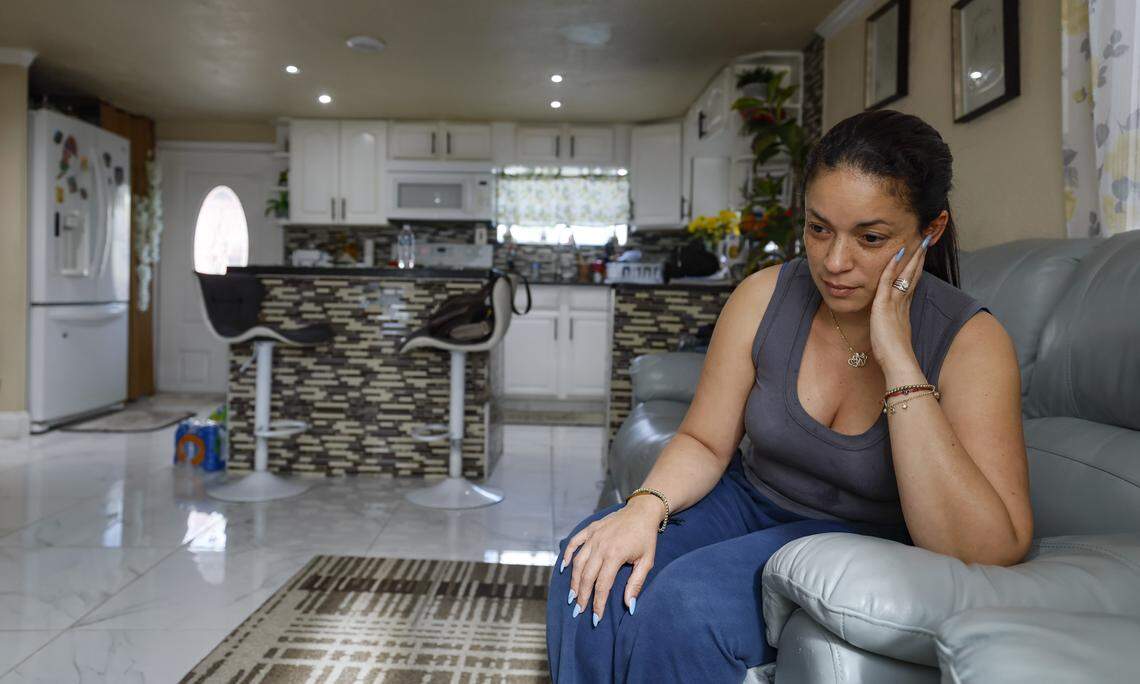
Suriel, 43, purchased her trailer two years ago for $45,000, then sank what remained of her savings, $20,000, into making it a home — new siding, a carport, interior repairs — for her three kids.
She had saved for seven years to buy the place, often driving 10-plus hours a day for Uber. “I thought I’d live here for the rest of my life,” she said.
But a paper taped to her front door on March 11 shattered that dream.
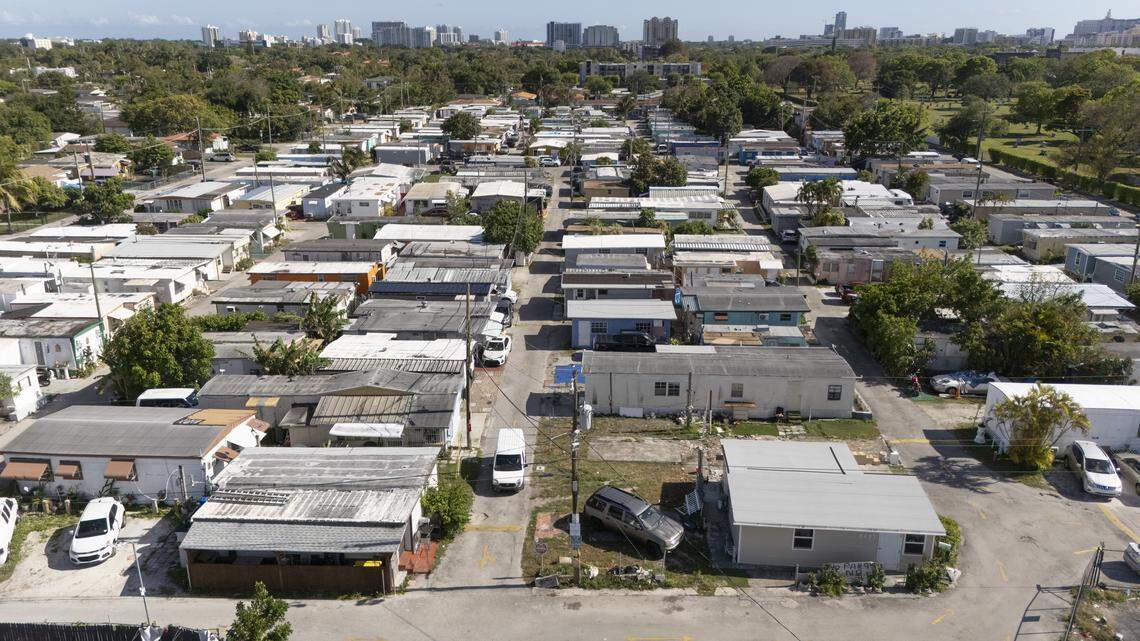
In it, Silver Court’s owner informed residents that the 65-year-old park in Miami’s Little Havana neighborhood would be closing in six months.
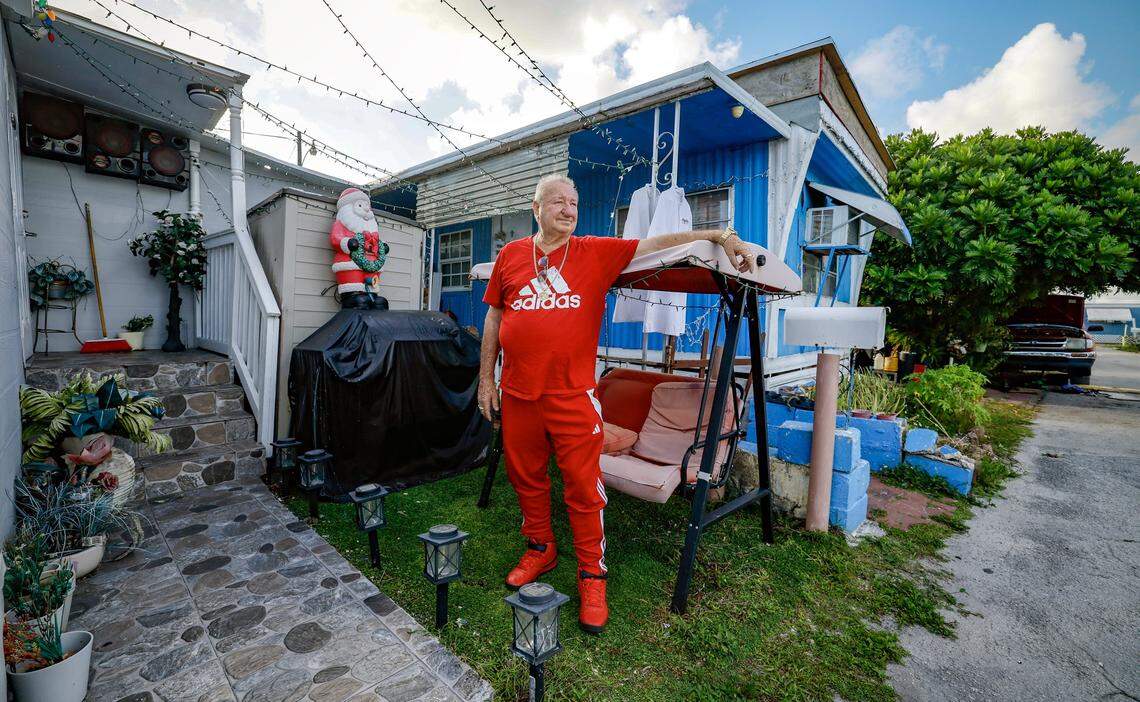
It’s the latest Miami-Dade trailer park to shutter in the face of development. Last year, thousands of residents of the Li’l Abner Mobile Home Park in Sweetwater were ordered out, pushing some into homelessness. As in that case, many of Silver Court’s residents are about to lose one of the few vestiges of stable, deeply affordable housing in Miami-Dade. Most are unsure how they’ll navigate Miami’s expensive housing market.
When asked what it intends to do with the Silver Court property, 1989 Sunny Court LLC, the park’s owner, didn’t specify. But whatever comes next will “bring value” to South Florida, said the company, which is part of a California-based real estate firm, Marquis Property Company, that in 2021 bought Silver Court along with the Sunnyside/West Haven trailer park in West Miami for a combined $50 million.
Those who live there now have until September to leave. To encourage early departures, park ownership has offered $10,000 to those who leave by May 31. Anyone who stays through July 15 will get $5,000, and those leaving by the end of August can expect $2,500, all on top of some compensation provided by the state — between $1,375 and $6,000, depending on the size of the trailer and whether its owner decides to undertake the costly and logistically complicated process of relocating it.
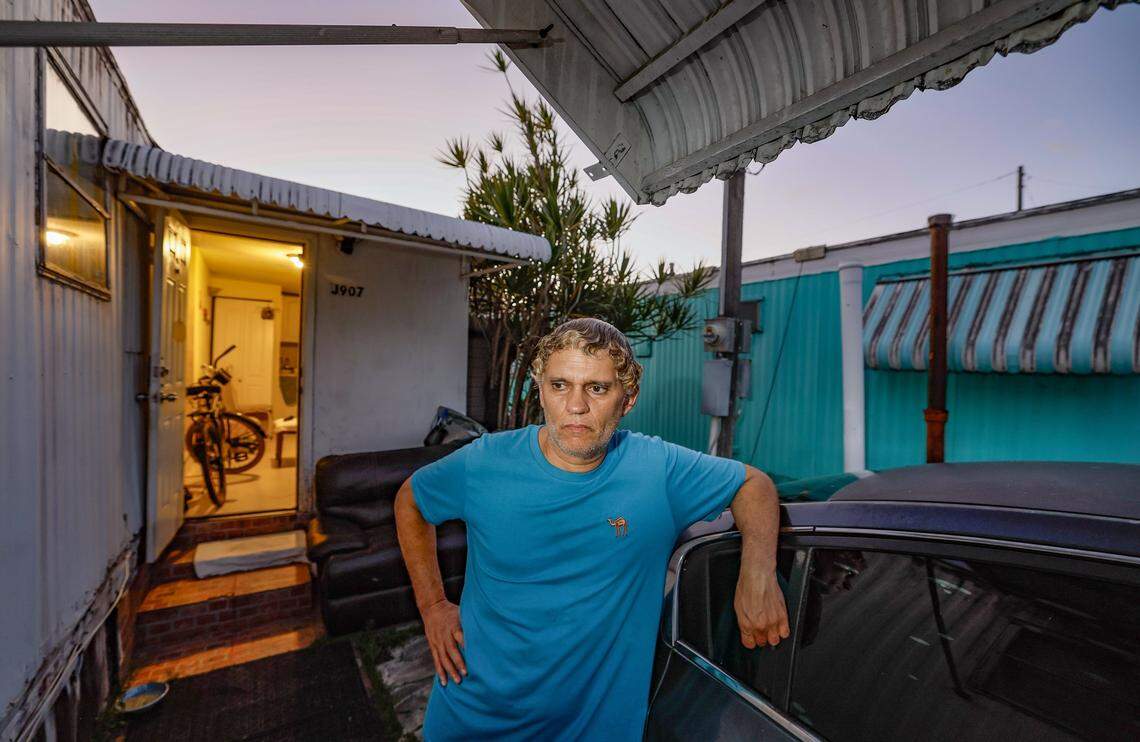
Resident Joseph Madera, a math teacher, has become the semi-official leader of a group of mobile home owners looking to challenge the terms of their eviction.
“This is a social catastrophe,” Madera, 46, said at the meeting’s opening.
Many of the park’s residents are older and on fixed incomes, and those who aren’t are largely low-income, said state Sen. Ileana Garcia, a Republican whose district includes the park. “It’s a very, very vulnerable population.”
“I’ve walked my district, and I have never seen a more impoverished situation than that park,” she added.
Still, many of Silver Court’s homeowners paid more than the $10,000 on offer for their trailers, their primary asset, whose market values they argue are double or triple the park owner’s largest buyout offer.
The eviction, they say, marks a catastrophic loss of wealth and housing stability.
“It’s economic annihilation,” said Madera.
‘Nowhere to go’
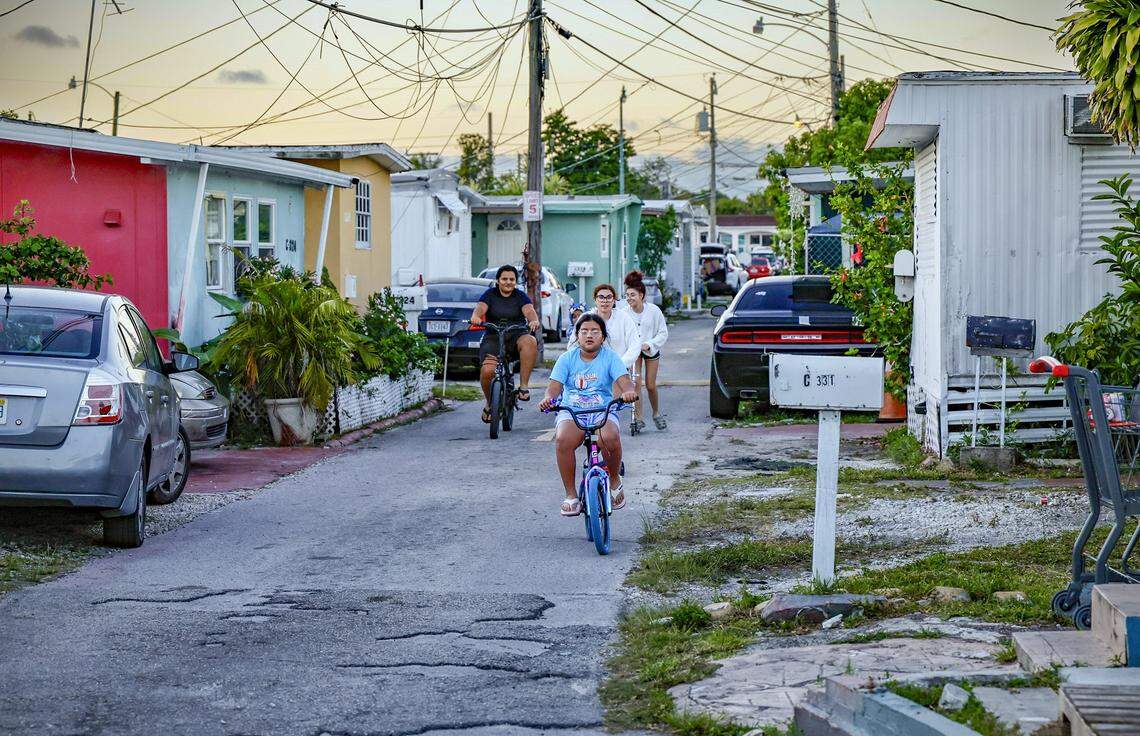
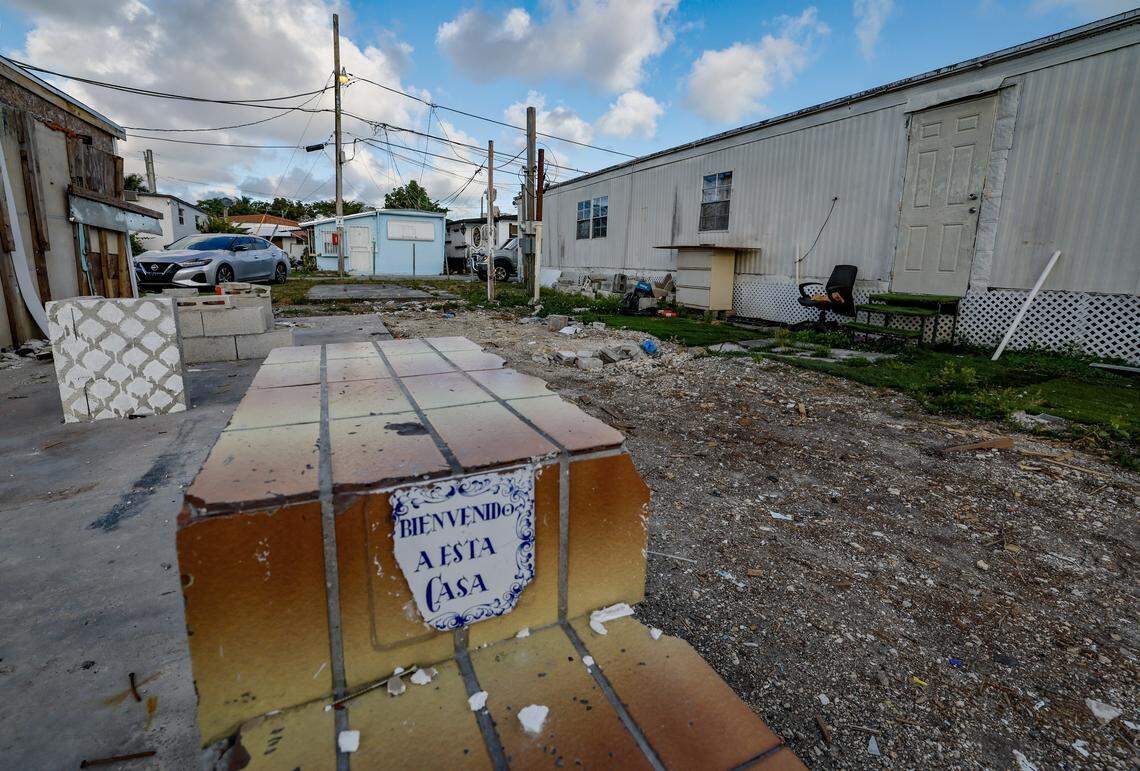
Suriel shuffled back to her home after the meeting, past colorful pastel trailers set just off the park’s narrow, cracked streets.
Despite being just off Calle Ocho, Silver Court is quiet, even at rush hour.
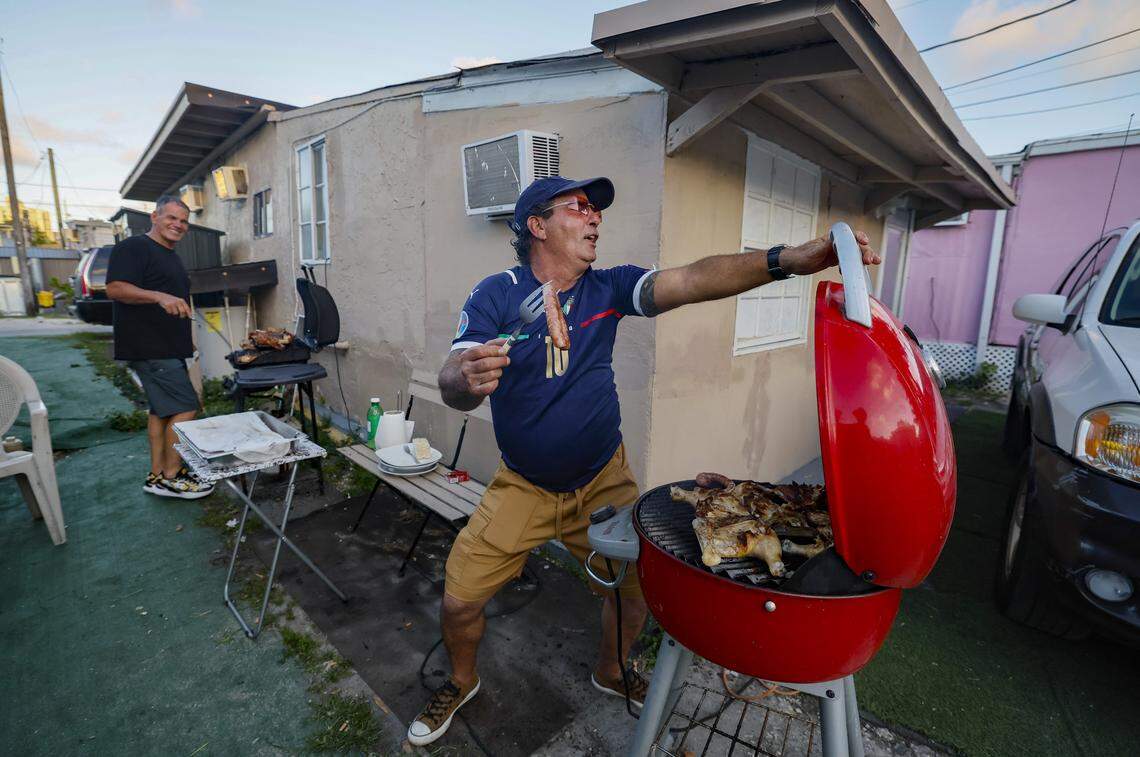
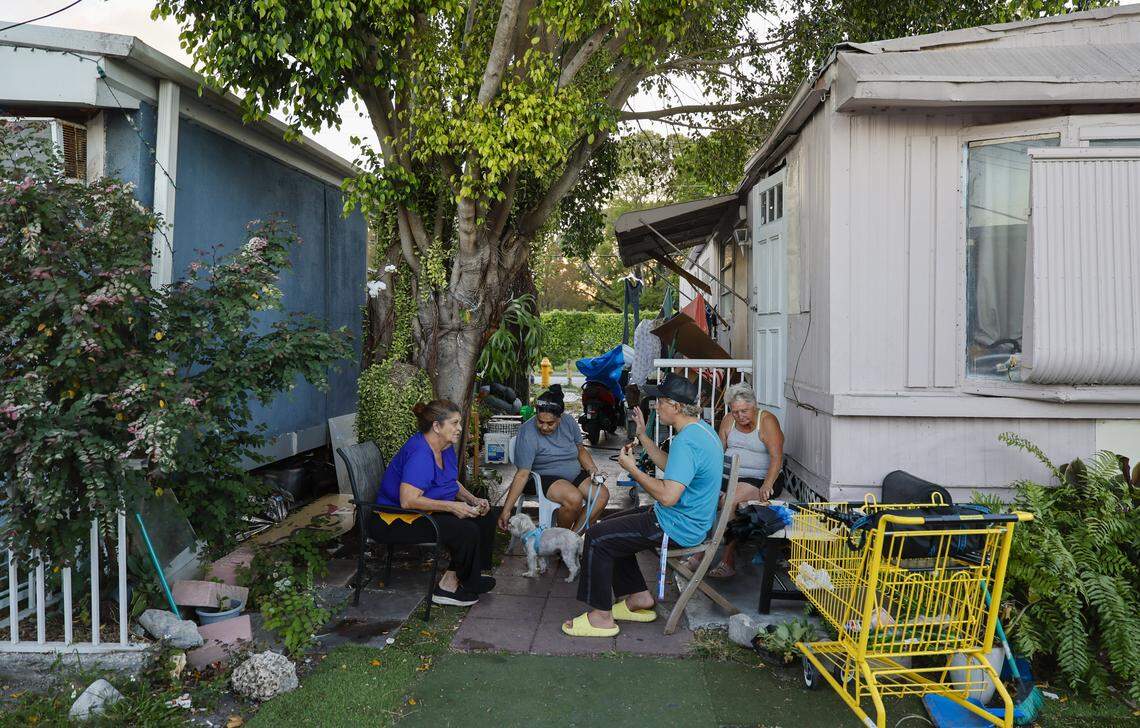
“You live peacefully here,” Suriel said as she passed a group of neighbors, laughing as they sat on folding chairs in someone’s driveway. “It’s the calmest place I’ve lived.”
Tranquility notwithstanding, Suriel was exhausted. Her eyes were dark. She’d been struggling to sleep.
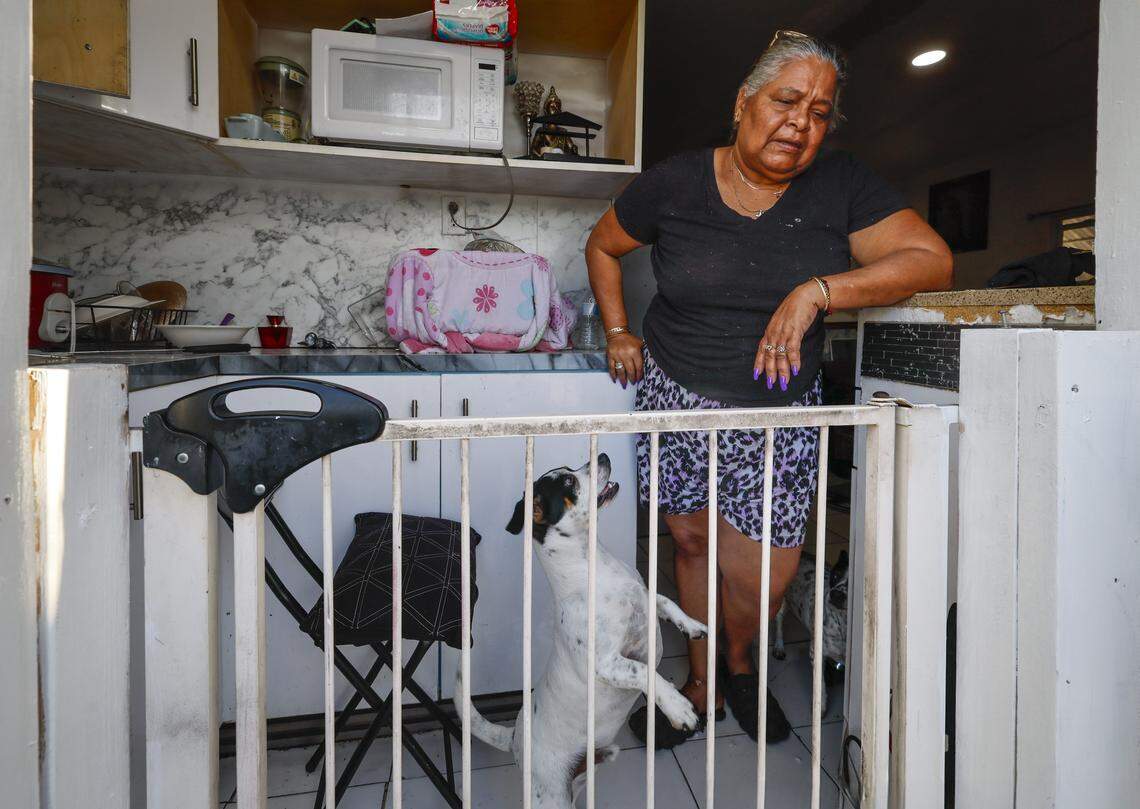
Despite being called a “mobile home,” Suriel’s trailer is cemented into the ground, as most homes in the park are. That leaves it either structurally immovable or movable only at great — likely five-figure — expense. Like most trailer owners, Suriel owns her mobile home but rents the land beneath it.
With no savings left and her only meaningful asset now unsellable — effectively worthless, beyond providing her a roof for the next few months — she has no idea where she, her partner and her three kids, ages 18, 14 and 4, will go.
Money is an issue. They’re five people, and none of the many landlords she’s called are willing to lease them anything smaller than a three-bedroom, monthly rents for which she says are well over $3,000. At Silver Court, her lot fee is roughly $900 a month.
She doesn’t think she’ll take the $10,000 offer to leave by June. First month, last month and security deposit payments alone would eat up almost all of the money, she explained. And between her and her partner, Suriel estimates the household pulls maybe $5,000 a month, depending on how many hours they each work.
Plus, she said, “I have nowhere to go.”
As Florida law stands, mobile home owners in parks undergoing a change of land use are, depending on whether they have a single- or double-wide trailer, entitled to $3,000 or $6,000, which they can use to physically move their homes to a different park.
If they abandon their trailers, which Suriel likely will, the state pays out just $1,375 or $2,750 — also depending on the size of the unit. Beyond that, trailer owners are promised nothing under the law.
Relocating her mobile home would certainly cost more than what’s guaranteed by the state. Even if Suriel could afford to — she can’t — and her home could survive being ripped from the ground and loaded onto a truck — it likely wouldn’t — she doesn’t know where she’d take it.
Garcia, the state senator, who also represents what was Li’l Abner, said she is “dumbfounded by the lack of protections that mobile homes have.”
Residents deserve at least nine to 12 months’ notice before being ordered to vacate their homes, she said. And while she didn’t give any hard numbers, Garcia said she would “definitely” be looking into revising the payment schemes to mobile home owners facing a park closure. Any payouts should take into account appreciation of the trailers’ value, she said.
They’re all ideas Garcia’s looking to advance during the next legislative session — just over 10 months from now.
How much appetite there is in Tallahassee for change remains to be seen. Last session, bills in the House and Senate sought to more than double relocation and abandonment payouts. Both initiatives died in committee.
But whatever sums the Florida Legislature cooks up, they’d need to be many times greater than what’s currently offered to be meaningful, said Madera, the leader of the park’s organizing homeowners.
The $10,000 offered by Sunny Court LLC technically goes above and beyond what’s required by state law. Still, “it’s a pitiful amount,” he said. “It’s maybe three months’ rent.”
During the homeowners meeting, attendees debated what a fair buyout would entail. “We know they’re the owners of the land,” said Madera, “but there are ways of going about this that’re not so emotionally, psychologically, economically crushing.”
Numbers flew, until one homeowner shouted, to applause, “$60,000 and three years.”
Having more money and more time to find a new place would be hugely helpful to Suriel. But neither would offset the immeasurable costs — both familial and emotional — of losing a home.
For years, Suriel had dreamed of homeownership. Of course, she would have loved to have purchased a house or condo. She actually had the cash for a down payment. “But I drive Uber,” she said. “I work a lot, but how is the bank going to give me a loan?”
Buying the trailer in cash, she figured, was her only option.
As she turned the corner onto her street, Suriel stopped in the middle of the road, taking in the view of her home. It was the evening golden hour, and the setting sun bathed the bone-colored trailer in warm light.
She thought of the days and nights she spent driving people around Miami to save enough to buy the place. The countless hours spent away from her kids — time she’d never get back.
“Thinking about what I built, about all of my sacrifices … just to see it vanish …” She trailed off.
Maybe this closure doesn’t mean much to the park’s owner, Suriel reasoned.
“To us, it’s everything.”
This story was produced with financial support from supporters including The Green Family Foundation Trust and Ken O’Keefe, in partnership with Journalism Funding Partners. The Miami Herald maintains full editorial control of this work.
This story was originally published April 24, 2026 at 2:00 AM with the headline "Little Havana residents fear ‘economic annihilation’ as trailer park closes."