Senate passes legislation to eliminate advisory votes from ballots
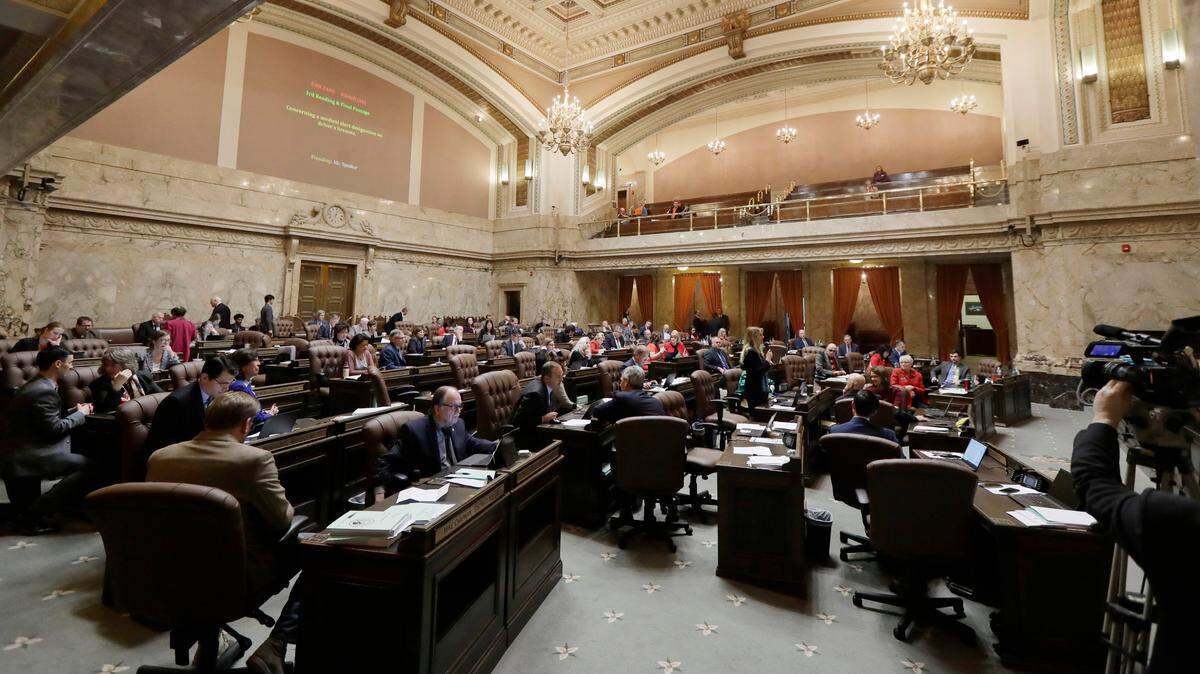
Advisory votes could disappear from Washington state ballots under a measure that passed the Washington State Senate chamber on Wednesday.
The legislation passed with a 30-18 vote. The bill will now head to the House for consideration, where it will have to go through committee before it can be voted on by House members.
Advisory votes are non-binding, meaning that voters have no power to approve or reject the measures. They were created to gauge voter opinion on tax increases that already have passed the Legislature. Anti-tax activist Tim Eyman sponsored the initiative in 2007 that first required advisory votes to be placed on Washington ballots.
Before Wednesday’s House vote, the bill’s prime sponsor, Sen. Patty Kuderer, D-Bellevue, delivered a few remarks to other Senate members.
She explained how the Legislature in the past has adopted laws to make voting easier, such as automatic voter registration, same-day voting registration, and increasing ballot drop boxes around the state.
“Even with all that, there are still barriers to voting and the most egregious barrier is the advisory vote,” Kuderer said.
Kuderer referred to advisory votes as “non-binding, polluting propaganda” on Washington ballots.
“They are designed specifically to instill distrust in government,” she said. “They are the epitome … of government waste, fraud and abuse.”
The version of the bill that passed the Senate would completely eliminate advisory votes on tax increase legislation, if passed. Instead, voters would have access to a website that summarizes operating, capital, and transportation budgets. Expenditures for the most recent bienniums would be available in graph form online as well, and charts of local and state expenditures would also be provided.
Sen. Mark Schoesler, R-Ritzville, also spoke during the floor debate before the bill’s final passage.
“I too at one time thought this was a poor idea,” he said. “Over the years, I interact more with my constituents because of this. We have a relationship with voters because of this that we would not otherwise have had, so over the years my position has evolved to be even stronger in support of this.
“This sunshine on this body is something Washingtonians have come to appreciate,” Schoesler said. “So making it more difficult to find what this body did or didn’t do is just wrong.”
The bill will head to Gov. Jay Inslee’s desk if the House approves it.
The legislative session ends April 23.