Here are some of the bills that survived the WA legislature’s first cutoff — and some that didn’t
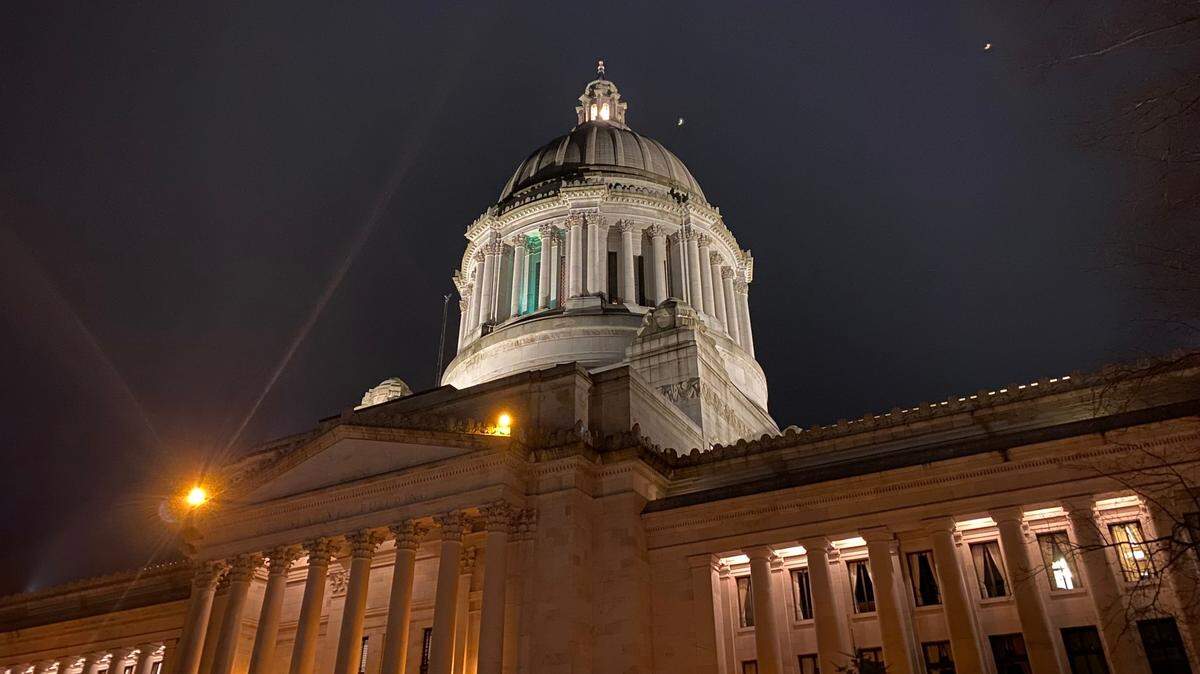
Friday marked the first cutoff date in the Washington State Legislature since the session began in mid-January.
Bills that lawmakers introduced by lawmakers this year had to be passed out of executive session in their committee of origin by Friday. Lawmakers will now have until Feb. 24 to get legislation with fiscal impacts passed from their house of origin during executive sessions in House fiscal committees as well as Senate Ways & Means and Transportation committees.
As House Minority Leader J.T. Wilcox, R-Yelm, told McClatchy Friday, bills with fiscal notes still stand a chance of survival. The general rule of thumb for the first cutoff date, he said, is that policy bills without fiscal impacts that didn’t make it out of their committee are dead. Rules could of course be suspended with a simple majority vote for any bills that didn’t pass their committee, Wilcox noted, but the cutoff Friday is a relatively hard deadline.
Jen Waldref, communications director for the Washington State House Democrats, told McClatchy on behalf of House Speaker Laurie Jinkins, D-Tacoma, in an email Friday that “nothing is really ‘dead’ in the sense that while there may be bills that don’t move further this year, the discussions around those policies will continue.”
“Sometimes an idea goes from bill to budget proviso, and sometimes the work and the conversation continues into the interim,” the email continued. “And since this is the first year of the biennium, those same bills can easily be revived next session. So there aren’t really any disappointments because there is a lot of good work and discussion that will continue beyond today. It can take multiple sessions for a policy to make it all the way to the finish line, as we’ve seen many times before in the Legislature.”
Both Waldref and Wilcox said they are pleased to see bipartisan housing policies moving forward this year.
March 8 is the final hard deadline for bills to pass out of their house of origin.
In a press conference with reporters Thursday, Gov. Jay Inslee said that there appears to be a “positive vibe” amongst legislators this session, and that he is seeing better bipartisan communication. Additionally, he said, some of his bills are still alive and “on-track for major progress.”
Here’s a snapshot of legislation that passed committee in time for the cutoff – and some that didn’t.
Bills that made committee cutoff
Policing
HB 1363: This legislation would restore the reasonable suspicion threshold for police to pursue drivers they believe have committed one of six particular crimes: violent offenses, sex offenses, vehicular assaults, escapes, assault involving domestic violence, and driving under the influence.
The legislation is sponsored by Rep. Alicia Rule, D-Blaine, and co-sponsored by several Democrats and Republicans. The bill was passed Thursday from the House Community Safety, Justice, and Reentry Committee with a nearly unanimous vote.
HB 1025: Qualified immunity for law enforcement officers could end in Washington state under this proposed legislation. The proposed bill creates an avenue for civil action against individual law enforcement officers if those officers have violated a person’s civil rights under the state constitution.
The bill is sponsored by Rep. My-Linh Thai, D-Bellevue and was passed out of the House Civil Rights and Judiciary Committee on Feb. 10. It was referred to the House Appropriations Committee on Feb. 14.
Guns
SB 5232: This legislation would prevent firearms dealers from selling a gun to a consumer until a background check has been completed and 10 days have elapsed since the background check request. Additionally, it would prohibit firearms dealers from selling a weapon to a purchaser unless they show proof they have completed a firearms safety training course, or show proof of an exemption.
The bill is sponsored by Jesse Salomon, D-Shoreline. It passed out of executive session in the Senate Law and Justice Committee on Feb. 16 and was referred to Senate Ways and Means on Feb. 17.
Housing
HB 1110: This proposed legislation would establish new requirements for “middle housing” regulations. Cities with more than 6,000 population could authorize at least four units on zoned residential lots, and up to six units could be authorized on zoned residential lots within a half-mile of major transit areas.
The bill is sponsored by Jessica Bateman, D-Olympia, and co-sponsored by several House Democrats and Republicans. It was passed out of executive session in the House Housing Committee on Feb. 7, and referred to the House Appropriations Committee on Feb. 13.
New state holiday
HB 1516: Washingtonians could soon be getting another paid day off every year under this legislation. The bill would designate the Lunar New Year as a state legal holiday.
Sponsored by Thai, the bill passed unanimously out of the House State Government and Tribal Relations Committee on Feb. 15. It was referred to the House Appropriations Committee on Feb. 17.
Bills that did not pass out of executive session
Emergency powers
HB 1535: Wilcox told McClatchy that his caucus was disappointed to see this piece of legislation fail to clear any hurdles needed to pass this year. The legislation would have limited state of emergency proclamations by the governor to 60 days, unless all four members of House and Senate leadership in the Legislature agreed to extend it. It also would have prevented governors from being able to declare a state of emergency on a similar topic once a state of emergency expires.
The bill was sponsored by Rep. Chris Corry, R-Yakima, and was not brought forward for a public hearing.
Homelessness
SB 5332: The proposed bill would have prohibited encampments within 1,000 feet of schools and early learning facilities, whether those encampments are authorized by local jurisdictions or allowed “through inaction.” The bill defined encampments as “outdoor tent or structure encampments, temporary small houses on-site, tiny homes sheltering homeless persons, vehicle resident safe parking, or care or feeding areas for homeless persons.”
The legislation was sponsored by Sen. Curtis King, R-Yakima. It had a public hearing in the Senate Local Government, Land Use and Tribal Affairs Committee on Feb. 14 but was not scheduled for an executive session before the cutoff date.
Policing
SB 5270: Under this bill, the Washington Department of Corrections would have been prohibited from sharing information about undocumented incarcerated individuals with the U.S. Immigration and Customs Enforcement. Additionally, it would have prohibited DOC from assisting in arrests for immigration enforcement purposes.
The bill was sponsored by Sen. Rebecca Saldaña, D-Seattle, and had a public hearing in the Senate Human Services Committee on Jan. 26. It was scheduled for executive session four separate times, but legislators did not take any action on the bill in time to get it out of committee.
This story was originally published February 18, 2023 at 12:14 PM.