
All 1.1 million WA students would be eligible for free school lunches under proposed law
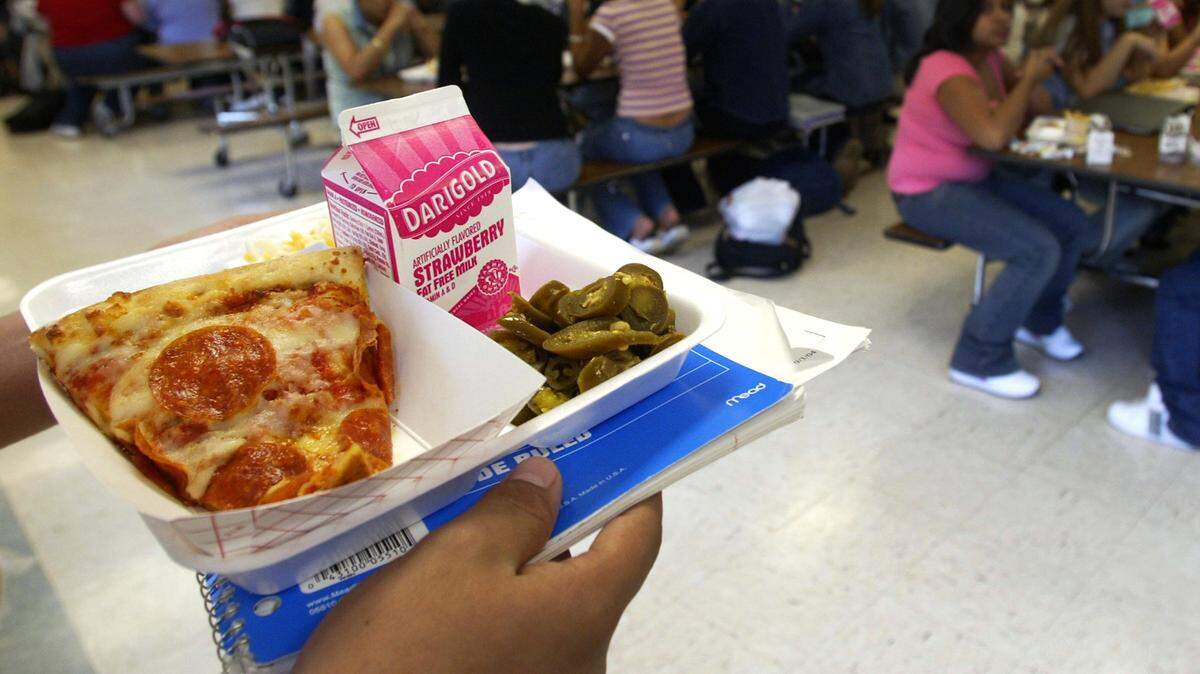
All Washington students would have access to free school lunches under a proposed law that was heard in committee on Feb. 4.
Sponsored by state Sen. Marcus Riccelli, Senate Bill 5352 would expand the state’s program for free school lunches to all of Washington’s 1.1 million public school students.
Riccelli, a Spokane Democrat and Senate majority floor leader, referenced how during the pandemic, the federal government temporarily helped all public school students access free lunches, regardless of income. He said throughout that time, Washington saw students’ hunger rates decline, and burdens were reduced for working families.
There also was “less lunch shaming,” Riccelli told the Early Learning and K-12 Education Committee.
“I know that we face serious challenges, and look, I’m here to say I support moves in all those areas,” he said Feb 4. “But I think this is one that shouldn’t be left behind. Our kids shouldn’t be left behind. We should feed them.”
The bill would, in part, ensure that all public schools offer free lunch and breakfast to any student who asks. This would start with the 2026-27 school year. Exemptions would be possible if schools show good cause that they cannot comply.
In October, the Office of Superintendent of Public Instruction announced that prior legislative expansions resulted in 70% of Washington students now having access to free school meals.
Riccelli classified this as a “tremendous move forward.” Yet he wants to see the state’s average raise from a C-minus to an A-plus.
Supporters argue that the bill would help quell the shame of asking for free lunches and lead to improved student behavior and performance.
Although no one argued that kids should go hungry, some have expressed concerns about the bill’s costs. A fiscal note estimating the costs to the state has been requested but was not available at the time of the hearing.
State Rep. April Berg, prime sponsor of the companion bill in the House, previously told KOMO News that such a program would cost taxpayers an estimated $108 million annually.
Riccelli told the committee that when kids have access to the right nutrition, they can thrive in the classroom. Some research has suggested links to fewer absences and disruptions. Academic success is far harder to achieve if students are hungry in school, he said.
State Sen. Lisa Wellman, who chairs the committee, noted that Washington is dealing with a major budget deficit.
The week of Jan. 27 the committee gave the green light to three bills that would help fund special education, school transportation and basic materials and operating costs, Wellman said. The Mercer Island Democrat cast doubt that all items would be able to be fully funded. She asked those testifying which of the other bills SB 5352 should replace.
Multiple speakers declined to choose, noting that the state constitution describes education as Washington’s “paramount duty.”
Jenny Choi, K-12 policy adviser to Gov. Bob Ferguson, told the committee that food insecurity affects kids beyond high-poverty schools. She said some might not apply for free lunches because it conflicts with their personal values, or because of confusion about eligibility. Then there’s the stigma.
Ferguson referenced his support for free school lunches during his inauguration speech last month.
“Right now if you’re a single parent working 40 hours a week, making 19 bucks an hour, your child does not qualify for free meals,” he said at the time. “That is unacceptable.”
Paul Marquardt, Bethel School District’s executive director of operations, said Feb. 4 that meals work to enhance focus, participation and academic performance.
“School success is impossible when your body is not nourished,” Marquardt told the Senate committee. “Why are we making the lunch room a space of haves and have nots? All kids have the right to a free education. Access to a nutritious meal should be a basic part of this right.”
Senate Republican Leader John Braun of Centralia said it could be tough to pass SB 5352 this session given the state’s budget crunch. He noted during a media availability Feb. 4 that his caucus is committed to solving the deficit without additional revenue.
Still, Braun said that he’s personally supported this policy in the past and continues to do so.
“It may mean we need to phase it in, but the idea that if collectively, we decide this is something that’s important for our students, it makes no sense to me to do it for some students and not others,” he told McClatchy. “All it does is divide children in the classroom, and that’s, I think, a bad idea.”
This story was originally published February 5, 2025 at 5:00 AM.
.jpg)