
WA Sen. Patty Murray slams ‘Measles President’ Trump’s cuts to Department of Health
U.S. Sen. Patty Murray said Thursday that her office is “getting panicked calls” from state health agencies following the news of massive job cuts at the federal Department of Health and Human Services (DHHS).
Earlier that day, DHHS announced plans to “Make America Healthy Again” through a dramatic restructuring. This, DHHS said, aligns with an executive order from President Donald Trump related to his administration’s Department of Government Efficiency campaign.
Murray didn’t hold back when speaking to the press at a news conference.
“We are really here to raise the alarm. Why? Because the Measles President, and Secretary Kennedy, are trying to turn the Department of Health into the Department of Disease,” she said.
Over the past few weeks, the Trump administration has pursued sweeping cuts across various federal agencies at breakneck speed.
Supporters have applauded the push as necessary to save taxpayers money and decrease bureaucratic bloat. Opponents, however, fear that the administration’s moves could hurt everyday Americans’ health, education and freedoms.
A DHHS fact sheet about the new restructuring reveals plans to downsize personnel, reducing 82,000 full-time employees to 62,000. In addition, the number of regional offices will be halved, from 10 to five.
The agency’s Region X office in downtown Seattle serves Washington, Alaska, Idaho, Oregon and 272 federally recognized tribes. As of Thursday, it remained unclear which regional offices would be shuttered.
McClatchy emailed the White House and submitted a message on DHHS’s website seeking comment but did not hear back.
“We aren’t just reducing bureaucratic sprawl. We are realigning the organization with its core mission and our new priorities in reversing the chronic disease epidemic,” Health Secretary Robert F. Kennedy Jr. said in a statement on the agency’s website. “This Department will do more — a lot more — at a lower cost to the taxpayer.”
‘Panicked calls’
Murray, who has been in the Senate 32 years, is vice chair of the Senate Appropriations Committee and a senior member and former chair of the Senate Committee on Health, Education, Labor, and Pensions (HELP). In a press conference March 27 with two other Democratic U.S. senators, Murray condemned the Trump administration’s health-department plans.
“Right now today, and it’s only one o’clock in my state, we are getting panicked calls from our health agencies about what funding is going to get cut off,” Murray told reporters.
Such changes are happening in the middle of flu season and outbreaks of the measles and whooping cough, she said. Health officials are the ones informing the public about how to protect themselves and where the outbreaks are.
Murray highlighted lingering questions: Are offices going to close? How will folks get important health information?
“So already, our local and state and county officials are saying to us, ‘Oh my gosh. How are we going to do the jobs that people are counting us on?’” she said, adding that many states — Washington included — don’t have the budgets to backfill federal cuts.
She continued: “They have to count on this funding, and to have it ripped away like this is just astounding to me.”
Washington state is facing a multi-billion-dollar budget hole. Lawmakers are hammering out how to bridge the divide — including through possible new revenue and savings — at the same time that federal-level uncertainty is intensifying.
What about cuts to Medicaid?
DHHS’s fact sheet states that despite the decreased workforce, the agency’s reorganization won’t affect Medicaid and Medicare services.
Earlier this week, Republican state Rep. Michelle Caldier of Gig Harbor petitioned Trump, asking in a letter that he refrain from making cuts to Medicaid, the government health-care coverage for low-income individuals.
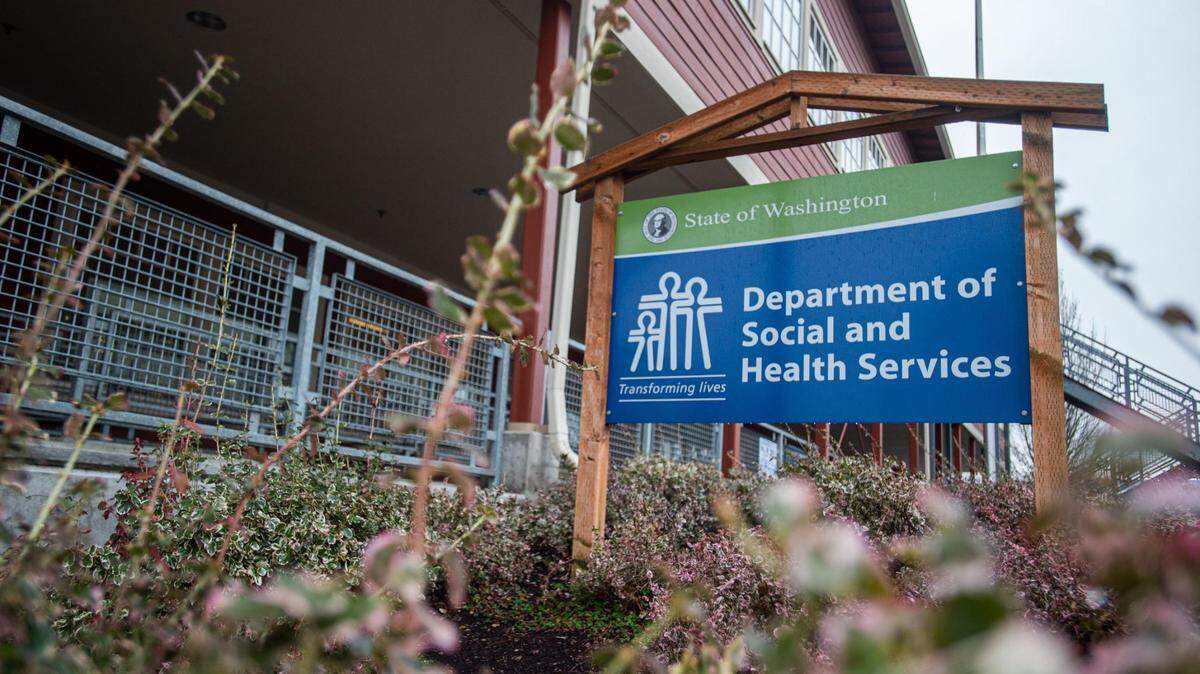
Federal funding makes up roughly half of the Washington state Department of Social and Health Services’ $21 billion biennial budget, spokesperson Adolfo Capestany told McClatchy via email. Of the department’s federal dollars, 91% comes from Medicaid, the Supplemental Nutrition Assistance Program (SNAP) and Temporary Assistance for Needy Families (TANF).
“At this juncture we don’t have enough information to determine potential impacts that any possible DOGE-style cuts in the U.S. Department of Health and Human Services would have on the department, and would only know when, and if, that occurred,” Capestany said.
During a Democratic leadership media availability earlier this month, House Speaker Laurie Jinkins said many constituents have concerns about actions from the other Washington — be it layoffs to federal workers or rumored cuts to Medicaid or Social Security.
Residents are urging lawmakers to adopt progressive revenue proposals to preserve programs that save lives, she added.
Jinkins, a Tacoma Democrat, said if federal Medicaid funding were ever to be wiped out, “there is not a state in this country that can backfill that in any way, shape or form.”
The older adult-focused SCAN Foundation noted that every day in the U.S., some 10,000 people turn 65. At the same time, the expense of caring for older adults is steadily climbing.
The Administration for Community Living within DHHS is the sole government agency dedicated to helping seniors age in their communities and homes, the foundation said in a news release. Any realignment of the agency or its functions must preserve the essential work the government has long done, it said.
“What America needs now is a coordinated federal effort to make it easier for families to care for older adults and combat chronic disease,” the group said.
.jpg)