
They’re back. Here’s what to know as WA Legislature convenes for 2026 session
AI-generated summary reviewed by our newsroom.
- WA Legislature convened Jan. 12 for a 60-day session to address budget and policy.
- Budget shortfall of about $2.3 billion, federal funding cuts drive urgency.
- Gov. Bob Ferguson is pushing for an income tax on residents earning more than $1 million.
The Washington state Legislature is back in session.
Jan. 12 marked the first day of 2026’s 60-day legislative session. The hallways beneath the Capitol dome buzzed with activity as lawmakers returned to Olympia for opening day ceremonies at noon.
In the weeks leading up to Jan. 12, Gov. Bob Ferguson and legislative leaders offered glimpses of their key priorities this year.
House Speaker Laurie Jinkins said during a Jan. 9 legislative session preview that lawmakers will be up against the “harmful policies” of the Trump administration and “attacks of the federal government on states like Washington.” The Tacoma Democrat also cited the state’s ongoing budget issues, particularly in light of federal funding cuts for Medicaid and food assistance.
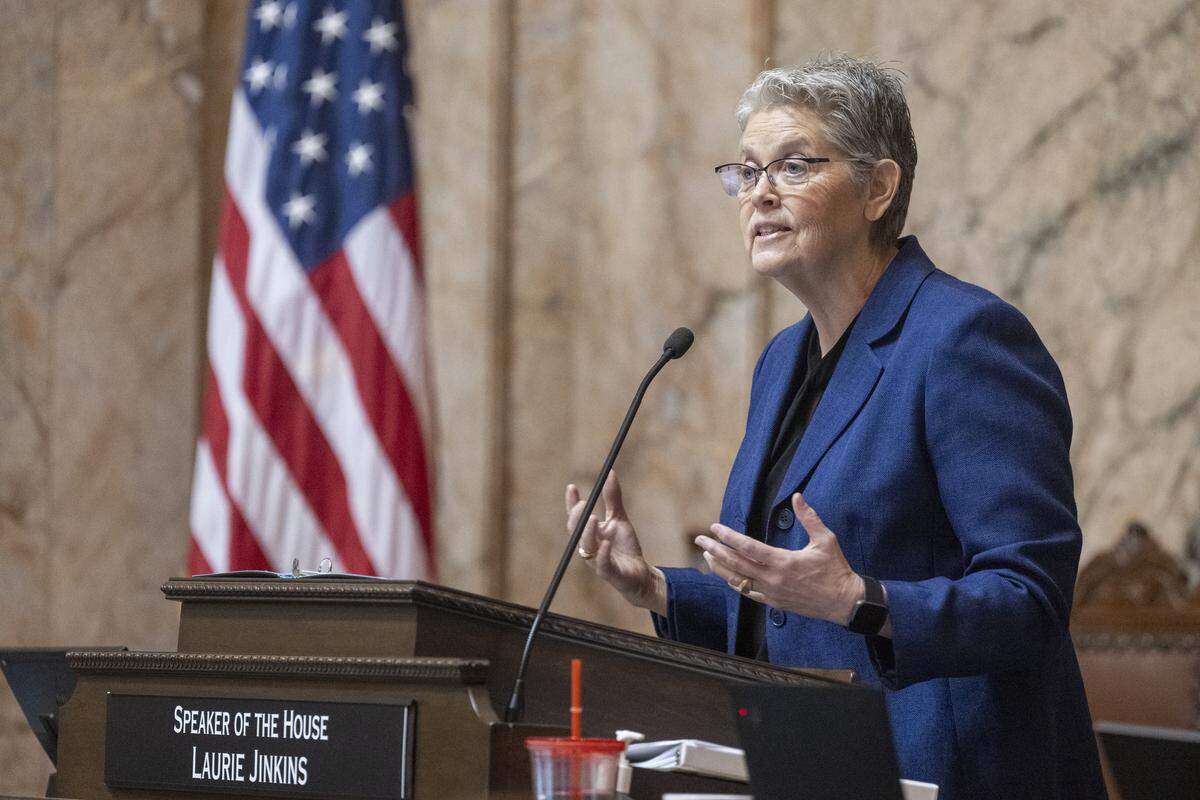
Senate Minority Leader John Braun said at the Jan. 9 preview that his caucus has for years focused on affordability, education and public safety. That’s still true, he said.
“But the gap between public concern on affordability and all the other ones, which are also important, has grown — to the point where the priorities are really affordability, affordability, affordability,” the Centralia Republican added.
Lawmakers in this short session will also be tasked with resolving a shortfall that Ferguson has pegged at $2.3 billion — conjuring up flashbacks of last session’s multi-billion-dollar deficit and heated budget skirmishes.
The stage has already been set for what’s likely to be one of this year’s liveliest debates: a governor-backed income tax on Washingtonians making more than $1 million annually.
Financial hits from December’s historic flooding will be top of mind, too, as will this November’s elections. Voters will decide who will fill about half of the 49 seats in the Senate and all 98 of the lower chamber’s slots.
The 2026 session is set to end March 12.
House leadership opens 2026 session
Jinkins banged the gavel welcoming lawmakers back to Olympia.
Her opening remarks to members of the state House of Representatives railed against the federal government. She said President Donald Trump’s tariffs have sparked a spike in inflation, cost increases to Washingtonians and broader economic uncertainty, hurting affordability — a claim that House Republican Leader Drew Stokesbary of Auburn would later contest.
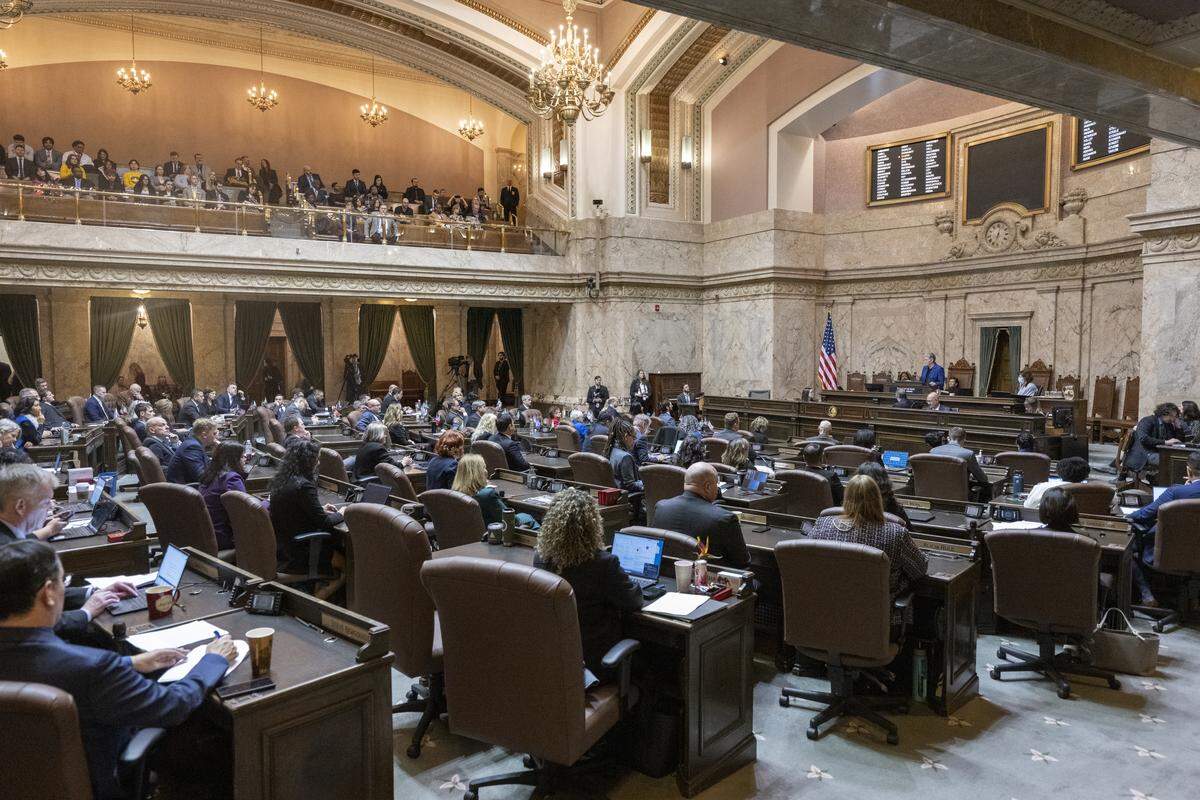
The speaker said H.R. 1, the sweeping federal tax and spending package that Trump signed into law last summer, has led to health insurance premium increases, plus jeopardized food benefits and clean-energy credits. Helping to address food assistance, health insurance and reproductive health care will remain priorities for Washington Democrats, she said.
Jinkins emphasized that Washington state will continue welcoming immigrants, also blasting the use of masks by agents from Immigration and Customs Enforcement.
“That can’t happen here,” she said to applause from her caucus, adding that a bill to ban the use of face coverings by law enforcement, including federal immigration officers, would receive a hearing on Jan. 13.
The state’s tax code, Jinkins continued, needs updating to ensure its fairness. She said that “nothing in politics is permanent,” be it good or bad, and that lawmakers are working to boost the good and stop the bad as quickly as possible.
“That job feels more urgent today than it has in many of our lifetimes. And sometimes, it feels impossible,” she said. “It is not.”
In Stokesbary’s remarks on the House floor, the Republican countered that the state was already experiencing an affordability crisis last year under Democratic President Joe Biden. Washington, he said, is at an “inflection point.”
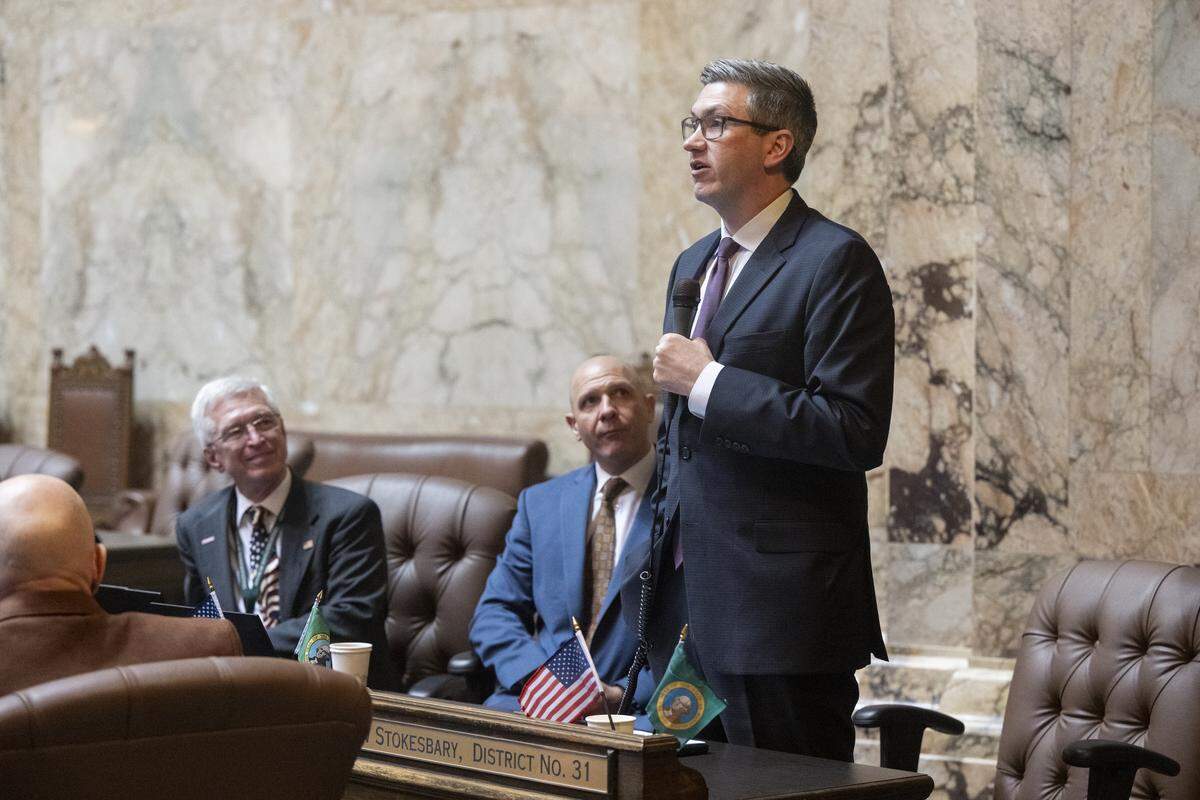
Stokesbary pointed to the record-high tax increases that Democrats passed last year, also warning of current revenue proposals like the so-called millionaire’s tax. He said tariffs don’t explain why Washington is among the nation’s most expensive states in areas including child care.
“If we want to know why life in Washington is more expensive than it is in nearly every other state,” he said, “we need to only look in the mirror.”
Upending the state’s tax code could lead to a rise in capital flight, he said, with businesses already leaving the state. Such a trend would lead to a shrinking tax base and ballooning deficits, harming the state’s social services and economy, he added.
House Republicans, he said, are offering solutions to create jobs, build homes, decrease crime and slash costs.
“Let’s spend the next 60 days doing exactly that,” Stokesbary said.
Local lawmakers talk 2026 session
Lawmakers told McClatchy on Monday that they have lots to do in this year’s short session, including mending another big budget shortfall.
State Rep. Sharlett Mena, chair of the House State Government & Tribal Relations Committee, said she’s looking forward to seeing some democracy-related bills.
The Tacoma Democrat co-sponsored one proposal that would allow the state to redistrict mid-decade. Other examples that she referenced include legislation to bolster the Washington Voting Rights Act and to offer local jurisdictions flexibility on ranked-choice voting.
Mena noted that Trump has sought to end vote-by-mail, a popular voting method in Washington state. She pointed to other states’ efforts to “disenfranchise voters” with stricter voter ID laws.
“It’s important that in Washington, we not only hold the line, but really continue to expand access to the ballot box,” she said.
State Rep. April Connors, who works as a real estate agent, said she’s had at least 10 clients this year move out of state. Half of those clients cited the state’s new top estate tax rate, which at 35% is the highest in the nation, the Kennewick Republican added. She wants that to get rolled back and lowered a bit.
Connors also cited ongoing pushes by Democrats to tax the state’s wealthiest residents — warning that such constituents contribute a lot to local communities. One constituent who moved their primary residence to Montana had donated $100,000 to the Tri-Cities the year before, she said.
“So we’re not only losing people that are paying into our tax base, but we’re losing people who are paying with their philanthropy dollars into the Tri-Cities,” the minority floor leader said.
Connors said that short sessions were once more focused on incremental work and meant to “fix things that were broken.” Now, though, she said that nearly as many bills are filed for 60-day sessions as they are for 105-day sessions, a pace she’d like to see slowed down.
Democratic state Rep. Beth Doglio of Olympia said she’s looking forward to potentially making a difference in the “upside-down nature of our tax structure in the state.” She wants lawmakers to pass the millionaires tax, noting that the proposal would offer relief to lower-income residents.
Revenue from the millionaires tax would in part expand eligibility for the state’s Working Families Tax Credit and boost the tax credit amount, Ferguson has said.
Other legislative efforts mentioned by Doglio revolve around addressing financial fraud, water quality issues, gun storage requirements and closing loopholes in clean-energy laws. She’s also working to ensure that the costs of data centers aren’t transferred to ratepayers.
“We don’t want … costs of data centers falling on families in Washington,” said Doglio, chair of the House Environment and Energy Committee.
Olympia state Rep. Andrew Barkis said he’s looking forward to making strides in transportation. Big conversations will include the potential usage of Climate Commitment Act dollars to address infrastructure issues, said the Republican, who’s the ranking member on the House Transportation Committee.
On the housing front, Barkis said he’s anticipating tweaks being made to permitting. He’ll be working on eviction reform, too.
“But it’s good to see all my colleagues,” Barkis said. “Opening day is always full of all sorts of hope, you know: hopeful that we’re going to do good work together in a bipartisan way.”
This story was originally published January 12, 2026 at 10:15 AM.
.jpg)