
Olympia mayoral candidates react to public’s negative views of downtown, housing response
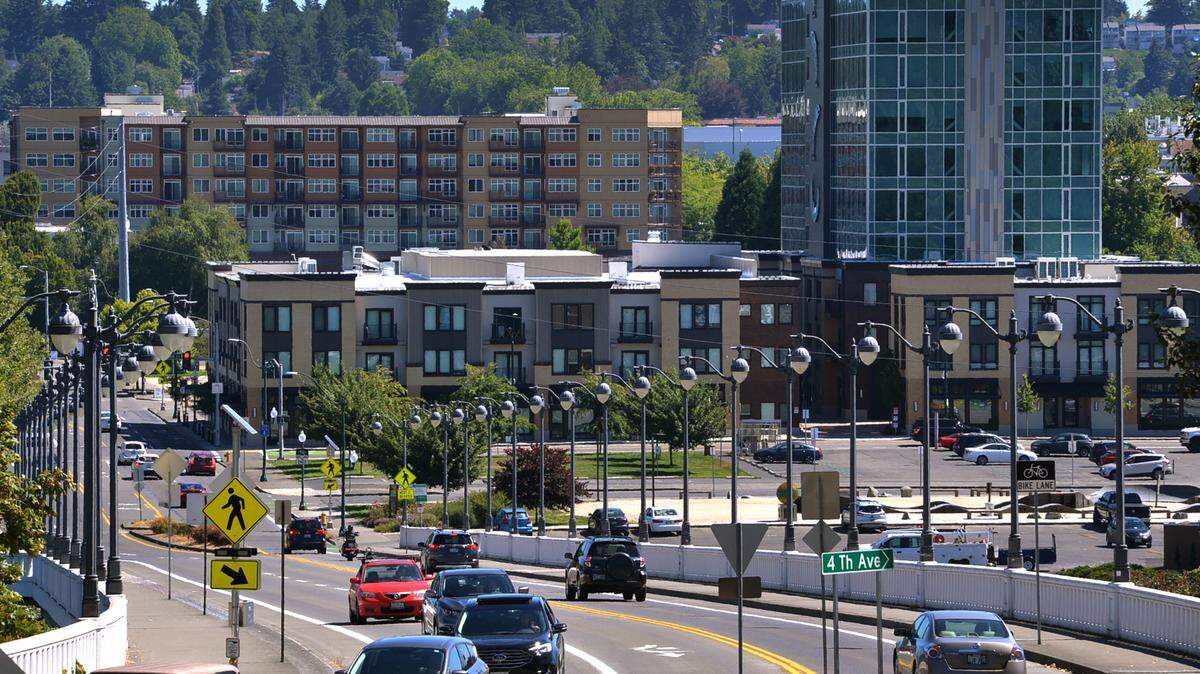
The City of Olympia got some bad news recently about the public’s perceptions of the city and its downtown.
A research company the city hired surveyed just over 500 adults in May and found 70% of them think the city is headed in the wrong direction. The most pressing issues for those surveyed were the city’s response to people who are homeless and their encampments, the need for more low-income housing, and safety downtown.
The three Olympia mayoral candidates up for election in the Aug. 1 primary spoke with The Olympian about the survey and people’s negative perceptions, and offered their ideas of how to tackle the problems moving forward. Survey results can be found on the city’s website.
Dontae Payne
Dontae Payne, 36, is currently a member of the Olympia City Council and lives in West Olympia. He said he thinks City Manager Jay Burney is right when he says the community feels the city is focusing on the right areas, such as housing and homelessness, public safety, the economy and communications. But he also understands the frustration from Olympians.
He said as long as the public continues to see encampments, substance abuse and public mental health crises, they’re not going to feel like much improvement has been made. But the reality is, change is happening, he said.
He said it can’t be ignored that the small city is taking on such large, systemic problems. He said more affordable housing projects continue to make their way downtown, and along with them will be wraparound services for those experiencing homelessness, substance abuse problems, and other issues.
“I just ask that the community continue to be patient with us as we do this really hard work,” he said. “But the work is happening.”
He said it takes better communication from the city for people to understand there’s progress being made.
“I think that we could do a much better job of telling the story of the successes that we’re having in terms of how what we’re doing is impacting people’s lives on an individual case by case basis, so that people have a really, really clear picture and understanding that what we’re doing is working and we just need to do it bigger and better and at some point faster, if we can, but I understand the frustration from the community.”
Payne said he questioned the results of the survey, saying election results don’t reflect that 70% of the community is unhappy. Instead, he thinks the survey results reflect the opinion of a “very vocal minority” in Olympia.
“You know, with that size of a number, we shouldn’t have two city council seats that are unopposed,” he said. “And we would have more than three people in the mayor’s race. So I feel that I do question the legitimacy of the data, because it just doesn’t translate into our elections.”
He said the city takes the survey results very seriously, though, and that to him it means he should keep doing the work he and the council have been doing.
David Ross
David Ross, 53, works in post-rehabilitation and lives in West Olympia. He said he thinks more than 70% of respondents having a negative perception of the city’s path means the city isn’t doing a very good job.
“I think the fact that you spent a half million-dollar budget to increase video and communication services on a part of the city in order to reach the public, so to speak, and you still have this tsunami of negative perceptions, my instinct wouldn’t be that, ‘Oh, we need to tell them louder,’ or tell them more,” Ross said. “It should be going the other way. It should be a reverberating earthquake back to the city leadership that the community doesn’t believe in the path that you’re taking the city.”
Ross said there needs to be more enforcement when it comes to handling encampments and the unhoused. He said there’s not enough being done to prevent new encampments from popping up, bringing in more people and forcing a need for more low-income housing development.
At the same time, he said he gives the city a thumbs up for pursuing more permanent supportive housing and transitional housing. He agreed, too, that there needs to be more subsidized housing, and that it’s impossible for someone living only on Social Security to live in a market-rate apartment in Olympia.
Ross said he worked as a homeless outreach case manager for five years in Thurston and Mason counties, and despite the ongoing successes of places like Plum Street Village and Quixote Village, the need for more housing is never ending and putting unbearable weight on those in the field now.
He’s unsure if the city’s tax-funded Home Fund will be able to keep up.
“It’s like digging a hole in wet sand at the beach,” he said. “As soon as you do something, you call it progress, but you have zero enforcement against new encampments, or against unmitigated public camping. It’s as if this new shelter, new transitional housing, new subsidized housing, new permit supportive housing, it’s as if it never even opened.”
But when it comes to enforcement, Ross said the city can’t arrest its way out of the problem, nor build its way out. Instead, it takes continued harm reduction and outreach, and a one-day-at-a-time approach. He said it takes getting more private individuals to help fund initiatives, and private businesses to partner with the city and housing programs to get people stable work.
Desiree Toliver
Desiree Toliver, 31, is a makeup artist who lives in West Olympia. She said she thinks people feel not enough is being done about the unhoused because it’s an issue that can be physically seen, and that many people have an individualistic mindset.
“With being houseless, you are invisible,” she said. “And you’re invisible in the sense of if your needs are not met, people kind of just chuck it off to your issue, something you’ve done to end up in your position. Some people do have a mindset of caring and helping people but they want to do it with a camera in someone’s face. And that doesn’t benefit anyone either.”
Toliver referenced a time when she was speaking with reporters at a park in Olympia when two men started arguing in front of them. She said there were comments made about the two being unhoused and contributing to the unsafe nature of downtown. She responded by saying those were just assumptions, that maybe more people could mind their own business.
“It can definitely feel unsafe,” she said. “There should be a certain level of awareness to that. But, you can maybe look into what resources can actually assist them.”
She said people can contact the crisis response team and other supportive programs, but she understands officers aren’t always available. That’s one area that could be improved to address safety downtown, Toliver said.
But she doesn’t think there are as many people downtown who are trying to hurt people as people believe.
“The reality is, people who are houseless, people who have mental health issues, they are more likely to be the victims of violent crime than to be the perpetrators of violent crimes,” Toliver said.
Toliver points to more outreach and harm reduction as solutions, as well as lowering barriers to housing and jobs. She said she herself has faced countless barriers in her life when trying to access housing and education.
“There’s a huge difference between accessible and available,” she said. “I don’t want things to just be available.”
One point she made on accessibility was the city council’s recent decision on parking requirements for new buildings. She said the city did nothing to ensure the money saved from not building parking spaces would help make public transit more accessible.
“So it’s like the city is saying, ‘Oh, we’re going to promote more of a green city and only people who are lazy would want to have a parking spot directly in front of their house,’” she said. “But the reality is, there are so many people who get left behind.”
This story was originally published July 28, 2023 at 12:43 PM.
.jpg)