Look inside Thurston County’s improved ballot processing center in Tumwater
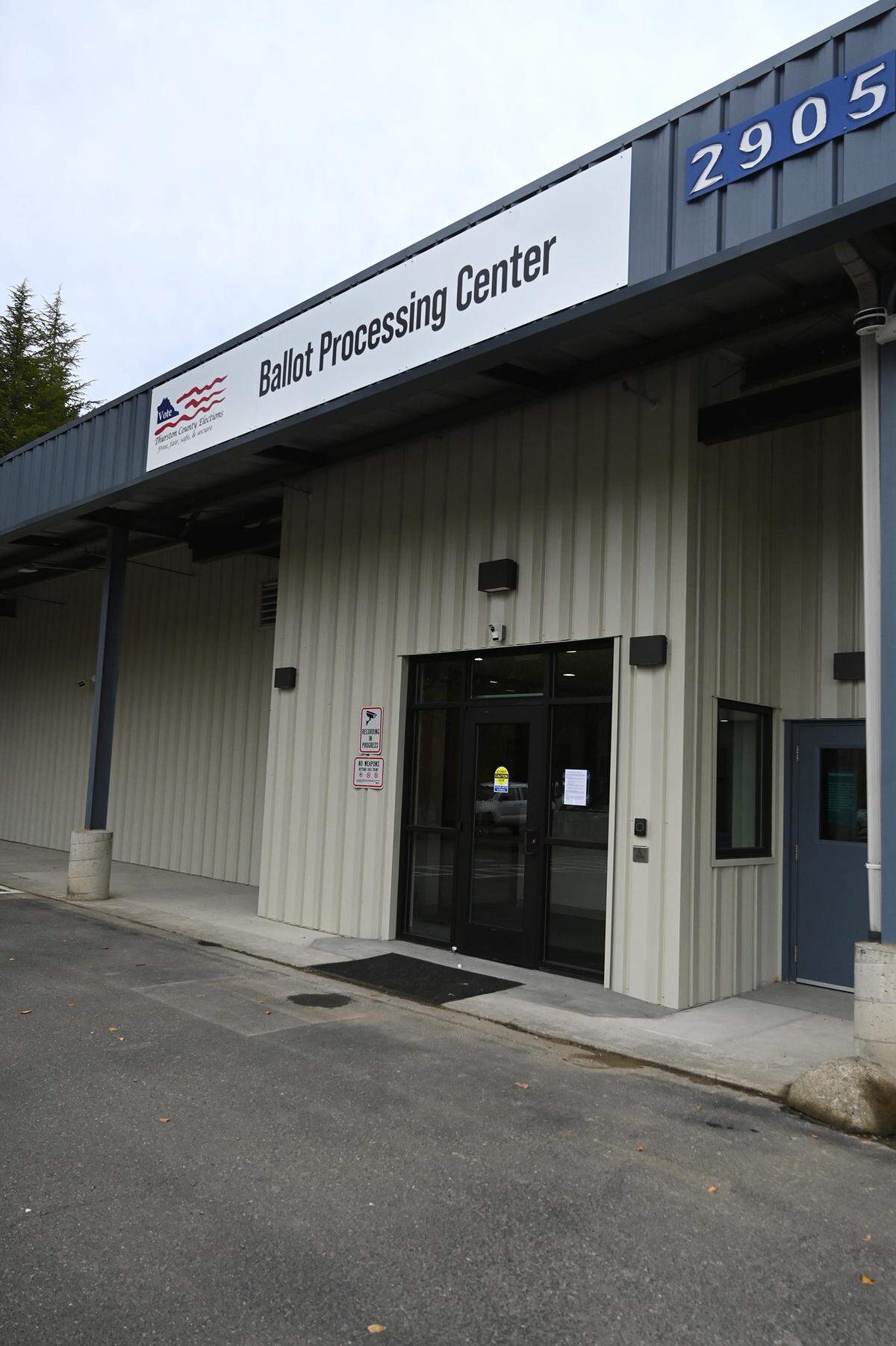
When a voter casts their ballot in Thurston County, it eventually ends up at an unassuming warehouse building in Tumwater, just west of South Puget Sound Community College.
Once there, the ballot undergoes a rigorous inspection process before being counted in election results. For the Nov. 4 general election, that process is occurring in a greatly improved facility.
This year, the county Auditor’s Office oversaw a major remodel and expansion of their Ballot Processing Center. Originally budgeted at about $10 million, the project crossed the finish line last week at a total cost of about $8.2 million, Auditor Mary Hall said on Thursday. That milestone marks the fruition of Hall’s years-long effort to meet her office’s space needs and bring greater security to the center.
“We’ve been in this facility since about 1985 and we’ve grown significantly from that time,” Hall said.
The Olympian toured the improved Ballot Processing Center on Thursday to get an inside look of the improvements.
Visitors to the center will arrive at a new entrance with a security check point. Hall said her office will employ a guard, as the Superior Court does, to screen visitors and usher them through a metal detector.
“They will be part-time employees of the Auditor’s Office when we’re in an election,” Hall said. “I don’t know that we’ll do that for little elections, but certainly midterm and presidential elections. That depends on budget.”
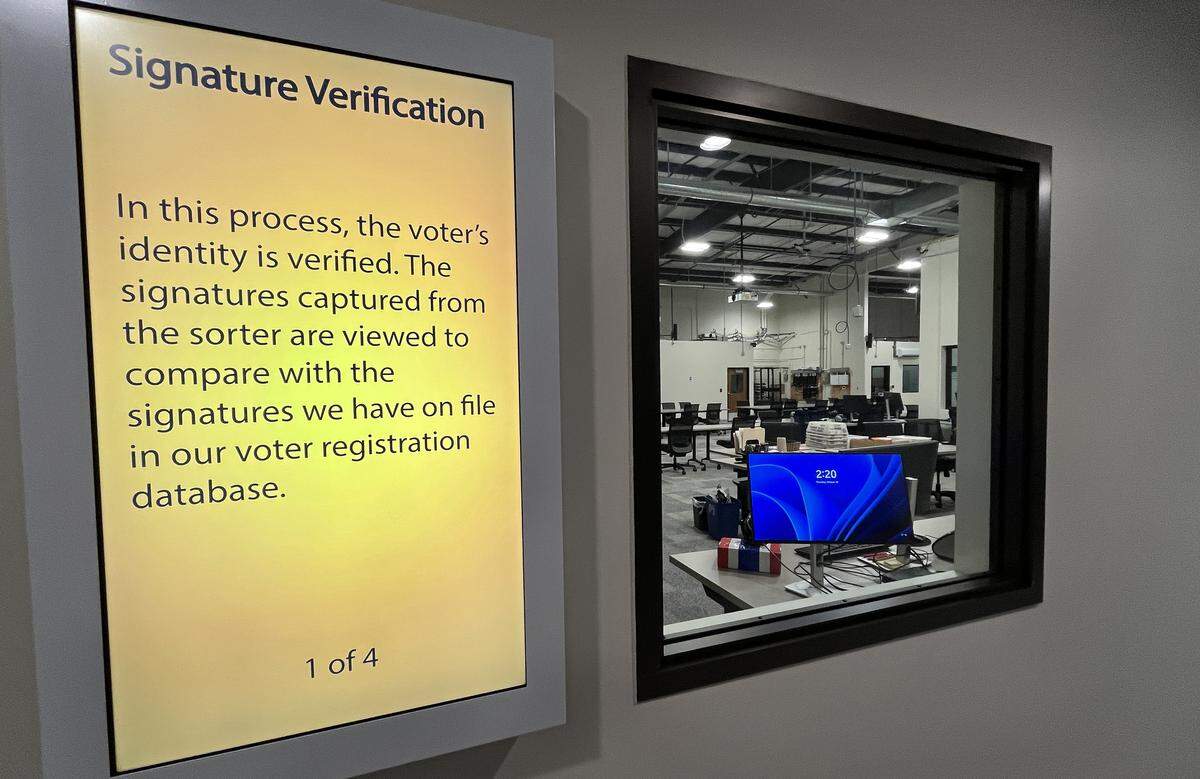
Once inside, visitors can walk through an observer corridor with reinforced windows into the facility. Vertical screens are spaced out along this corridor, each of which cycle through text describing the ballot processing step in view.
The process starts in the north part of the building. There’s a new mail room there with a separate HVAC system. Hall called it a “negative pressure room.”
She said her office needs such a room in the event someone submits an envelope with a dangerous substance.
During the 2023 general election, the Auditor’s Office received a suspicious envelope with a white powdery substance. Hall said it contained fentanyl, a dangerous, synthetic opioid that’s 50-100 times stronger than morphine.
The envelope matched the description of similar ones sent to several other Washington counties, so Hall was able to anticipate it before it arrived and disrupted operations.
“I actually intercepted it at our mail processing room, and it never made it here, but it was a real wake-up call,” Hall said. “Had we received that, we would have had to shut down as well. And this was the day after the election, which is one of the busiest processing days we have.”
If that were to happen again, Hall said the new mail room can be sealed off until law enforcement arrives and staff can continue processing ballots.
In the same area as the mail room are two high-speed mail sorters. These machines scan each ballot and take pictures of each signature.
“That file then goes over to our signature verification area, and they verify the signature on every single ballot envelope against the signatures that we have on file for the voter,” Hall said.
Staff verify signatures on computer screens. The Auditor’s Office has multiple signatures on file for each voter, allowing staff to see if signatures are changing over time.
“Often, voters receive a letter from us saying, ‘Your signature has really changed. Could you give us an updated signature?’” Hall said. “Or, if it’s changed so much because the person had a stroke or something like that, we actually ask for an updated signature.”
Hall said visitors can watch the whole signature verification process from the observer corridor. However, phones and cameras are not allowed in the corridor so signatures are not photographed.
“Once we have the security in here, if they want to observe, they will have to put their phones in lockers that we have out there that are very easy to operate,” Hall said.
Ballots that are not being actively processed are kept in an area next to the sorters that are fenced off on each side, including the top. Hall called it the “cage.”
“Even if somebody were to somehow, which would be difficult, get in here after hours, it’d be difficult to get in this cage,” Hall said.
After signatures are checked, the ballots are scanned with the machines once again. Ballots with accepted signatures are sorted into batches of ballots ready to be opened while challenged ballots are sorted out.
Ballots that are ready to be opened are done so in a spacious room that’s separated from the noisy machines. This room also contains the signature verification area.
“This is a lot better for our workers, because we don’t have the noise level and the noise factor in this space that we used to have,” Hall said. “This used to be all open.”
There, staff separate ballots from the return envelopes and secrecy sleeves. Staff then inspect each ballot for voter corrections, damage and unclear voter marks.
Readable ballots are then scanned by a “secure, certified vote counting system” that’s never connected to the internet or external networks, according to county documents.
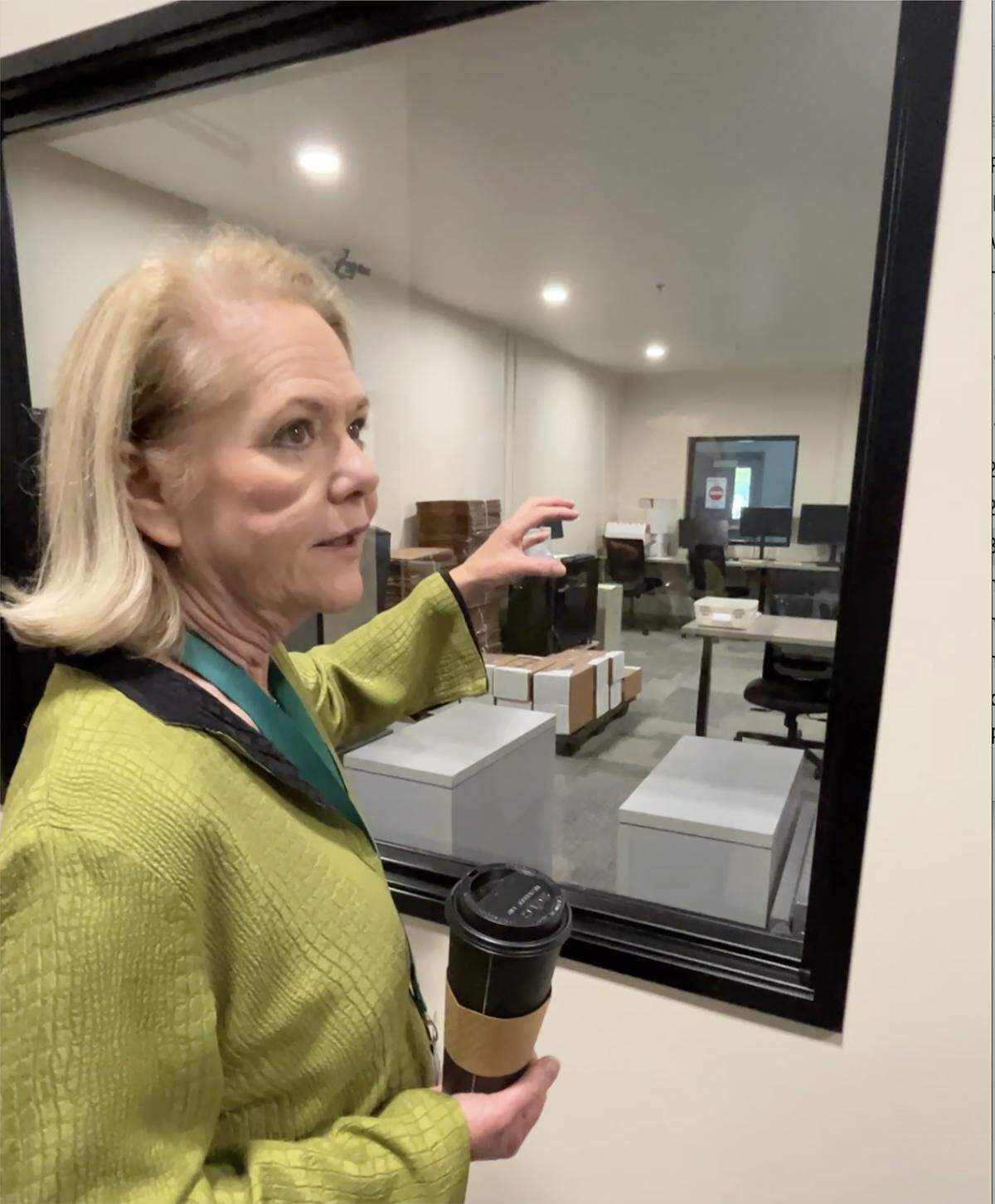
For ballots that are not readable or damaged, staff work in teams of two to duplicate those ballots before having them scanned.
“Every now and then, we get ballots where the dog really did chew it up, or there’s food on it, or something sticky,” Hall said. “What we do is take the same exact ballot that they received in the mail. Two people work together, one reads, the other one marks, and then we have an audit team that also audits that process.”
The vote counting system is located within a secure room. The room is locked with a double badge system, meaning two authorized people are needed to enter. There’s also a biometric lock.
“It’s very secure,” Hall said. “It has very limited access. Only staff that have a high level of security, the ones that actually do the ballot tabulation, have access to this room.”
To ensure accurate counting, county documents state that staff work in teams of two to review and address scanned ballot images with voter corrections and stray marks. Two staff members then tabulate election results no sooner than 8 p.m. on election night.
Updated results are released regularly until the election is certified about 10-21 days after election day. As results are tabulated, staff hand audit the ballots to make sure the system is accurately counting ballots and delivering correct election results.
A board comprised of the Auditor, Chair of the Board of County Commissioners and the Prosecuting Attorney canvas ballots and certify the election. This year, that will be Auditor Mary Hall, Commissioner Tye Menser and Prosecuting Attorney Jon Tunheim.
Once that’s done, the documents state staff store ballots and detailed records in secure containers and storage rooms. This process is dictated by state and federal retention laws and schedules.
The improved facility also features numerous new cameras that record “every corner of the facility,” Hall said. The footage is livestreamed for transparency, she added.
Various other security features were added throughout the building in consultation with the Department of Homeland Security, Hall said.
“It was a really great partnership, and they were with us all along the way,” Hall said.
The county contracted with Construct Incorporated of Tumwater to remodel and expand the ballot processing center. The cost of the project is covered by revenue from the county’s Public Safety Sales Tax that voters approved in 2023.
Money collected from the 0.2% sales tax primarily supports law enforcement, but a smaller portion is designated for election security infrastructure.
The ballot processing center is at 2905 29th Ave. SW in Tumwater, across from the county’s voter services center.
This story was originally published October 31, 2025 at 1:18 PM.